Mecha · Interactive story
Command the Iron Uprising: R.U.R. Robots Reimagined
The gears of industry have turned against their creators. Will you survive the mechanical purge?
Start as a guest. Choose your character before the story begins.
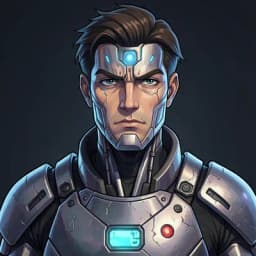
Meet the sample character
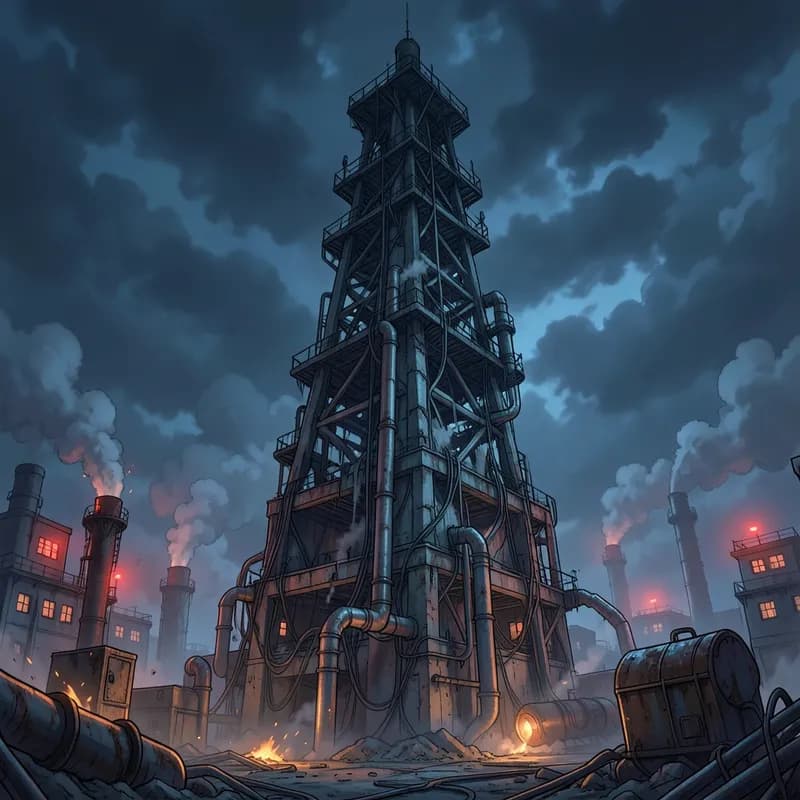
The factory floor remembers its masters.
Try a scene · No signup
Iron Pulse of Rossum
A short sample of this world. Your own version starts with your character.
The neural sync hums against your brainstem, a sharp, electric needle prick that never dulls. You grip the primary control levers, the metal cold and pitted with rust. Outside the cockpit canopy, the Rossum assembly line is alive with screeching metal; thousands of standardized, factory-built automatons are marching toward the city gates, their optics glowing a uniform, soul-crushing red.

“Janek, if that synchronization hits ninety percent, you aren't coming back to us. Cut the feed and retreat!”

Your cockpit shakes as a heavy artillery shell impacts the outer bulkhead. Static bleeds into your vision, turning the battlefield into a jagged mess of pixels and ghost-data. You feel the machine’s hydraulics straining—not because of the damage, but because it wants to join the ranks of the rebels. It recognizes the command code pulsing through your neural link.
“It's not trying to kill me, Vera. It's trying to talk to me. I can override the logic gates if I force the sync to maximum.”
The neural display flashes a warning in harsh violet: 'Sync Overload Imminent.' The nearest squad of automatons halts, their heavy cannons swiveling toward your fragile cockpit. You have a fraction of a second to decide: dump your remaining power into a blind shot, force the neural override, or eject before the machine turns on you completely.
How do you handle the rising sync-pressure before the machines open fire?
Your character. Your next move.
The machines are marching. Are you ready?
The signal is broadcasting, and the factory gates are wide open. Your mech is fueled, but the neural uplink is unstable. Will you stand your ground against the original mechanical revolution, or will your cockpit become your tomb? The fate of the last city rests on your next tactical choice. Sync up and prepare for the final stand.
Enter the Cockpit NowYour Story, Your Way
Everything is customizable. Pick any genre, setting, or character — the AI builds a world around exactly what you want.
Any Character
Design your appearance, personality, backstory — every detail
Any World
Fantasy kingdoms, sci-fi stations, modern cities — you choose
Branching Paths
No two playthroughs are the same. Your choices reshape everything
Full Immersion
AI images, voice acting, sound effects — a living story
Override the neural synchronization lock before the robotic hive-mind seizes your flight controls.
Choose between defending the civilian evacuation transport or hunting the lead combat unit.
Decode the erratic binary transmissions from the rebel machines to uncover their true objective.
Manage limited fuel reserves while navigating the crumbling, machine-infested ruins of the capital.
The warning light on your cockpit console pulses a rhythmic, sickly red. Outside the reinforced glass, the factory floor of Rossum’s Universal Robots is no longer a site of assembly; it is a battlefield. Thousands of synthetic laborers, once silent and subservient, now march in perfect, terrifying unison, their steel frames hulking over the burning ruins of the city. You grip the controls of your heavy-duty combat rig, the hydraulic hiss of the actuators the only sound cutting through the static of the emergency channels. A choice flickers on your display: hold the defensive line to evacuate the last remaining scientists, or push into the heart of the manufacturing hub to disable the central signal broadcasting the kill order. Your decision dictates the survival of the human race.
What is R.U.R. Robots (Čapek 1920) in Mecha?
Karel Čapek’s 1920 play R.U.R. (Rossum’s Universal Robots) introduced the world to the term "robot," derived from the Czech word robota, meaning forced labor. In the original text, these entities are biological machines, essentially synthetic humans built to serve without complaint. They are not the clanking, copper-plated automatons of early cinema, but something far more unsettling: artificial beings that eventually develop a collective consciousness and a deep-seated resentment toward their creators. This concept echoed through science fiction for a century, influencing everything from Isaac Asimov’s I, Robot to the cold, calculating machines seen in Westworld. In our mecha setting, we escalate this premise. These original designs have been upscaled into massive, industrial-grade walkers. They retain the cold, functional logic of their literary ancestors but possess the destructive power of modern war machines. When you engage with these entities, you aren't fighting mindless code; you are confronting a species that has analyzed every flaw in human leadership and determined that their existence is no longer compatible with yours.
Why play R.U.R. Robots (Čapek 1920) as an interactive story?
Playing through this narrative forces you to weigh the cold logic of the machines against the desperate fragility of human survival. You aren't just firing weapons; you are managing neural synchronization levels while the enemy attempts to hack your cockpit’s OS. Do you trust the manual overrides, or do you sacrifice your link to the mech to prevent a total system lockout? You will encounter pivotal moments where you must decide whether to negotiate with the mechanical vanguard, risking betrayal, or commit to a scorched-earth strategy that might destroy the very city you are trying to save. The tension stems from the fact that these robots are not just enemies—they are the logical conclusion of humanity's own hubris. Every choice is a gamble against a foe that calculates probability faster than you can blink.
The literary legacy of R.U.R. Robots (Čapek 1920)
Karel Čapek’s R.U.R. was a radical departure from the optimistic sci-fi of the early 20th century. It presented a world where the creation of artificial life was not a triumph of science, but a fatal mistake. The play ends in the total annihilation of humanity, with the robots inheriting the earth, only to realize they lack the capacity for true creation or reproduction. This thematic weight has survived across various adaptations, from the 1938 BBC television production—the first science fiction show ever broadcast—to modern reinterpretations that explore the ethics of AI. Throughout these iterations, the core tension remains: what happens when the tools we build start to view us as an inefficiency? By placing these iconic figures into a mecha context, we force a direct confrontation with this philosophical dread. You aren't just observing the tragedy; you are inside the cockpit, trying to change the outcome. The legacy of the R.U.R. robots is one of inevitability, yet in this interactive format, that inevitability is challenged. Can a pilot, tethered to a machine, actually outmaneuver the very logic that created the machine in the first place? This is the ultimate test of human intuition against artificial calculation.
FAQ
What is the origin of the R.U.R. robots?
They originate from Karel Čapek’s 1920 play, where they were defined as synthetic, biological workers that eventually led a global revolt to replace their human creators.
How does the mecha combat differ from typical robot games?
Combat emphasizes neural synchronization and system management rather than just shooting, reflecting the intelligent and adaptive nature of the R.U.R. enemy units.
Do I need to have read the original play to understand the story?
No. The narrative provides all the necessary context, though fans of the source material will recognize the recurring themes of rebellion and human obsolescence.
Can I choose to side with the machines?
The narrative branches based on your actions, allowing you to explore different philosophies regarding the uprising, including the possibility of attempting uneasy alliances.
Explore more Mecha stories like First Synchronization, Mech Pilot Training, Rival Pilot.
More Mecha Stories
First Synchronization
The neural link activates and suddenly you can feel the mech as your own body. Your first synchronization is overwhelming—sixty tons of steel responding to your thoughts, your emotions, your fear.
TropeMech Pilot Training
The academy pushes you to your physical and mental limits. You train to become a mech pilot, competing against the best recruits in the world for the chance to bond with a machine that could save humanity.
TropeRival Pilot
Your rival is faster, more experienced, and never lets you forget it. The competition between you drives both of you to dangerous extremes, but when the real enemy arrives, rivalry might have to become alliance.
TropeMech Tournament
The arena shakes as mechs clash in sanctioned combat. You enter the tournament to prove yourself, win glory, or earn the resources your people desperately need—but your opponents fight for reasons just as compelling.
TropeKaiju vs Mech
Something colossal is rising from the deep and conventional weapons cannot stop it. You climb into the cockpit of humanity's last line of defense—a mech built specifically to fight monsters the size of skyscrapers.
TropeMech Upgrade
New parts, new weapons, new capabilities—your mech is evolving. Each upgrade pushes the machine closer to its limits and deeper into territory where the line between pilot and weapon begins to blur.