
Mecha · Interactive story
Neural Link: The First Synchronization
Your heart rate spikes. The machine wakes up. You are no longer just a pilot.
Start as a guest. Choose your character before the story begins.
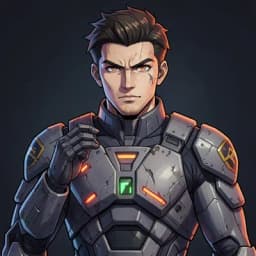
Meet the sample character
The machine remembers what the pilot wants to forget.
Try a scene · No signup
Synaptic Overload
A short sample of this world. Your own version starts with your character.
The neural harness needles bite into your spine, a sharp, metallic sting that initiates the handshake. Cold hydraulic fluid hums beneath the floor plating. You can smell recycled oxygen, but then, the monitor flickers a violent, electric green. Your vision tilts, shifting from your own optic nerves to the external cameras of the machine. The sheer weight of the sixty-ton frame suddenly presses against your mind.

“Don't fight the feedback, Tanaka. If you try to hold back, the machine will tear your nervous system to shreds.”

The feedback hits like a physical blow to your chest. You aren't just sitting in a pilot’s chair; you are existing inside a giant exoskeleton of ceramic and steel. Your left hand, usually cursed with a subtle, rhythmic tremor, is perfectly still—locked into the rigid, unflinching grip of the machine’s manipulator arm. The neural link amplifies your heartbeat until it echoes like a war drum through the internal audio feed.
“I can feel its joints. It is not just a tool; it is a predator waiting for me to give it permission to hunt.”
The hangar alarm blares, a jagged sound that vibrates through your new, metal skin. A heavy kinetic round slams into the outer blast doors, bucking the entire hangar. Synaptic warnings flash red across your vision: the power draw is spiking, and if you do not act, the feedback loop will liquefy your brain before the enemy even enters the room.
The blast doors are buckling under enemy fire. Your neural load is reaching critical levels. How do you stabilize the machine?
Your character. Your next move.
Step Into the Cockpit
The alarm is blaring. The neural link is waiting. If you hesitate, the machine will reject you. Choose your path, calibrate your focus, and prepare for the first engagement. Your mech is waiting for a pilot—will you be the one to master the machine, or will the machine break you?
Synchronize and Launch NowYour Story, Your Way
Everything is customizable. Pick any genre, setting, or character — the AI builds a world around exactly what you want.
Any Character
Design your appearance, personality, backstory — every detail
Any World
Fantasy kingdoms, sci-fi stations, modern cities — you choose
Branching Paths
No two playthroughs are the same. Your choices reshape everything
Full Immersion
AI images, voice acting, sound effects — a living story
Balance your neural load to prevent cognitive overload during high-intensity combat encounters.
Decide whether to trust automated safety protocols or bypass them for raw speed.
Experience real-time sensory feedback that alters your vision based on mech damage.
Navigate the psychological strain of merging your consciousness with a complex machine.
The hangar is freezing, but the cockpit is a sweat-soaked oven. You grip the haptic controls, waiting for the command. When the neural link initializes, it does not feel like a machine turning on; it feels like a phantom limb suddenly gaining sensation. The metal of the frame becomes your skin, the hydraulic hiss your own breath. You blink, and the HUD flickers into existence, overlaying your vision with tactical data and warning lights. The weight of sixty tons of combat-ready steel is now yours to command. You have seconds to calibrate your nervous system before the enemy breach hits the perimeter. Every choice you make from this moment—how you distribute power to the actuators, whether you push your sync rate to the red line—defines whether you survive the first wave. Your decisions ripple through the circuits, determining if you become one with the machine or if the system rejects your humanity.
What is First Synchronization in Mecha?
The First Synchronization is a staple in mecha fiction, representing the moment a pilot transcends the barrier between human and hardware. It is the point of no return where the pilot’s consciousness is mapped onto the mech’s operating system. In Neon Genesis Evangelion, this process is visceral and terrifying, forcing the pilot to endure the psychological strain of merging with a biomechanical unit. Unlike driving a car, synchronization requires a two-way flow of data: the pilot commands the machine, but the machine feeds sensory input directly into the pilot's brain. This is not just about moving a joystick; it is about feeling the recoil of a cannon blast in your own shoulder or the heat of a damaged reactor in your own chest. When done right, this trope transforms the mech from a vehicle into an extension of the pilot’s psyche, creating a bond that is as much about vulnerability as it is about power. It turns the cockpit into a pressure cooker where the pilot’s internal state dictates the external reality of the battlefield.
Why play First Synchronization as an interactive story?
Playing through your first sync demands more than just tactical knowledge; it demands emotional regulation. When you are linked to a war machine, your fear, anger, and focus directly impact your combat performance. You will face critical decisions: do you maintain a low, stable sync rate to keep your head clear, or do you push for a 100% neural merge to unlock the machine’s full kinetic potential, risking sensory overload? You might find yourself locked in a duel where your mech’s damage feedback causes real-time cognitive impairment. You have to choose how to prioritize your internal systems while the enemy closes in. Will you trust the AI-assisted targeting, or will you force a manual override that pushes your neural load to the breaking point? Your agency dictates whether you remain in control or become a passenger in your own armor. The tension of the synchronization is not a static state; it is a constant, shifting challenge that rewards risk and punishes hesitation.
Famous examples of First Synchronization in books, film, and games
In the world of mecha, the First Synchronization is the crucible. Consider Pacific Rim, where 'Drifting' requires two pilots to share a neural link. It is a literal synchronization of memories and trauma, showing how the connection is not just mechanical but deeply personal. If one pilot slips, the entire machine falters. In contrast, Mobile Suit Gundam often focuses on the sheer technical and psychic weight of Newtypes, where the machine serves as a conduit for their heightened intuition. In these stories, the sync is not just a tool; it is a burden. The machine demands a piece of the pilot's soul to function. Whether it is the biological horror of the EVA units or the team-based coordination seen in Western mecha films, the trope endures because it forces characters to face their limitations. It asks the ultimate question: what happens to the human when they become the machine? The friction between the pilot's humanity and the machine's cold, calculated efficiency creates the tension that drives the best mecha stories. It remains a powerful narrative device because it forces the protagonist to define their identity against the backdrop of an overwhelming technological power.
FAQ
What is the neural link in mecha stories?
A neural link is a direct interface connecting the pilot's brain to the machine's operating systems, allowing the mech to respond to thought and providing sensory feedback to the pilot.
How does the first sync affect combat performance?
The first sync determines your baseline control. A poor sync results in sluggish movement and system errors, while a high sync increases reaction speed and weapon accuracy at the cost of your own mental stability.
Is high synchronization always the best choice?
No. While higher sync rates offer superior power and responsiveness, they significantly increase the risk of sensory overload, hallucinations, and lasting psychological trauma if the machine sustains damage.
Can I choose my pilot's personality?
Yes. Your choices regarding how you handle the initial link and your reactions to the sensory input will shape how the machine responds to you throughout your story.
Explore more Mecha stories like Mech Pilot Training, Rival Pilot, Mech Tournament.
More Mecha Stories
Mech Pilot Training
The academy pushes you to your physical and mental limits. You train to become a mech pilot, competing against the best recruits in the world for the chance to bond with a machine that could save humanity.
TropeRival Pilot
Your rival is faster, more experienced, and never lets you forget it. The competition between you drives both of you to dangerous extremes, but when the real enemy arrives, rivalry might have to become alliance.
TropeMech Tournament
The arena shakes as mechs clash in sanctioned combat. You enter the tournament to prove yourself, win glory, or earn the resources your people desperately need—but your opponents fight for reasons just as compelling.
TropeKaiju vs Mech
Something colossal is rising from the deep and conventional weapons cannot stop it. You climb into the cockpit of humanity's last line of defense—a mech built specifically to fight monsters the size of skyscrapers.
TropeMech Upgrade
New parts, new weapons, new capabilities—your mech is evolving. Each upgrade pushes the machine closer to its limits and deeper into territory where the line between pilot and weapon begins to blur.
TropeNeural Link Bond
The bond between you and your mech is growing deeper than engineering intended. You share memories, emotions, and something that feels disturbingly like a soul. Disconnecting may no longer be an option.