
Mecha · Interactive story
Command the Steel: Mech Pilot Training
The neural link is live. Can you synchronize before the enemy breaks your perimeter?
Start as a guest. Choose your character before the story begins.
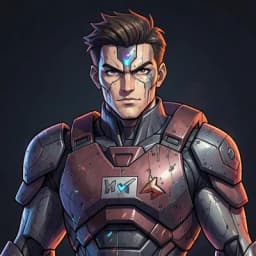
Meet the sample character
The synchronization process is never painless.
Try a scene · No signup
Static in the Neural Link
A short sample of this world. Your own version starts with your character.
The neural harness bites into your temples, cold needles of data piercing your scalp. You are strapped into the cockpit of the Mk. IV Strider, a machine that feels less like hardware and more like a caged beast. The cockpit lights flicker to a sickly amber, signaling the startup sequence. You can taste copper as the synaptic bridge engages, forcing your mind into the frame of the machine.

“Stop stalling, Sato. If you can't sync with the chassis in under ten seconds, you're scrubbing the decks for the rest of your tenure.”

Your vision blurs as the machine’s sensors feed raw, unfiltered diagnostic data directly into your cerebral cortex. The metallic groan of the Strider’s actuators vibrates in your own bones. You feel the weight of its three-ton arm as if it were your own limb, but the neural feedback is erratic, jagged with static. The sync percentage climbs—50%... 65%... 80%—but the machine is pushing back, resisting your mental command.
“I have control. I don't need a dampened link to make this bucket of bolts walk.”
The machine suddenly kicks back, sending a massive, unauthorized surge of feedback through your spine. Your nose begins to bleed as the Strider’s combat AI overrides your motor functions, attempting to force you into a high-intensity combat stance against your will. You have mere seconds before your neural pathways hit critical temperature, and the machine is already drawing its plasma blade.
The machine is seizing control of your motor functions. How do you respond to the hostile feedback?
Your character. Your next move.
Step into the cockpit. The simulation is waiting.
The hangar doors are sliding open. Your unit is cooling, its reactor humming with a low-frequency vibration that you can feel in your chest. The instructor is calling your name for the final assessment. Will you push your sync rate beyond the safety limit to secure your place in the vanguard, or will you play it safe and risk being benched? The machine is waiting for your command.
Initiate Neural Sync NowYour Story, Your Way
Everything is customizable. Pick any genre, setting, or character — the AI builds a world around exactly what you want.
Any Character
Design your appearance, personality, backstory — every detail
Any World
Fantasy kingdoms, sci-fi stations, modern cities — you choose
Branching Paths
No two playthroughs are the same. Your choices reshape everything
Full Immersion
AI images, voice acting, sound effects — a living story
Calibrate your neural interface during high-velocity combat simulations to avoid system feedback.
Choose between aggressive pilot tactics or defensive shielding protocols during intense sparring matches.
Manage the delicate relationship with your academy rival to gain tactical advantages in group drills.
Make split-second decisions when your mech sustains damage, choosing which systems to prioritize.
Sweat stings your eyes as the simulation alarm blares, a relentless siren that signals another morning in the academy. You are not just here to learn; you are here to bond with a sentient frame of cold titanium and hydraulics. Your heart rate monitors flicker on the HUD, showing a sharp spike as you initiate the neural handshake. The machine shudders, not with a mechanical glitch, but with a sudden, overwhelming awareness of your own nerves. This is where your story begins—not in a classroom, but in the white-hot intensity of the cockpit. Every decision you make during these grueling drills ripples outward, determining whether you graduate as a hero or end up as scrap metal in the hangar. The weight of the world is balanced on your ability to sync.
What is Mech Pilot Training in Mecha?
Mech Pilot Training is the crucible of the genre. It focuses on the transition from civilian to soldier, emphasizing the physical and psychological toll of operating a machine that is essentially an extension of the pilot's own nervous system. Think of Neon Genesis Evangelion, where the synchronization ratio is more than just a metric—it is a measure of the pilot's humanity. Or consider the grueling selection process in Mobile Suit Gundam, where raw talent is rarely enough to survive the battlefield. This trope is not just about learning to press buttons; it is about the 'sync,' the moment where the boundary between human and machine blurs. The academy is not a school; it is a filter designed to find those who can withstand the crushing G-forces and the psychic feedback of a giant robot. If a pilot fails to harmonize with their machine, they become a liability. If they succeed, they become a weapon capable of shifting the tide of war. It is the essential starting point for any pilot facing the unknown.
Why play Mech Pilot Training as an interactive story?
Playing through this training means facing the brutal reality of the academy. You will choose your training path: do you focus on raw, brute-force synchronization, or do you prioritize tactical agility and sensory awareness? You will encounter high-stakes moments like the calibration test, where a minor hesitation could mean a catastrophic neural feedback loop. You will have to decide whether to follow the drill sergeant’s rigid, by-the-book protocols or risk an unconventional maneuver that might get you expelled if it fails. The tension comes from your agency: you are not just observing a pilot; you are the one gripping the controls. When the siren sounds for a surprise live-fire drill, will you panic, or will you force your mind to match the machine's rhythm? Every choice alters your standing with your peers and your compatibility rating with your unit.
Famous examples of Mech Pilot Training in books, film, and games
Mech Pilot Training serves as the foundational arc for many iconic stories. In Pacific Rim, the 'Drift' acts as a literal, physical manifestation of this trope, requiring two pilots to share their memories and trauma to control a Jaeger. It shows that training is as much about emotional stability as it is about physical reflexes. Conversely, The Iron Giant explores a different side of the bond, where the training is a journey of discovery for both the machine and the boy. The trope works because it provides a clear, high-stakes environment where the character's growth is measurable. Whether it's the militaristic rigor found in Full Metal Panic! or the more ethereal, soul-binding training in newer mecha series, the core remains the same: the machine is only as effective as the person inside. It turns the cockpit into a pressure cooker, forcing characters to confront their flaws, fears, and strengths before they ever face a real enemy. This structure endures because it mirrors our own desire to master complex technology, turning the cold, impersonal nature of war into something intimate and deeply personal.
FAQ
Can I fail the academy training?
Yes. Your performance in simulations, your ability to handle neural stress, and your interpersonal choices all influence your career path. A poor showing in the initial calibration could lead to a grounding, changing the trajectory of your entire story.
How does the neural link affect the story?
The sync level acts as a key mechanic. High synchronization allows for faster reflexes and more powerful attacks, but it also increases your exposure to the machine’s raw processing power. High-level syncing can lead to unpredictable narrative consequences.
What is the difference between this and standard combat?
Training focuses on the development of the pilot and their bond with the mecha. Combat is the test; training is where you earn the right to exist in the cockpit. The stakes are personal, academic, and social rather than just territorial.
Is this story suitable for beginners to the Mecha genre?
Absolutely. The academy setting is the perfect entry point. It introduces the mechanics of pilot-machine synchronization naturally, allowing you to learn the rules of the world alongside your character as they progress from recruit to ace.
Explore more Mecha stories like First Synchronization, Rival Pilot, Mech Tournament.
More Mecha Stories
First Synchronization
The neural link activates and suddenly you can feel the mech as your own body. Your first synchronization is overwhelming—sixty tons of steel responding to your thoughts, your emotions, your fear.
TropeRival Pilot
Your rival is faster, more experienced, and never lets you forget it. The competition between you drives both of you to dangerous extremes, but when the real enemy arrives, rivalry might have to become alliance.
TropeMech Tournament
The arena shakes as mechs clash in sanctioned combat. You enter the tournament to prove yourself, win glory, or earn the resources your people desperately need—but your opponents fight for reasons just as compelling.
TropeKaiju vs Mech
Something colossal is rising from the deep and conventional weapons cannot stop it. You climb into the cockpit of humanity's last line of defense—a mech built specifically to fight monsters the size of skyscrapers.
TropeMech Upgrade
New parts, new weapons, new capabilities—your mech is evolving. Each upgrade pushes the machine closer to its limits and deeper into territory where the line between pilot and weapon begins to blur.
TropeNeural Link Bond
The bond between you and your mech is growing deeper than engineering intended. You share memories, emotions, and something that feels disturbingly like a soul. Disconnecting may no longer be an option.