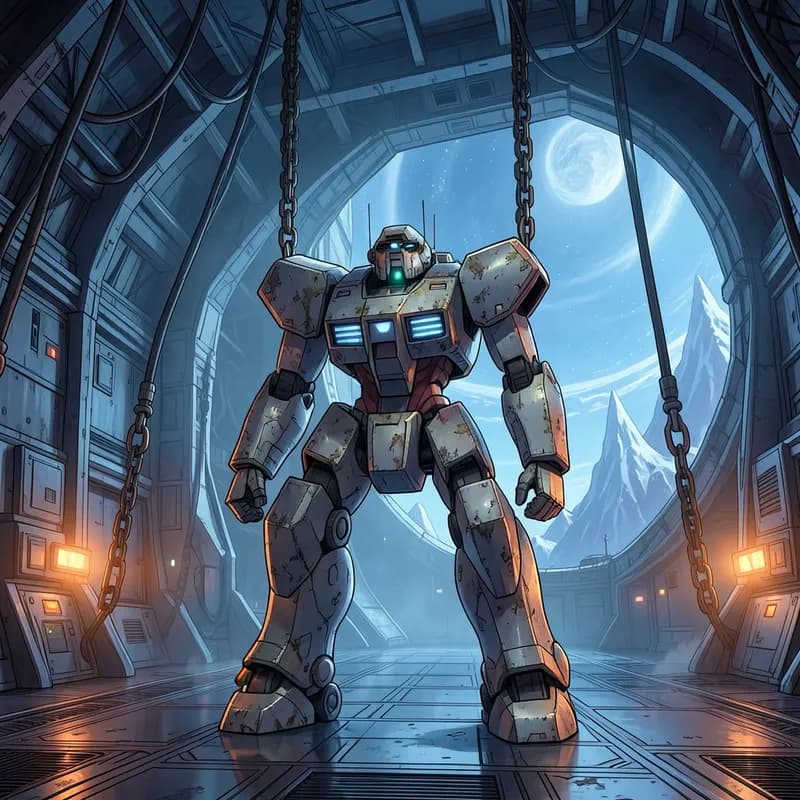
Mecha · Interactive story
Iron Baptism: The Rookie Pilot’s First Sortie
The cockpit smells of fresh coolant and ozone—don’t let it become your coffin.
Start as a guest. Choose your character before the story begins.
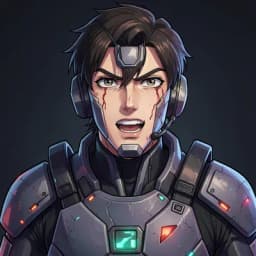
Meet the sample character
The first link is always the hardest.
Try a scene · No signup
Cold Iron, Hot Blood
A short sample of this world. Your own version starts with your character.
You sit strapped into the cockpit of the V-400 Interceptor. The neural gel feels like thick, cold honey sliding into your spinal port. Every light on the console pulses in sync with your own heartbeat. Above you, the hangar bay doors groan, exposing the jagged, frozen void of Neptune’s rings. You are nineteen, and your hands are shaking so violently you have to grip the manual override handles just to keep them steady.
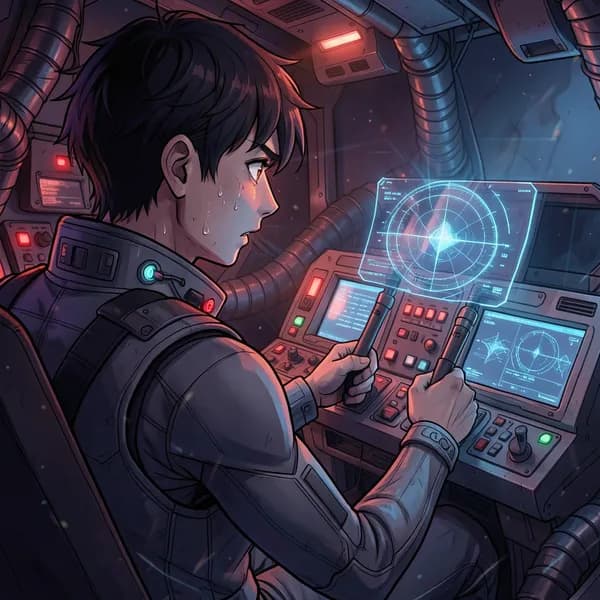
“Keep your eyes on the sensor array, kid. Don't look at the horizon. If you try to track the enemy ships with your own eyes, the G-force will liquefy your brain before you even reach the firing line.”
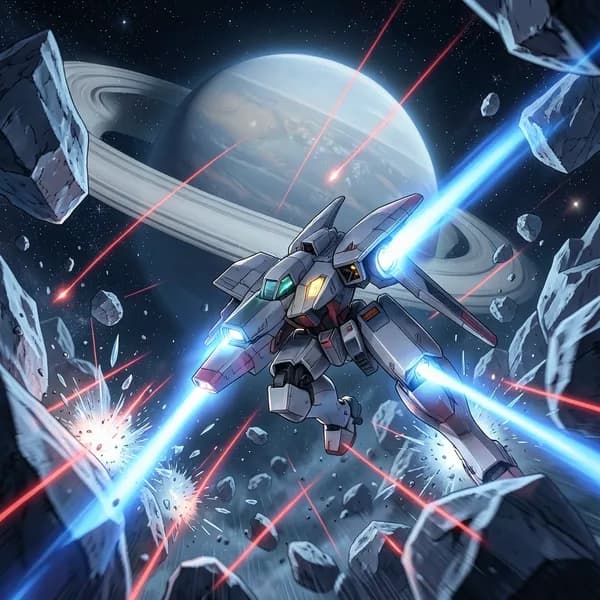
The warning klaxon screams, a jagged sound that vibrates through the very bones of the mech. Vance’s unit is already accelerating, a streak of white light against the dark, frozen expanse. You feel the heavy, metallic pressure of the V-400 waking up. The neuro-link spikes, showing you a hundred incoming missiles as red dots crawling toward your position. You have seconds to decide how to burn your fuel reserves.
“I’m not sitting here for target practice, Vance. I’m punching the thrusters and breaking formation.”
Your finger hovers over the red toggle. If you commit to a full-burn interception, you might break the enemy flank, but you’ll be stranded without enough fuel to return to the carrier. If you hold your position, you become a stationary target for the incoming barrage. The cockpit grows impossibly hot as the engine reactors whine, demanding you commit to your first maneuver in the line of fire.
The missiles are closing the distance. Do you initiate the full-burn intercept?
Your character. Your next move.
Strap in. The enemy is already on the radar.
Your squad is waiting, and the hangar doors are opening. You have thirty seconds to finalize your pre-flight checks and decide: are you going to be the pilot who survives, or the one who gets remembered in a casualty report? Step into the cockpit and take control of your destiny today.
Start Your First SortieYour Story, Your Way
Everything is customizable. Pick any genre, setting, or character — the AI builds a world around exactly what you want.
Any Character
Design your appearance, personality, backstory — every detail
Any World
Fantasy kingdoms, sci-fi stations, modern cities — you choose
Branching Paths
No two playthroughs are the same. Your choices reshape everything
Full Immersion
AI images, voice acting, sound effects — a living story
Calibrate your neural sync levels during combat to balance speed against mental stability.
Choose to disobey reckless orders from superiors to save your squad or follow protocol.
Manage limited ammo and fuel reserves while deciding when to engage or retreat.
Build or break relationships with veteran pilots who decide your reputation on the field.
The diagnostic lights are still cycling through their pre-flight check, casting a sickly green glow over your gloved hands. Outside the armored glass, the hangar bay is a cacophony of hydraulic hisses and the desperate shouting of ground crew who have seen too many pilots fail to return. You are fresh out of the academy, your neural link still raw from the initial calibration, and the massive machine beneath you feels more like a cage than a weapon of war. Your commanding officer is barking orders over the comms, a static-filled demand for status that you aren't ready to answer. Every decision you make in these first few minutes—from how you balance your sync rate to whether you trust the veteran wingman covering your flank—will dictate your survival. This is an interactive story where your intuition behind the controls is the only thing standing between you and a crater.
What is The Rookie Pilot in Mecha?
The Rookie Pilot is a cornerstone archetype in mecha fiction, representing the intersection of extreme technical capability and profound inexperience. This character is often thrust into a conflict they barely understand, piloting a machine that is far more powerful than their own nerves. They are the blank slate upon which the horrors of war are written. In classic entries like 'Mobile Suit Gundam,' Amuro Ray begins as a civilian boy who happens to stumble into the cockpit of the RX-78-2, forced to grow up at the speed of a laser blast. Similarly, Shinji Ikari from 'Neon Genesis Evangelion' highlights the psychological weight of this role, where the machine requires a total synchronization that threatens to dissolve the pilot's very sense of self. The archetype thrives on the tension between the fragility of the human soul and the cold, unyielding lethality of the metal frame. It isn't just about the skill gap; it is about the transition from a person who plays with toys to a soldier who must decide if they are willing to pull the trigger on an enemy who might be just as scared as they are.
Why play The Rookie Pilot as an interactive story?
Playing as the rookie puts the weight of the machine's heavy, hydraulic limbs squarely in your hands. Unlike passive media where you watch a protagonist panic, here you must manage your own heart rate and focus. You will face high-stakes moments that test your resolve: do you push your sync rate to the red line to land a kill, knowing it might fry your neural pathways, or do you play it safe and risk your squad's lives? You’ll negotiate with cynical veterans who expect you to fold under the pressure of the first sortie. Every choice shifts the narrative, turning the cold calculations of the cockpit into a desperate struggle for survival. You aren't just reading about the terror of being targeted by an enemy ace; you are deciding how to maneuver, whether to vent your cooling systems to prevent a meltdown, and which target to prioritize when your ammunition is running low.
The psychology of The Rookie Pilot: why readers fall for this character
The Rookie Pilot embodies the fantasy of sudden, overwhelming power paired with the reality of total vulnerability. Readers and players gravitate toward this archetype because it mirrors the human condition of being thrown into situations we are not prepared for. We feel the anxiety of the 'first day on the job' amplified a thousand times by the presence of giant, lethal robots. In 'Pacific Rim,' Raleigh Becket’s initial struggle to reconnect with a Jaeger after his brother's death captures the trauma and necessity of the pilot's bond. This archetype allows for a clear character arc: we start as a liability and, through trial by fire, become the lynchpin of the war effort. The appeal lies in the growth. We want to see the moment the fear stops and the instinct takes over. It is the transition from being a passenger in a machine to becoming its master. This journey is inherently satisfying because it rewards the player's learning curve. When you finally hit that perfect synchronization, it feels earned because you remember the clumsy, terrifying first steps. The archetype also challenges our morality; in the heat of a battle, the rookie is often the only one left with the capacity for empathy, making their choices about who to spare or how to fight feel more significant than the cold, hardened decisions of the veterans around them. By placing you in the seat, the narrative forces you to confront the reality that war is not about the machine, but about the person inside it trying to stay human.
FAQ
What makes the rookie pilot archetype different from a veteran pilot?
A veteran pilot relies on muscle memory and hardened detachment, often treating the mech as an extension of their own body. The rookie, however, experiences everything as a new, overwhelming stimulus. The rookie’s arc is defined by learning, fear, and the struggle to maintain their humanity, whereas a veteran's story usually focuses on burnout, regret, or the trauma of past missions.
Can I choose my own mech in this interactive story?
Yes. As a rookie, the machine you are assigned often reflects your status. You might start with a dated, clunky prototype that requires constant manual adjustments, or a sleek but temperamental model. Your choices throughout the story can lead to upgrades, repairs, or even the chance to pilot a completely different class of mech.
How does the sync-rate mechanic affect my survival?
The sync-rate is a measure of your mental integration with the mech. A higher sync-rate allows for faster reflexes and more precise movement, but it also increases the physical and psychological toll on your brain. If you push the sync too high, you might experience sensory overload, which can lead to critical errors or long-term damage.
Is this experience suitable for someone who has never played a mecha game?
Absolutely. The rookie archetype is the perfect entry point because you learn the mechanics and the world alongside your character. You don't need prior knowledge of complex lore; you only need to understand the immediate danger of the battlefield and the weight of your decisions.
Explore more Mecha stories like First Synchronization, Mech Pilot Training, Rival Pilot.
More Mecha Stories
First Synchronization
The neural link activates and suddenly you can feel the mech as your own body. Your first synchronization is overwhelming—sixty tons of steel responding to your thoughts, your emotions, your fear.
TropeMech Pilot Training
The academy pushes you to your physical and mental limits. You train to become a mech pilot, competing against the best recruits in the world for the chance to bond with a machine that could save humanity.
TropeRival Pilot
Your rival is faster, more experienced, and never lets you forget it. The competition between you drives both of you to dangerous extremes, but when the real enemy arrives, rivalry might have to become alliance.
TropeMech Tournament
The arena shakes as mechs clash in sanctioned combat. You enter the tournament to prove yourself, win glory, or earn the resources your people desperately need—but your opponents fight for reasons just as compelling.
TropeKaiju vs Mech
Something colossal is rising from the deep and conventional weapons cannot stop it. You climb into the cockpit of humanity's last line of defense—a mech built specifically to fight monsters the size of skyscrapers.
TropeMech Upgrade
New parts, new weapons, new capabilities—your mech is evolving. Each upgrade pushes the machine closer to its limits and deeper into territory where the line between pilot and weapon begins to blur.