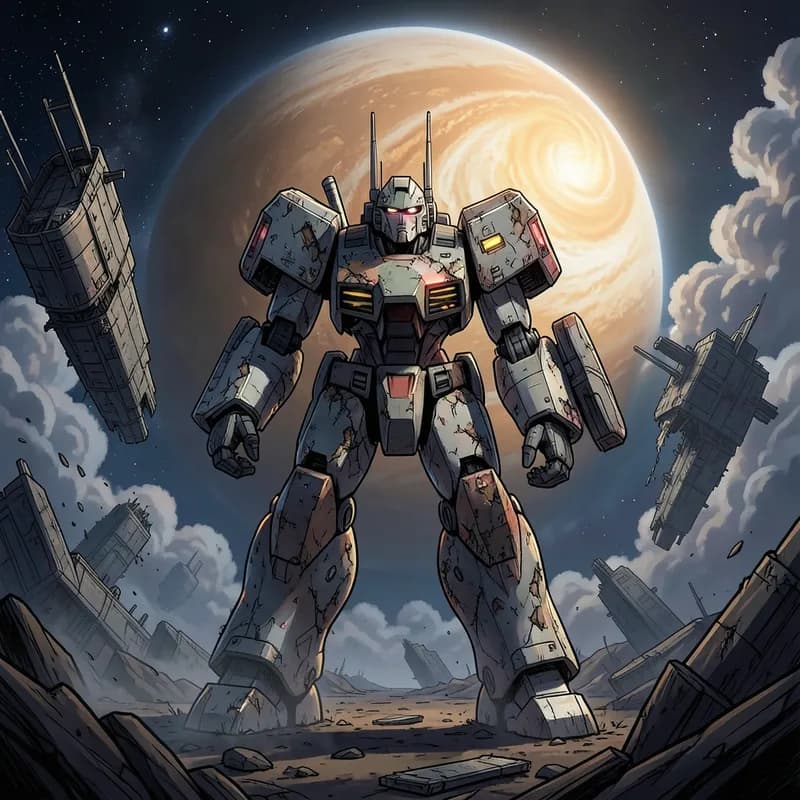
Mecha · Interactive story
The Rival Ace: Master the Cockpit of Your Enemy
Your cockpit is your church, and your rival is the only one who prays.
Start as a guest. Choose your character before the story begins.
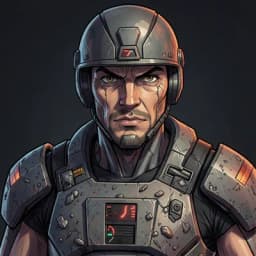
Meet the sample character
The last vector before the end.
Try a scene · No signup
Velocity of Betrayal
A short sample of this world. Your own version starts with your character.
Your cockpit smells of ozone and recycled sweat. Outside the reinforced glass, the debris field of the freighter Icarus spins, catching the light of a distant, dying star. The neural link—your sync—pulses at the base of your skull, a cold needle of feedback that reports your left stabilizer is shredded. You are breathing hard, waiting for that signature flicker on the long-range sensor.
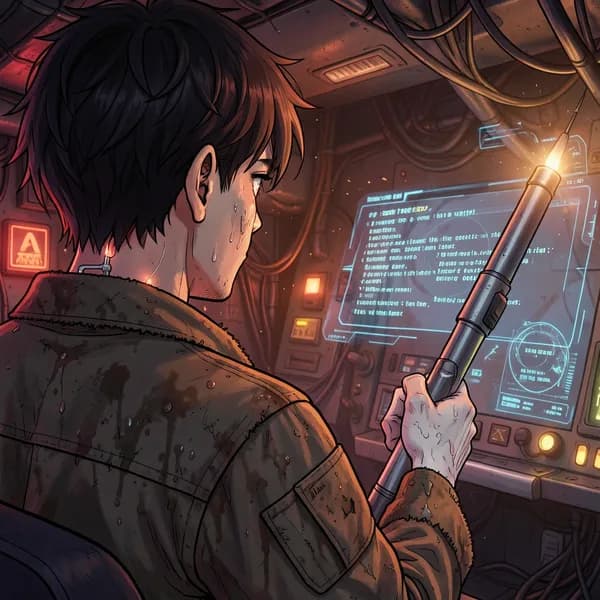
“Hideo, stop pretending you have a choice. The war ended the moment you decided to live for your own ghosts.”
Sunder’s Crimson-class rig slides into view, jagged and polished like a scalpel. He moves with the arrogance of a predator who has never been hit. The heat gauge in your HUD flares red as the thermal dampeners struggle against the vacuum's absolute zero. Your fingers twitch over the firing triggers, muscles aching from the neural-haptic feedback loop.

“My ghosts are the only thing keeping me upright, Sunder. You wouldn't know how that feels, hidden behind your clean armor and empty rhetoric.”
The silence that follows is heavy with the hum of reactor cores. Sunder begins the locking sequence, his target reticle painting a glowing circle over your cockpit glass. Your power supply is buckling, dropping to forty percent, and the emergency ejection seat has been disabled by a remote hack. You have seconds before his railgun tears through your chassis, ending your life in a single, silent flash.
Sunder's targeting computer is locking on. How do you force him to break his rhythm?
Your character. Your next move.
The cockpit is waiting for its pilot.
Command your machine and prove your superiority against the only pilot who can keep pace with your maneuvers. Your choice to strike or stand down will change the course of the war.
Take the flight stickYour Story, Your Way
Everything is customizable. Pick any genre, setting, or character — the AI builds a world around exactly what you want.
Any Character
Design your appearance, personality, backstory — every detail
Any World
Fantasy kingdoms, sci-fi stations, modern cities — you choose
Branching Paths
No two playthroughs are the same. Your choices reshape everything
Full Immersion
AI images, voice acting, sound effects — a living story
Calibrate your mech's targeting systems during a high-speed orbital dogfight.
Choose whether to execute a downed pilot or offer them a chance to retreat.
Navigate political fallout after disobeying a direct order to secure a personal victory.
The smell of ozone and recycled air fills the cockpit. Outside, the horizon shimmers with the heat of thrusters. You check your HUD—the target signature is unmistakable. It is him again. The pilot who has turned every skirmish into a dance of destruction. Your hand hovers over the firing trigger, fingers twitching against the flight stick. You know his maneuvers, his tells, and the way he hesitates before committing to a strike. In this story, you inhabit the mind of the enemy’s most lethal ace, deciding whether to honor the duel or prioritize the mission. Your choices determine if you survive the next engagement or become another piece of scrap metal in the desert. Every decision you make carries the weight of your machine’s heavy armor and the fragile status of your reputation.
What is The Rival Ace in Mecha?
The Rival Ace acts as the mirror image to the hero. They are not merely a boss fight; they are a psychological anchor. Think of Char Aznable from Mobile Suit Gundam or the intense, high-stakes duels in Armored Core. They possess equal—or superior—skill, a unique custom machine, and a code of honor that often conflicts with their own command structure. They force the player to confront the reality of war, where the line between hero and villain is blurred by the cockpit glass. This archetype operates on the assumption that the most dangerous person on the battlefield is the one who understands your tactics as well as you do. They are defined by their specialization: they do not fight for the sake of the war, but for the sake of the encounter.
Why play The Rival Ace as an interactive story?
Playing as the Rival Ace shifts the focus from winning to maintaining your identity in a conflict you might not fully support. You manage heat levels, choose tactical maneuvers, and decide when to spare a pilot who might be your only equal. Will you follow the brutal orders from high command, or will you challenge your rival to a fair duel, risking your reputation and your life? You face moments where technical skill meets moral compromise. The tension arises from the fact that you are the 'villain' in someone else’s success story, and you must decide if you are willing to lose your life to prove your superiority.
The psychology of The Rival Ace: why readers fall for this character
The Rival Ace archetype thrives on the tension of mutual respect. It is the dance of death fantasy. It activates the player's desire for mastery—not just of a machine, but of a relationship. In Macross, the rivalry between pilots defines the stakes of the entire war. Unlike a mindless grunt, the Ace is a character of depth who fears stagnation. They fear being surpassed, but they also fear a world without their counterpart. This archetype highlights the tragedy of combat: the only person who truly understands you is the one trying to kill you. By stepping into this role, you explore the cost of obsession and the weight of being the symbol your nation relies on. These pilots represent the peak of human-machine synchronization, where the machine is an extension of the pilot's ego, and the rival is the only mirror that shows them their own true reflection.
FAQ
What makes an Ace different from a standard pilot?
An Ace is defined by their kill count, their unique custom machine, and their ability to influence the outcome of an entire battle. They are the tip of the spear, often operating with more autonomy than regular infantry.
Can I switch sides as the Rival Ace?
Yes. Depending on your choices regarding your orders and your interactions with your rival, you may find your loyalties shifting, leading to branching paths where you abandon your original faction.
How does the mecha combat affect the story?
Combat success influences your standing within your military hierarchy. High performance grants you access to better equipment, but it also paints a larger target on your back, increasing the difficulty of your rival encounters.
Is this archetype only for villains?
Not at all. The Rival Ace is about conviction. You are the hero of your own perspective, and your actions are justified by your personal code, regardless of how the opposing side views your aggression.
Explore more Mecha stories like First Synchronization, Mech Pilot Training, Rival Pilot.
More Mecha Stories
First Synchronization
The neural link activates and suddenly you can feel the mech as your own body. Your first synchronization is overwhelming—sixty tons of steel responding to your thoughts, your emotions, your fear.
TropeMech Pilot Training
The academy pushes you to your physical and mental limits. You train to become a mech pilot, competing against the best recruits in the world for the chance to bond with a machine that could save humanity.
TropeRival Pilot
Your rival is faster, more experienced, and never lets you forget it. The competition between you drives both of you to dangerous extremes, but when the real enemy arrives, rivalry might have to become alliance.
TropeMech Tournament
The arena shakes as mechs clash in sanctioned combat. You enter the tournament to prove yourself, win glory, or earn the resources your people desperately need—but your opponents fight for reasons just as compelling.
TropeKaiju vs Mech
Something colossal is rising from the deep and conventional weapons cannot stop it. You climb into the cockpit of humanity's last line of defense—a mech built specifically to fight monsters the size of skyscrapers.
TropeMech Upgrade
New parts, new weapons, new capabilities—your mech is evolving. Each upgrade pushes the machine closer to its limits and deeper into territory where the line between pilot and weapon begins to blur.