Mecha · Interactive story
Architects of Steel: The Mech Engineer’s Burden
The pilot gets the glory, but you hold the power of life and death.
Start as a guest. Choose your character before the story begins.
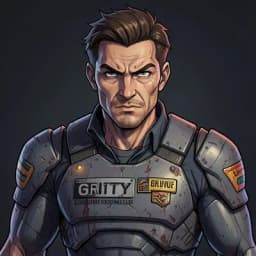
Meet the sample character
When the steel screams, you are the only one who can talk it down.
Try a scene · No signup
The Cold Weld
A short sample of this world. Your own version starts with your character.
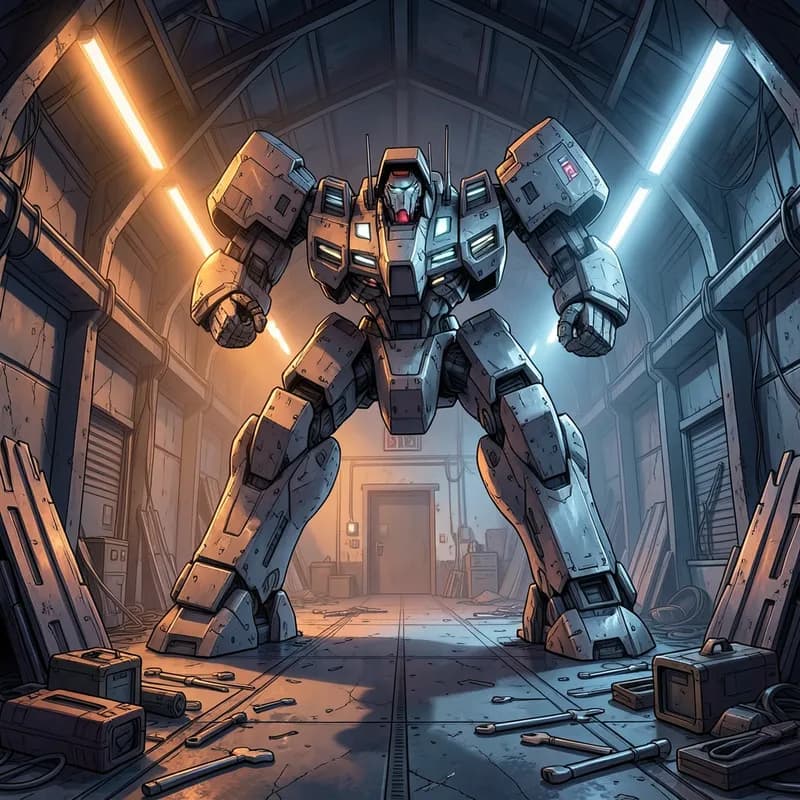
You wipe hydraulic fluid from your eyes, the smell of ozone and burning coolant stinging your nostrils. Below the Vanguard’s massive chassis, the ground shudders as the base defense grid absorbs another kinetic barrage. Rina’s heartbeat syncs through the floorboards, a frantic, irregular rhythm transmitted directly from her neuro-link. The heat exchangers are screaming, red lights pulsing against the dark steel of the hangar walls. You have seconds before the fusion core hits critical mass.
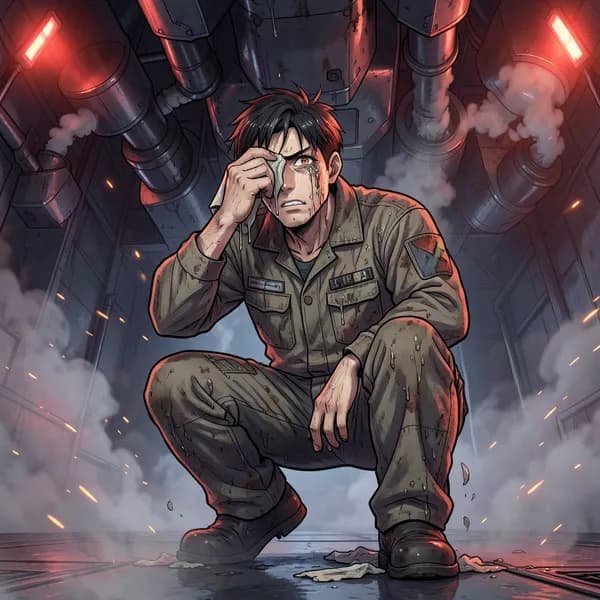
“Kenzo! The stabilizer is flatlining! If you don't bypass the primary limiter, I’m going to be nothing but a smear of meat inside this cockpit in thirty seconds!”
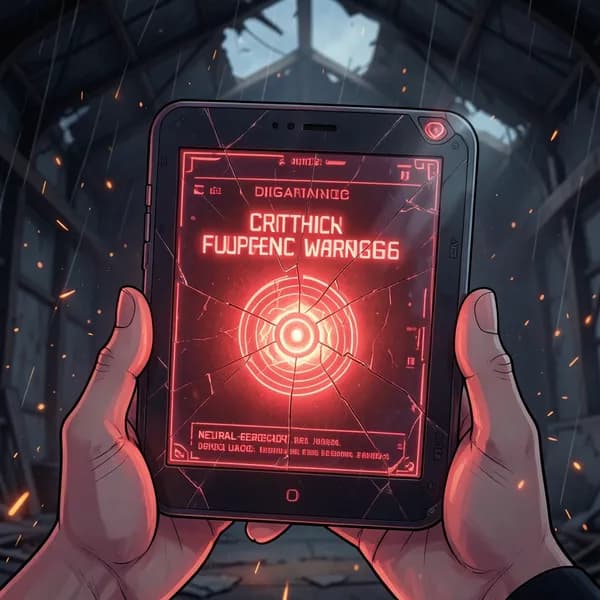
You slide out from the undercarriage, wrench still gripped in your palm. Steam hisses from a ruptured pipe, obscuring the hangar in a thick, synthetic fog. You look at the diagnostic tablet; the neural-feedback loop is locked. Rina is pushing the machine beyond its physical limits, and the alloy plating is already warping under the strain. You can force the coolant bypass, but the surge will likely weld the cockpit door shut forever, trapping her inside even if she survives the fight.
“Rina, hold your fire! If I force the shunt, you'll be locked in that suit until the heat vents, but you won't die today. Just keep your sync-levels steady.”
The ceiling groans as the docking bay doors take a direct hit, showering the hangar in sparks and debris. You have a choice: force the shunt and risk trapping her, dump the fuel to cool the core but leave her defenseless, or manually override the AI and dump the pilot’s neural data back to the base, effectively bricking the mech. Outside, the enemy swarm has breached the second perimeter.
The core is reaching critical temperature. How do you stabilize the Vanguard?
Your character. Your next move.
The Hangar is Yours. Build the Future.
The sirens are wailing, and the heavy interceptors are waiting for your touch. Will you opt for the experimental thrusters that could give your pilot the edge, or stick to the schematics and play it safe? The weight of their survival rests on your workbench.
Start Your Engineering CareerYour Story, Your Way
Everything is customizable. Pick any genre, setting, or character — the AI builds a world around exactly what you want.
Any Character
Design your appearance, personality, backstory — every detail
Any World
Fantasy kingdoms, sci-fi stations, modern cities — you choose
Branching Paths
No two playthroughs are the same. Your choices reshape everything
Full Immersion
AI images, voice acting, sound effects — a living story
Diagnose failing hydraulic lines during a mid-mission emergency repair under heavy artillery fire.
Choose between experimental prototype parts and reliable, battle-tested steel for custom machine upgrades.
Manage limited hangar resources to keep an entire squadron of mechs combat-ready.
Override safety protocols to push a mech’s output beyond its factory-specified operational limits.
The smell of ozone and burnt hydraulic fluid clings to your jumpsuit. Outside the hangar bay, the siren blares, signaling another sortie, but you aren't heading to the cockpit. You are under the chassis of a Mark-IV interceptor, wrench in hand, tightening a pressure valve that is vibrating with a low, dangerous hum. The pilot is a kid with a death wish, and your work is the only thing keeping his neural sync from burning out his brain. Every choice you make in the hangar—from the type of cooling alloy you scavenge to the calibration of the leg servos—directly dictates whether that machine returns in one piece or comes back as a pile of scrap. Your tools are your weapon, and your precision is the only line of defense between victory and total mechanical failure. In this interactive story, your decisions in the workshop determine the fate of every pilot on the field.
What is The Mech Engineer in Mecha?
The Mech Engineer is the unsung backbone of the genre, the character who sees the soul in the machinery. While pilots focus on the adrenaline of the dogfight, the engineer understands the rhythmic agony of the metal. Think of the support team in Ghost in the Shell or the dedicated technicians in Armored Core. You are not just swapping parts; you are tuning the heartbeat of a weapon that weighs forty tons. You know that a slightly loose bolt in a gyro-stabilizer can cause a fatal crash during a high-speed maneuver. In fiction, this archetype represents the logic and preparation required to survive a world governed by chaos and war. Whether you are patching a hole in the armor with scrap metal under fire or spending weeks optimizing a custom loadout for a specific mission, your role defines the tactical capabilities of the entire squad. You are the architect of the machine's survival, ensuring that when the pilot pulls the trigger, the system responds as intended.
Why play The Mech Engineer as an interactive story?
Playing as a technician forces you to view the battlefield through blueprints rather than sights. You will face high-stakes decisions: do you prioritize shield durability for a defensive push, or strip the frame for speed at the risk of structural integrity? When a pilot brings back a suit with a blown reactor, you have to decide if you have enough spare parts to fix it properly or if you need to improvise a patch that might fail mid-battle. The tension comes from the weight of your choices—if you skip a maintenance check to save time, the results will manifest in the heat of a crisis. Your agency dictates the squad's readiness, and the AI reacts to your specific technical failures or triumphs during combat encounters.
The psychology of The Mech Engineer: why readers fall for this character
The appeal of the Mech Engineer lies in the fantasy of mastery over complex systems. While the pilot surrenders to the machine’s sync, the engineer dominates it. This character archetype satisfies the desire to be the smartest person in the room—the one who knows exactly why the machine failed and how to prevent it from happening again. In Mobile Suit Gundam, the engineers are the ones who allow the protagonists to survive impossible odds, transforming experimental junk into legendary machines. Similarly, in Pacific Rim, the technicians who maintain the Jaeger systems are the silent heroes who prevent the machines from tearing themselves apart under the stress of the drift. The engineer embodies the fear of technological dependence; they are the buffer between humanity and the cold, unfeeling steel. By focusing on the how rather than the why, they ground the high-concept science fiction in tactile, visceral reality. Players gravitate toward this role because it offers a different kind of power—the power of creation and preservation in a world dominated by destruction. You are not just fighting the enemy; you are fighting entropy itself.
FAQ
Can I customize my own mechs?
Yes. You will select specific hardware components, weapon loadouts, and cooling systems that directly impact the mech’s performance and survival rate in combat.
What happens if I make a mistake in the hangar?
Poor maintenance decisions lead to mechanical failure during missions, which can leave pilots stranded, cause weapon malfunctions, or lead to total mission failure.
Is this story focused on combat?
It balances technical management with the high-stakes consequences of battle, focusing heavily on the preparation, maintenance, and emergency repairs needed to succeed.
How does the AI influence the story?
The AI tracks your specific engineering choices, simulating the realistic performance of the machines you build and maintaining a persistent state for your hardware throughout the narrative.
Explore more Mecha stories like First Synchronization, Mech Pilot Training, Rival Pilot.
More Mecha Stories
First Synchronization
The neural link activates and suddenly you can feel the mech as your own body. Your first synchronization is overwhelming—sixty tons of steel responding to your thoughts, your emotions, your fear.
TropeMech Pilot Training
The academy pushes you to your physical and mental limits. You train to become a mech pilot, competing against the best recruits in the world for the chance to bond with a machine that could save humanity.
TropeRival Pilot
Your rival is faster, more experienced, and never lets you forget it. The competition between you drives both of you to dangerous extremes, but when the real enemy arrives, rivalry might have to become alliance.
TropeMech Tournament
The arena shakes as mechs clash in sanctioned combat. You enter the tournament to prove yourself, win glory, or earn the resources your people desperately need—but your opponents fight for reasons just as compelling.
TropeKaiju vs Mech
Something colossal is rising from the deep and conventional weapons cannot stop it. You climb into the cockpit of humanity's last line of defense—a mech built specifically to fight monsters the size of skyscrapers.
TropeMech Upgrade
New parts, new weapons, new capabilities—your mech is evolving. Each upgrade pushes the machine closer to its limits and deeper into territory where the line between pilot and weapon begins to blur.