
Mecha · Interactive story
The Colossus of Rhodes: Bronze Titan of the Harbor
The harbor is burning, and you are the only one holding the bronze sword.
Start as a guest. Choose your character before the story begins.
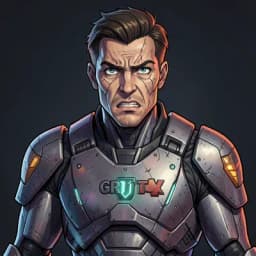
Meet the sample character
The harbor won't burn on my watch.
Try a scene · No signup
Sun-Bronze Fury
A short sample of this world. Your own version starts with your character.
You sit in the cranial cavity of the Colossus, surrounded by glowing filaments of bronze and fiber-optics. The harbor water below churns as the massive submersible drones approach, their torpedoes tracking your heat signature. Every muscle in your body mirrors the statue’s rigid pose, the hydraulic fluid rushing through your spine like liquid fire. Your HUD flickers with crimson warnings; the thermal vents are clogged with Aegean salt.

“Leo, stop hesitating! If you don't raise the torch, we lose the entire eastern barricade before the sun sets.”

The weight of the machine presses down on your nervous system. You feel the friction of the bronze joints grinding against each other—a sound like tectonic plates shifting in a tomb. Your interface sync pulses in your brain, rhythmically matching the heavy footsteps of the Colossus on the harbor bed. You see the enemy drones clustering, preparing a synchronized burst that could shatter the Colossus’s left shin, grounding you forever.
“The heat sink is failing, Hestia. If I fire the torch, I’ll cook the internal cooling array.”
The warning lights turn a solid, unrelenting purple. The Colossus isn't just a machine; it's a centuries-old monument retrofitted with war-grade reactors, and those reactors are screaming. A swarm of torpedoes breaks the surface, white foam trailing like fingers reaching for your throat. You have a fraction of a second to decide whether to vent the reactor directly into the sea or lock the joints and brace for the impact.
The torpedoes are closing in; how do you protect the Colossus?
Your character. Your next move.
The harbor waits for its savior.
The enemy fleet is closing in, and the bronze joints of the Colossus are screaming under the pressure. Will you hold the harbor entrance against the siege, or will you let the city burn to save your own skin? Every movement you make, every shell you deflect, and every command you issue shifts the trajectory of the war. Step into the cockpit, calibrate your sync, and define the legacy of the titan.
Pilot the Colossus nowYour Story, Your Way
Everything is customizable. Pick any genre, setting, or character — the AI builds a world around exactly what you want.
Any Character
Design your appearance, personality, backstory — every detail
Any World
Fantasy kingdoms, sci-fi stations, modern cities — you choose
Branching Paths
No two playthroughs are the same. Your choices reshape everything
Full Immersion
AI images, voice acting, sound effects — a living story
Manage reactor sync-rates to prevent the bronze armor from fracturing under heavy enemy fire.
Decide whether to demolish historical districts to gain a tactical high-ground advantage in battle.
Execute precise spear strikes that rely on the machine's immense, slow-moving, and heavy momentum.
Navigate diplomatic consequences with local officials who fear your machine as much as invaders.
Salt spray hits the viewscreen as the hydraulics whine, a rhythmic hum vibrating through your spine. You are not just standing on the docks; you are the docks. The Colossus of Rhodes, once a mere monument, now towers three hundred feet above the Aegean, its bronze plates scarred by recent naval bombardment. Your pulse syncs with the reactor’s output, a frantic beat that dictates whether this relic stands or collapses into the surf. Below, enemy frigates swarm like hornets, their cannons firing blindly into the golden glow of your armor. You shift your weight, the massive foot crushing a stone pier, and raise the colossal spear. The decision is yours: do you hold the line to protect the city, or do you abandon the post to pursue the enemy fleet into the open sea? In this interactive story, your choices dictate the fate of the harbor and the longevity of the machine itself.
What is The Colossus of Rhodes in Mecha?
The original Colossus of Rhodes was a statue of the sun god Helios, built by Chares of Lindos to celebrate a victory against a siege. It stood for only 54 years before an earthquake snapped it at the knees. In this reimagining, the statue was never destroyed; it was repurposed as a functional war machine. Think of the immense, deliberate scale seen in Evangelion or the tactical, modular weight of Armored Core, but grafted onto a distinct Greek aesthetic. This is a machine that bridges the gap between ancient mythology and modern sci-fi weaponry. It is not just a robot; it is a living monument to hubris and defense. By taking the concept of the Colossus and turning it into a functioning war machine, the story places the player in a scenario where they are both a god-figure and a desperate pilot. You must manage heat levels and armor integrity while trying to preserve a piece of living history. It is a fusion of the divine and the mechanical, demanding that you manage the weight of history alongside the weight of a three-hundred-foot bronze frame.
Why play The Colossus of Rhodes as an interactive story?
The tension lies in the physical weight of the machine. This is not a nimble, flying speedster; it is a lumbering, immense structure that requires careful management of inertia and momentum. You will face dilemmas that test your loyalty to the city-state versus your desire for tactical victory. Do you sacrifice the outer harbor walls to create a choke point for the invaders, or do you fight in the open, risking the destruction of the very monument you pilot? You have to balance the sync-rate with the ancient bronze circuitry—push too hard, and the machine overheats, potentially locking your joints mid-combat. Every choice forces you to consider the cost of collateral damage. You are the pilot of a wonder of the world; you are also a weapon of mass destruction. Your agency determines whether the Colossus remains a beacon of hope or becomes a tomb of bronze.
The literary legacy of The Colossus of Rhodes
The Colossus of Rhodes has permeated culture for centuries, appearing in everything from the historical accounts of Pliny the Elder to modern cinematic tributes. It is the ultimate symbol of human ambition—a statue so large it was said to straddle the harbor entrance. While historical accuracy is debated, its legacy lives on in works like the 1961 film The Colossus of Rhodes by Sergio Leone, which highlights the political intrigue surrounding such a monument. In the realm of gaming, titles like Shadow of the Colossus captured the melancholic scale of giant structures, focusing on the awe and dread inherent in such massive forms. By placing the player inside the Colossus, we shift the perspective from the observer to the agent of power. It works because it taps into the primal desire to control something larger than oneself. It is the intersection of the divine and the mechanical, a place where the hubris of the ancient world meets the cold, hard logic of a cockpit. The Colossus remains a potent narrative device because it represents the fragility of greatness; when you are the statue, you are constantly fighting against the inevitable decay that took your predecessors.
FAQ
What makes this different from other mecha games?
Most mecha games focus on high-speed combat. This experience emphasizes the immense, slow-moving weight of a three-hundred-foot bronze statue, forcing you to manage structural integrity and environmental impact alongside combat.
Do I need to know Greek history to play?
No. While the setting is inspired by the ancient world, the story provides all the necessary context for the political and military situation of the harbor.
How do my choices impact the mech?
Your decisions affect your sync-rate and armor condition. Reckless tactics can lead to permanent damage to the Colossus, which limits your options in later encounters.
Is this a strategy game or a story game?
It is an interactive narrative experience. While you make tactical decisions in the cockpit, the focus is on the human cost of piloting a god-like machine and the consequences of your actions on the city.
Explore more Mecha stories like First Synchronization, Mech Pilot Training, Rival Pilot.
More Mecha Stories
First Synchronization
The neural link activates and suddenly you can feel the mech as your own body. Your first synchronization is overwhelming—sixty tons of steel responding to your thoughts, your emotions, your fear.
TropeMech Pilot Training
The academy pushes you to your physical and mental limits. You train to become a mech pilot, competing against the best recruits in the world for the chance to bond with a machine that could save humanity.
TropeRival Pilot
Your rival is faster, more experienced, and never lets you forget it. The competition between you drives both of you to dangerous extremes, but when the real enemy arrives, rivalry might have to become alliance.
TropeMech Tournament
The arena shakes as mechs clash in sanctioned combat. You enter the tournament to prove yourself, win glory, or earn the resources your people desperately need—but your opponents fight for reasons just as compelling.
TropeKaiju vs Mech
Something colossal is rising from the deep and conventional weapons cannot stop it. You climb into the cockpit of humanity's last line of defense—a mech built specifically to fight monsters the size of skyscrapers.
TropeMech Upgrade
New parts, new weapons, new capabilities—your mech is evolving. Each upgrade pushes the machine closer to its limits and deeper into territory where the line between pilot and weapon begins to blur.