
Mecha · Interactive story
Pilot the Bronze Titan: Talos Reborn
The bronze skin groans, the gears scream; you are the god-machine of Crete.
Start as a guest. Choose your character before the story begins.
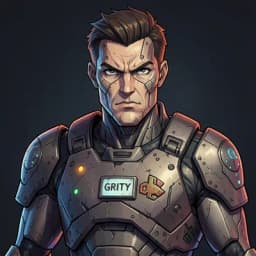
Meet the sample character
The ancient engine demands a pilot.
Try a scene · No signup
The Bronze Pulse
A short sample of this world. Your own version starts with your character.
You stand beneath the towering, oxidized heel of the entity they call Talos. The air smells of ozone and ancient brine, a sharp contrast to the stale recycled oxygen in your flight suit. Above, the hull of the salvage freighter groans under the strain of the crane, swaying precariously. You are the only pilot compatible with the archaic neural interface, but the machine is cold, silent, and heavier than any modern warframe.

“Listen, Iason, if you can't spark the core in the next sixty seconds, the pressure in the hull will crush us all. Stop hesitating and punch the sync.”

Sweat stings your eyes as you climb into the cockpit. The interior is not steel and polymer but etched, cold bronze that seems to absorb your body heat. You slide the interface leads into your spinal port. The machine shudders. You feel the massive, forgotten joints shifting deep within the earth, a rhythmic, grinding sound that resonates through your own marrow. Something is waking up, and it is hungry for a pilot.
“The feedback loop is too strong, Krios. If I force the link, I might burn out the neural array—or worse, lose myself to the machine's legacy.”
The bronze panels around the console begin to glow with a faint, pulsing amber light. A voice, ancient and discordant, vibrates through the very metal of the ship, echoing in your skull. The crane above snaps, sending a massive segment of rusted hull plummeting toward the excavation site. You have half a second to decide: do you push the sync to full capacity, brace for impact, or override the manual safeties to eject?
The hull is falling and the neural feedback is spikey. How do you handle the Talos interface?
Your character. Your next move.
Board the Colossus and command the bronze tide.
The coastal defenses are failing, and the bronze giant awaits a pilot. Will you be the one to master the ancient gears and decide the fate of the Aegean? Step into the cockpit and see if your mind can withstand the weight of a god-forged machine.
Sync with TalosYour Story, Your Way
Everything is customizable. Pick any genre, setting, or character — the AI builds a world around exactly what you want.
Any Character
Design your appearance, personality, backstory — every detail
Any World
Fantasy kingdoms, sci-fi stations, modern cities — you choose
Branching Paths
No two playthroughs are the same. Your choices reshape everything
Full Immersion
AI images, voice acting, sound effects — a living story
Calibrate neural synchronization to prevent the bronze plating from crushing your pilot’s seat.
Decide whether to fire the internal furnace to unleash a devastating thermal blast.
Choose your allegiance as the automaton’s original programming conflicts with modern strategic directives.
Repair damaged hydraulic veins mid-battle to keep the Colossus from locking up permanently.
The smell of ozone and heated copper fills the cockpit. Your neural link burns as it connects with the ancient, shifting brass of the Colossus. Outside the reinforced viewport, the Aegean Sea churns, waiting for your first step to shatter the shoreline. You are bonded to a relic of Hephaestus, a weapon forged before iron became common. Every neural impulse you send triggers a mechanical heartbeat in the giant’s chest. The choice is yours: will you defend the coast against the invading fleet, or will the weight of this bronze armor lead you to crush the very civilization you were built to protect? Your decisions define whether this automaton remains a guardian or becomes an unstoppable engine of ruin.
What is Talos (Greek Automaton) in Mecha?
In Greek mythology, Talos was a giant automaton made of bronze, tasked by Zeus to protect Europa and the island of Crete from invaders. He circled the island three times daily, hurling boulders at approaching ships. He is often cited as one of the earliest literary precursors to the modern robot or mech. You can see his influence in various media, most famously in the iconic 1963 film 'Jason and the Argonauts' where Ray Harryhausen’s stop-motion animation brought the bronze giant to terrifying life. Literary sources like the 'Argonautica' by Apollonius of Rhodes describe his singular weakness: a bronze nail plugging a vein in his ankle that held his life-force, or 'ichor,' inside. In a mecha context, Talos represents the ultimate fusion of ancient engineering and heavy-duty combat. Unlike sleek, modern mechs, Talos is bulky, relentless, and powered by archaic, mysterious internal mechanics that defy standard physics.
Why play Talos (Greek Automaton) as an interactive story?
Playing as the pilot of Talos forces you to contend with the friction between god-like power and fragile humanity. Because the machine was forged by a deity, it does not obey modern logic. You must manage the 'sync' between your own nervous system and the automaton’s ancient clockwork. If your focus wavers, the machine may succumb to its original, violent programming. You will face high-stakes tactical decisions: do you prioritize the preservation of the city, or do you conserve the limited ichor powering your joints? Every choice carries weight, literally and figuratively. You might choose to overload the internal furnace to incinerate a blockade, knowing the heat could melt the very bronze you rely on for protection. The tension lies in maintaining control over a weapon that is arguably more intelligent—and more dangerous—than the pilot inside it.
The literary legacy of Talos (Greek Automaton)
The legend of Talos has persisted for millennia because it touches on the fundamental human anxiety regarding artificial life. First appearing in the 'Argonautica' and various vase paintings from the 5th century BC, Talos was the prototype for the 'killer robot.' His evolution from a mythological guardian to a staple of science fiction highlights our obsession with creating life that can outlast us. In the 20th century, the concept of the 'bronze man' shifted from fantasy to the blueprint for the mecha genre. While 'Jason and the Argonauts' cemented his visual identity as a clunky, terrifying threat, later works like the 'Neon Genesis Evangelion' series draw subtle inspiration from the concept of a pilot being physically and spiritually bound to a giant machine. Even in the 'Gundam' franchise, the idea of the machine having a 'soul' or a history that influences its pilot echoes the original myth of the bronze giant. Talos works today because he is the grandfather of the mecha archetype. He represents the collision of the divine and the mechanical—a reminder that when we build something larger than ourselves, we must be prepared to answer for its actions. Whether viewed through the lens of ancient poetry or modern anime, the story of a man inside a machine that decides the fate of nations remains a powerful narrative hook.
FAQ
Is this Talos story based on historical Greek myth?
Yes. The narrative is rooted in the classical accounts of the bronze automaton from the 'Argonautica,' but it reimagines the setting to allow for modern pilot interaction and mechanical customization.
How does the sync-link mechanic work in the game?
The sync-link measures your mental alignment with the automaton. High sync allows for precise control, but too much can lead to the machine overriding your commands with its ancient, aggressive instincts.
Can I customize the bronze chassis of the Colossus?
You can modify internal components and reinforce external plating, but the core bronze chassis retains its mythological properties, which often dictate how the machine reacts to specific damage types.
What makes Talos different from other mechs?
Talos is not mass-produced technology. It is a singular, artifact-level weapon that operates on 'ichor' and divine clockwork rather than traditional fuel or batteries, leading to unique combat limitations and strengths.
Explore more Mecha stories like First Synchronization, Mech Pilot Training, Rival Pilot.
More Mecha Stories
First Synchronization
The neural link activates and suddenly you can feel the mech as your own body. Your first synchronization is overwhelming—sixty tons of steel responding to your thoughts, your emotions, your fear.
TropeMech Pilot Training
The academy pushes you to your physical and mental limits. You train to become a mech pilot, competing against the best recruits in the world for the chance to bond with a machine that could save humanity.
TropeRival Pilot
Your rival is faster, more experienced, and never lets you forget it. The competition between you drives both of you to dangerous extremes, but when the real enemy arrives, rivalry might have to become alliance.
TropeMech Tournament
The arena shakes as mechs clash in sanctioned combat. You enter the tournament to prove yourself, win glory, or earn the resources your people desperately need—but your opponents fight for reasons just as compelling.
TropeKaiju vs Mech
Something colossal is rising from the deep and conventional weapons cannot stop it. You climb into the cockpit of humanity's last line of defense—a mech built specifically to fight monsters the size of skyscrapers.
TropeMech Upgrade
New parts, new weapons, new capabilities—your mech is evolving. Each upgrade pushes the machine closer to its limits and deeper into territory where the line between pilot and weapon begins to blur.