
Mecha · Interactive story
Command from the Void: The Orbital Mech Station
The atmosphere is thin, the drop is lethal, and the machine is your only lifeline.
Start as a guest. Choose your character before the story begins.
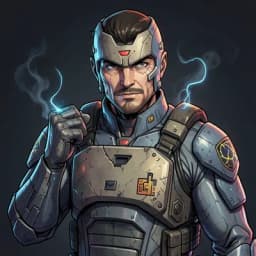
Meet the sample character
The atmosphere burns, and so will you.
Try a scene · No signup
Iron Rain Over Sector 4
A short sample of this world. Your own version starts with your character.
You float in the gel-tank, neural needles pricking the base of your skull. Above you, the launch bay doors iris open, revealing the swirling orange clouds of the planet waiting to be incinerated. Your mech, the Cinder-09, pulses with a low-frequency thrum that rattles your teeth, sync-locked and hungry.

“Jiro, the sync-monitor is spiking red again. If you push the pressure any higher, your brain will cook before you even hit the stratosphere.”

You tighten your grip on the control sticks, feeling the cold steel of the machine merge with your own nervous system. Outside, the debris field of a destroyed cruiser drifts past, metallic shrapnel flickering like dying stars. The countdown clock on your HUD hits thirty seconds, and your internal temperature is already redlining.
“Let it spike, Hoshi. If I don't hit the target before the atmospheric stabilizers engage, we are both dead anyway.”
The gravity-tether snaps, and the Cinder-09 jerks forward into the void. You are falling now, gravity clutching at your chassis, while your onboard AI screams that the structural integrity of your left arm is failing. The ground looms, a mosaic of smoke and fire, and you have seconds to decide how to break your descent.
The atmosphere is tearing at your armor plates. How do you approach the drop?
Your character. Your next move.
Prep your thrusters. The drop is waiting.
The hangar bay doors are opening, and your squad is already initiating their descent. Will you drop into the heart of the city to secure the bridge, or take the high ground on the ridge? Your choice dictates the survival of your unit. Strap into the cockpit and make the call before the window closes.
Launch your mech nowYour Story, Your Way
Everything is customizable. Pick any genre, setting, or character — the AI builds a world around exactly what you want.
Any Character
Design your appearance, personality, backstory — every detail
Any World
Fantasy kingdoms, sci-fi stations, modern cities — you choose
Branching Paths
No two playthroughs are the same. Your choices reshape everything
Full Immersion
AI images, voice acting, sound effects — a living story
Calibrate atmospheric reentry thrusters to survive the scorching heat of the descent.
Choose between stealth deployment or a shock-and-awe drop into the enemy frontlines.
Manage limited orbital supplies while deciding which squad members get priority repairs.
Execute mid-air maneuvers to dodge anti-aircraft fire while still in freefall.
The hum of cooling fans is the only sound in the hangar. Above you, the station’s artificial gravity plates flicker, a reminder that you are suspended in the vacuum of space. You lock your neural link into the chassis of the Vanguard-7, the metal groaning as it accepts your presence. Below, the planet glows with the fires of a conflict that has been raging for months. A green light blinks on your HUD—the launch sequence is ready. You choose whether to initiate the thrusters now or wait for the tactical window to open, knowing that a single miscalculation sends you burning up in the atmosphere before you even see the enemy. Your decisions define whether you land as a savior or a pile of scrap metal.
What is Orbital Mech Station in Mecha?
An orbital mech station is the staging ground for high-stakes planetary assault. It functions as a fortress, a repair bay, and a launch catapult, sitting in a geosynchronous orbit that allows for rapid deployment to any location on the surface. Unlike land-based hangers, these stations force pilots to confront the absolute isolation of space. Think of the Gundam series or the tense, claustrophobic atmosphere found in Mobile Suit Gundam: The 08th MS Team. In these settings, the station acts as the bridge between humanity's reach into the stars and the brutal, boots-on-the-ground reality of mecha warfare. It is where the transition from human to pilot happens—a place where you are stripped of your civilian identity and replaced by a machine-integrated soldier. These stations represent the peak of technological hubris, offering a vantage point that turns a war into a map of targets, yet leaving the pilot vulnerable to the sheer physics of the drop.
Why play Orbital Mech Station as an interactive story?
Playing on an orbital station means managing the transition from zero-G silence to the roar of reentry. You are not just driving a robot; you are managing a complex weapon system that must survive the intense thermal stress of falling from orbit. You will face choices that dictate your mech’s configuration: do you prioritize heat shielding for a fast drop, or heavy armor plating for a sustained ground assault? During the descent, you have to decide whether to engage enemy interceptors or focus on your landing trajectory, knowing that a poorly timed burn leaves you stranded in hostile territory. The agency provided by this setting adds weight to every decision—when you are hundreds of miles above the target, your tactical intuition is the only thing keeping your squad alive.
What makes Orbital Mech Station work: the worldbuilding
The orbital station setting thrives on the contrast between the sterile, cold environment of space and the chaotic, visceral nature of planetary combat. It creates a natural pressure cooker. You deal with the logistics of supply lines, the psychological toll of watching the war from above, and the extreme physical demand of high-G maneuvers. This setting excels in works like Armored Core or the classic Macross series, where the station is a character in its own right—a place of repair and reflection. It forces the pilot to be a strategist, not just a trigger-puller. The sensory details are key: the smell of ozone, the vibration of the docking clamps, the flickering lights of the HUD, and the absolute silence of the void outside the reinforced glass. By focusing on the station, the narrative highlights the disconnect between the commanders who plan the war and the pilots who experience the fire. This is a setting for stories about isolation, the dehumanizing effect of advanced weaponry, and the desperate need for connection when you are thousands of miles from the ground you are fighting to save.
FAQ
What is the primary challenge of an orbital drop?
The primary challenge is managing thermal stress and trajectory. Your mech is essentially a falling bomb; if your heat shielding fails or your thrusters don't fire at the precise second, you will disintegrate in the upper atmosphere.
How does the station setting change the gameplay?
It shifts the focus from simple combat to resource management and tactical planning. You must account for your loadout weight, fuel consumption, and the specific landing zone conditions before you even leave the hangar.
Is this setting suitable for new players?
Yes. It provides a clear, structured start to the story. You begin in the safety of the station, which allows you to learn your machine and your squad dynamics before the high-pressure combat begins.
Can I customize my mech on the station?
Absolutely. The hangar is the central hub where you swap out weapons, armor, and thruster systems based on the mission parameters you receive from command.
Explore more Mecha stories like First Synchronization, Mech Pilot Training, Rival Pilot.
More Mecha Stories
First Synchronization
The neural link activates and suddenly you can feel the mech as your own body. Your first synchronization is overwhelming—sixty tons of steel responding to your thoughts, your emotions, your fear.
TropeMech Pilot Training
The academy pushes you to your physical and mental limits. You train to become a mech pilot, competing against the best recruits in the world for the chance to bond with a machine that could save humanity.
TropeRival Pilot
Your rival is faster, more experienced, and never lets you forget it. The competition between you drives both of you to dangerous extremes, but when the real enemy arrives, rivalry might have to become alliance.
TropeMech Tournament
The arena shakes as mechs clash in sanctioned combat. You enter the tournament to prove yourself, win glory, or earn the resources your people desperately need—but your opponents fight for reasons just as compelling.
TropeKaiju vs Mech
Something colossal is rising from the deep and conventional weapons cannot stop it. You climb into the cockpit of humanity's last line of defense—a mech built specifically to fight monsters the size of skyscrapers.
TropeMech Upgrade
New parts, new weapons, new capabilities—your mech is evolving. Each upgrade pushes the machine closer to its limits and deeper into territory where the line between pilot and weapon begins to blur.