
Mecha · Interactive story
Silence Before the Strike: Life in the Mech Hangar
The smell of ozone and hydraulic fluid is the only home you have left.
Start as a guest. Choose your character before the story begins.

Meet the sample character
The machine remembers what you try to forget.
Try a scene · No signup
Neural Feedback Loop
A short sample of this world. Your own version starts with your character.
The sharp tang of ozone and burning hydraulic fluid fills your helmet. You sit locked inside the cockpit of the 'Iron Sentinel', staring at the flickering diagnostic display. The hangar floor vibrates as the heavy lift engages, dragging your massive frame upward toward the launch tube while the station groans under incoming heavy artillery fire.

“Sync-rate is dipping, Tanaka. If you don't stabilize the neural feedback loop, you'll be a vegetable before you even hit the atmosphere.”
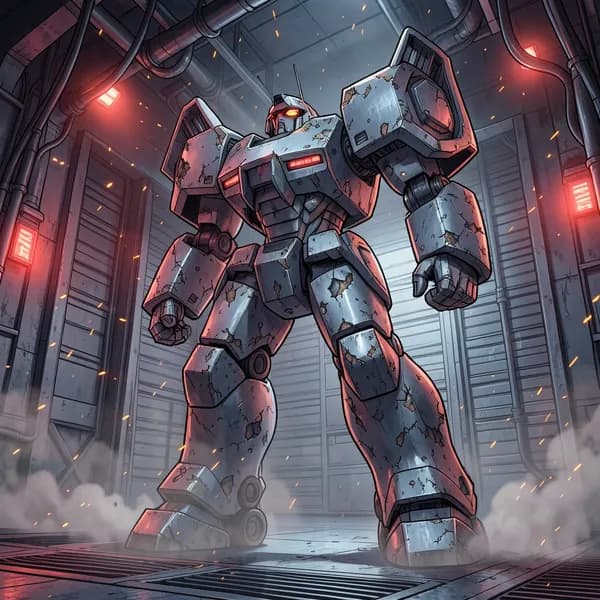
Your hands tremble against the control sticks. Pressure builds behind your eyes, a searing reminder that your nervous system is hardwired into the machine's cooling system. Outside the pressurized hangar bay, the red alarm lights pulse in a frantic rhythm, illuminating the dark, dented armor of your unit.
“The feedback isn't the machine's fault, Vora. It's the ghost in the code. I'm forcing the manual override.”
You slam the engagement switch. The Sentinel’s massive hydraulic pistons groan in protest, showering the bay with sparks as the shoulder actuators lock into combat position. If you push the synchronization any harder, your synapses might incinerate, but you have no other way to bypass the corrupted targeting software before the drop zone turns into a graveyard.
The targeting lock is locked in a corrupted cycle. How do you handle the launch?
Your character. Your next move.
Prep your machine for the final drop.
The enemy fleet is breaching the perimeter. Your mech is docked, but the cooling systems are offline and the ammunition feed is jammed. You have one chance to bypass the safety protocols before the hangar doors blow. Will you risk a total reactor failure for a shot at victory, or will you play it safe and face the infantry with a crippled machine? Strap in. The choice is yours.
Launch your mech nowYour Story, Your Way
Everything is customizable. Pick any genre, setting, or character — the AI builds a world around exactly what you want.
Any Character
Design your appearance, personality, backstory — every detail
Any World
Fantasy kingdoms, sci-fi stations, modern cities — you choose
Branching Paths
No two playthroughs are the same. Your choices reshape everything
Full Immersion
AI images, voice acting, sound effects — a living story
Calibrate the neural sync interface to optimize your reaction time against agile enemy scouts.
Choose between heavy armor plating or increased thruster capacity for your upcoming assault mission.
Repair critical structural damage while the enemy fleet closes in on the orbital gate.
Debrief with the hangar crew to uncover intelligence about the opposing pilot’s tactics.
The floor vibrates under your boots, a rhythmic thrumming from the fusion core of the unit designated Ironclad-04. Sparks shower from a welder’s torch three levels up, drifting down like dying embers onto the scarred concrete. You stand in the shadow of a thirty-foot steel titan, checking the neural link feedback loops for the third time this hour. Outside these reinforced blast doors, the planetary defense grid is crumbling, but here, in the dim, flickering fluorescent light, you have a moment to calibrate your nerves. In this interactive story, the decisions you make while prepping your frame dictate whether you launch into a tactical advantage or a death trap. Every valve tightened and every software patch installed shifts the probability of your survival when the alarms finally scream.
What is Mech Hangar in Mecha?
The hangar acts as the quiet eye of the storm in any mecha narrative. It is the transition point between the safety of the base and the chaos of the front line. In series like Neon Genesis Evangelion, the hangar is a clinical, high-pressure environment where technicians and pilots intersect, revealing the fragility of the machines they rely on. It is where the weight of the war becomes physical—the sheer scale of the plating, the hiss of pneumatic actuators, and the claustrophobia of the cockpit. Whether it is the grimy, industrial bays of Armored Core or the sleek, high-tech docks seen in Gundam, this setting emphasizes the dependency between pilot and machine. It is a place of maintenance, both mechanical and psychological, where the pilot must reconcile their humanity with the cold, unyielding metal they are about to inhabit.
Why play Mech Hangar as an interactive story?
Playing in the hangar forces you to manage resources and tensions before the first shot is fired. You are not just selecting a loadout; you are deciding how much of your own neural bandwidth to sacrifice for combat speed. Do you push the reactor past safety limits, knowing it might overheat during the firefight? Do you listen to the chief mechanic’s warnings about the brittle alloy in the left actuator, or do you gamble on your own reflexes to compensate? These choices carry weight because they manifest in the heat of battle. A poorly maintained cooling system might mean your weapons lock up when you need them most, while a rushed calibration could leave your targeting sensors jittery. The tension comes from knowing that the hangar is your final window for control. Once the launch sequence initiates, the machine takes over, and your previous decisions—the ones you made while surrounded by the smell of grease and stale coffee—become your only lifeline.
What makes Mech Hangar work: the worldbuilding
The hangar is the crucible of the mecha genre. It is where the human element is revealed alongside the raw necessity of the machine. In Pacific Rim, the hangar scenes highlight the sheer labor required to keep these giants upright, turning the machine into a character of its own. The conflict here is internal: the fear of the machine failing, the pressure to be perfect, and the isolation of the pilot. The sensory landscape is defined by the contrast between cold steel and human sweat. Characters who belong here are the obsessive mechanics, the weary veterans, and the fresh pilots terrified of their first drop. To make this setting work, you must emphasize the scale. The machine should feel heavy, dangerous, and slightly alien. When you look up at the cockpit hatch, it should look like the entrance to a tomb or a temple. Works like Battletech excel at this, treating the mech as a legacy asset that needs constant care. The hangar allows for intimate character moments—a hushed conversation between a pilot and their crew chief can be more tense than a dogfight because it reveals the stakes of the mission. When the lights dim and the hangar bay doors begin to cycle open, the transition from the mundane to the lethal is where the story truly breathes.
FAQ
What makes the Mech Hangar a critical setting?
It serves as the final preparation phase before combat. In this setting, you define your mech's capabilities and your pilot's mental state. Choices made here directly influence the success or failure of your upcoming sorties.
How does the AI handle mech maintenance choices?
The AI tracks the integrity of your machine based on your actions. If you neglect repairs in the hangar, you will face mechanical malfunctions or reduced mobility during battle sequences.
Can I interact with the crew in the hangar?
Yes. You can engage with technicians, engineers, and rival pilots. These interactions provide critical lore, mission intel, and potential upgrades for your mech.
Is the hangar setting suitable for beginners?
Absolutely. It provides a controlled environment to learn the mechanics of the game and the nuances of your specific mech unit before the story ramps up the combat difficulty.
Explore more Mecha stories like First Synchronization, Mech Pilot Training, Rival Pilot.
More Mecha Stories
First Synchronization
The neural link activates and suddenly you can feel the mech as your own body. Your first synchronization is overwhelming—sixty tons of steel responding to your thoughts, your emotions, your fear.
TropeMech Pilot Training
The academy pushes you to your physical and mental limits. You train to become a mech pilot, competing against the best recruits in the world for the chance to bond with a machine that could save humanity.
TropeRival Pilot
Your rival is faster, more experienced, and never lets you forget it. The competition between you drives both of you to dangerous extremes, but when the real enemy arrives, rivalry might have to become alliance.
TropeMech Tournament
The arena shakes as mechs clash in sanctioned combat. You enter the tournament to prove yourself, win glory, or earn the resources your people desperately need—but your opponents fight for reasons just as compelling.
TropeKaiju vs Mech
Something colossal is rising from the deep and conventional weapons cannot stop it. You climb into the cockpit of humanity's last line of defense—a mech built specifically to fight monsters the size of skyscrapers.
TropeMech Upgrade
New parts, new weapons, new capabilities—your mech is evolving. Each upgrade pushes the machine closer to its limits and deeper into territory where the line between pilot and weapon begins to blur.