
Mecha · Interactive story
Tactical Command: The Weight of the Bridge
Your orders decide the survival of the squadron. Every second counts in the bridge.
Start as a guest. Choose your character before the story begins.
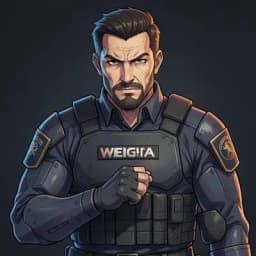
Meet the sample character
The bridge is silent, but the hull is screaming.
Try a scene · No signup
Iron Pulse
A short sample of this world. Your own version starts with your character.
The main tactical display flickers, painting your face in a harsh, pulsing violet. Outside the observation glass, the debris field of Mars shifts as enemy mechs break formation, their thrusters igniting like dying stars. You grip the railing of the command bridge, knuckles white, as the sound of hull-plating groaning under gravitational stress vibrates through the deck plates beneath your boots.

“Commander, the heat sinks on the vanguard units are pinned at critical. If we don't order an emergency vent now, the pilots will cook inside their cockpits before the next wave arrives.”
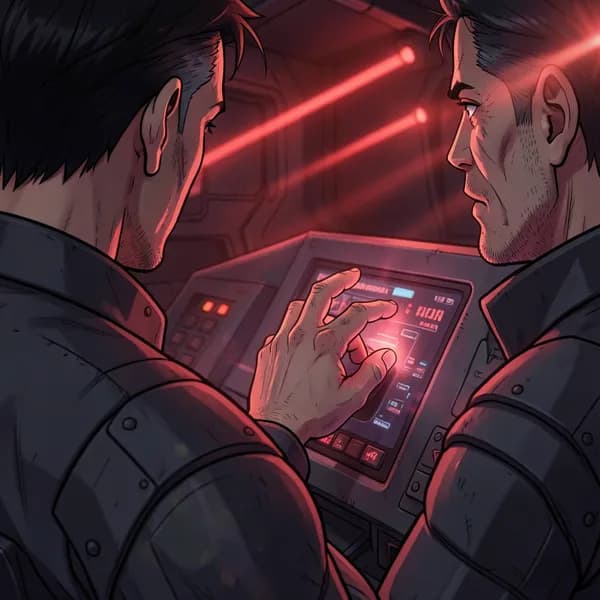
You watch the icons on the screen—your pilots, your responsibility. Their vitals are spiking, erratic bursts of bio-feedback sync-data racing across your monitor. The enemy swarm is closing the gap, and venting the heat will leave your front line blind for ten seconds. Ten seconds is a lifetime in a dogfight, and yet, the alternatives are grim.
“Hold their positions. I need that perimeter anchored, no matter the internal temperature.”
A proximity alarm shrieks. An enemy heavy-class unit has bypassed the outer perimeter, its proximity mine lock-on tone rising to a piercing whine. You have mere milliseconds to commit to a command that will either save your vanguard or sacrifice the bridge to a direct kinetic impact. The console waits for your input, pulsing like a dying heart.
The enemy heavy-class unit is locking on. How do you respond to the breach?
Your character. Your next move.
Direct the fleet and secure the future.
The enemy fleet is closing in, and your tactical display is flashing red. Every second you hesitate, your pilots lose ground. Will you commit your reserves to an all-out assault, or hold the line and pray for reinforcements? The choice is yours, but the consequences are permanent. Step onto the bridge, take the helm, and prove you have the resolve to lead humanity through this fire.
Assume Command NowYour Story, Your Way
Everything is customizable. Pick any genre, setting, or character — the AI builds a world around exactly what you want.
Any Character
Design your appearance, personality, backstory — every detail
Any World
Fantasy kingdoms, sci-fi stations, modern cities — you choose
Branching Paths
No two playthroughs are the same. Your choices reshape everything
Full Immersion
AI images, voice acting, sound effects — a living story
Manage resource allocation to keep mech armor repaired during intense, multi-stage orbital bombardment.
Issue tactical commands that override pilot instincts during high-stakes extraction missions.
Interpret conflicting sensor data to identify the true enemy flagship in the chaos.
Decide which pilot squadron receives critical ammo drops when logistics lines fail.
Static hisses over the comms-link. The tactical display glows red, showing four friendly signals blinking out one by one in the dense fog of Sector 4. You stand at the center of the command bridge, the cold steel of the console beneath your fingertips. Outside, massive bipedal machines trade fire, their hydraulic roars muffled by the reinforced glass. A pilot’s voice breaks through the interference, begging for extraction, but your fuel reserves are critical. You have to decide: do you authorize a risky long-range jump to save them, or do you leave the squad to preserve the main line? Every choice you make echoes through the hull of your ship, shifting the tide of a war that humanity is barely winning. This is an interactive story where your tactical decisions dictate the survival of your fleet.
What is Command Bridge in Mecha?
The command bridge is the nerve center of any mecha operation. Unlike the cockpit, which focuses on the visceral, one-on-one combat of a single pilot, the bridge is about the macro-scale drama of war. It is where you oversee the entire theater of conflict, monitoring heat signatures, ammunition counts, and structural integrity for dozens of units simultaneously. Think of the bridge sequences in Mobile Suit Gundam or the tactical depth found in Into the Breach. You aren't just firing weapons; you are managing a logistics nightmare while the enemy closes in. In these stories, the bridge is the place where cold logic clashes with human empathy. You are the person who has to tell a pilot their objective has changed, even if it means sending them into a suicide run to protect the fleet. It is a setting defined by high-pressure decision-making, where the information you receive is often incomplete, and the consequences of your orders are immediate. The bridge is where the war is won or lost before a single shot is fired.
Why play Command Bridge as an interactive story?
Playing from the bridge changes the focus from reflexes to strategy. You aren't worried about hitting a button to fire a cannon; you are worried about whether your squad has enough energy to sustain their shields for another three minutes. You will face dilemmas like choosing which sector to reinforce when two fronts collapse at once, or deciding whether to trust the data from a faulty sensor array that claims an enemy ambush is incoming. Agency here means accepting the fallout of your strategic gambles. If you misjudge the enemy’s maneuverability, you will watch the results on the monitor in real-time as your units are forced to retreat or worse. The tension comes from the delay between your command and its execution—the agonizing seconds where you wait to see if your plan holds together or falls apart.
What makes Command Bridge work: the worldbuilding
The command bridge setting excels at creating a sense of inevitability and scale. It thrives on the contrast between the calm, sterile environment of the bridge and the chaotic, violent nature of the battlefield it controls. The best stories in this genre, such as the tactical deployments in Legend of the Galactic Heroes or the desperate defense of The Super Dimension Fortress Macross, emphasize that the person on the bridge is just as much a target as the pilot in the machine. Sensory details are crucial here: the rhythmic thrum of the engine, the blinking amber lights of a warning system, the smell of ozone, and the constant stream of reports from subordinates. You need to capture the feeling of the fog of war. Characters in this setting often struggle with the distance between their comfortable command chair and the muddy, bloody reality their pilots face. Conflicts arise when pilots disagree with your orders, or when the ship’s AI provides a recommendation that feels morally wrong. By forcing players to interact with these systems—managing the bridge’s power grid while simultaneously dictating fleet movements—you create a layer of complexity that feels authentic to the genre. The bridge isn't just a room; it is a crucible where personality traits are tested under the pressure of annihilation. The environment itself becomes an antagonist, forcing you to maintain order while the hull buckles under enemy fire.
FAQ
Can I command different types of mechs?
Yes, you manage a diverse fleet ranging from light recon units to heavy siege walkers, each with unique tactical roles that you must coordinate.
Does the bridge setting involve direct combat?
While you are not in the cockpit, the bridge is often a primary target for enemy strikes, leading to bridge-level crises that threaten your command capabilities.
Can my decisions lead to losing the war?
Absolutely. Poor resource management or failed tactical calls can lead to total fleet destruction and a permanent shift in the war's outcome.
What is the primary difference between cockpit and bridge gameplay?
Cockpit play centers on individual reaction and physical sync with the machine, while the bridge focuses on fleet-wide strategy, logistics, and multi-unit coordination.
Explore more Mecha stories like First Synchronization, Mech Pilot Training, Rival Pilot.
More Mecha Stories
First Synchronization
The neural link activates and suddenly you can feel the mech as your own body. Your first synchronization is overwhelming—sixty tons of steel responding to your thoughts, your emotions, your fear.
TropeMech Pilot Training
The academy pushes you to your physical and mental limits. You train to become a mech pilot, competing against the best recruits in the world for the chance to bond with a machine that could save humanity.
TropeRival Pilot
Your rival is faster, more experienced, and never lets you forget it. The competition between you drives both of you to dangerous extremes, but when the real enemy arrives, rivalry might have to become alliance.
TropeMech Tournament
The arena shakes as mechs clash in sanctioned combat. You enter the tournament to prove yourself, win glory, or earn the resources your people desperately need—but your opponents fight for reasons just as compelling.
TropeKaiju vs Mech
Something colossal is rising from the deep and conventional weapons cannot stop it. You climb into the cockpit of humanity's last line of defense—a mech built specifically to fight monsters the size of skyscrapers.
TropeMech Upgrade
New parts, new weapons, new capabilities—your mech is evolving. Each upgrade pushes the machine closer to its limits and deeper into territory where the line between pilot and weapon begins to blur.