
Mecha · Interactive story
One Against the Swarm: The Prototype Pilot
One experimental frame. A thousand mass-produced machines. Can you survive the scrap heap?
Start as a guest. Choose your character before the story begins.
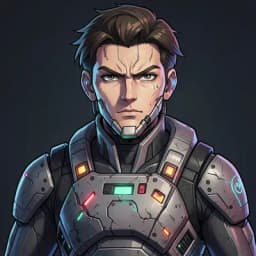
Meet the sample character
One machine against a thousand gears.
Try a scene · No signup
Signal Loss at Sector 4
A short sample of this world. Your own version starts with your character.
You are strapped into the Valkyrie-Zero, a prototype frame that hums with unstable, pressurized energy. Outside the reinforced viewport, the horizon darkens with the silhouettes of fifty Mantis-class drones. They are cheap, disposable, and move with a cold, calculated precision that makes your pulse spike in the cockpit.

“Sato, get out of there! Your sync rate is peaking, and that frame hasn't been stress-tested for a full-scale assault.”

The heat in the cockpit surges, the smell of burning coolant filling your lungs. Your fingers dance across the haptic triggers as the first wave of mass-produced units lock their targeting lasers onto your chassis. They move in perfect, synchronized unison, a swarm of steel needles designed to break your spirit.
“The Mantis drones don't have a heartbeat, Hideo. I do. Let them come.”
A tremor rocks the ground, and your HUD flickers a violent red—the reactor is reaching critical capacity. You have mere seconds before the drones breach the perimeter. You can force an explosive overcharge, brace for a desperate kinetic defense, or attempt a risky hack into their swarm network.
The drones are closing in. How will you utilize the prototype's unique capabilities to survive the incoming wave?
Your character. Your next move.
The swarm is closing in. Sync up.
Your prototype is the only thing keeping the line from breaking. Do you push the reactor to critical levels to break their formation, or do you play it safe and risk being overwhelmed by the incoming waves? Your choices in the cockpit decide if you survive the night.
Pilot your prototype nowYour Story, Your Way
Everything is customizable. Pick any genre, setting, or character — the AI builds a world around exactly what you want.
Any Character
Design your appearance, personality, backstory — every detail
Any World
Fantasy kingdoms, sci-fi stations, modern cities — you choose
Branching Paths
No two playthroughs are the same. Your choices reshape everything
Full Immersion
AI images, voice acting, sound effects — a living story
Overclock your reactor to bypass safety limits, risking catastrophic failure for temporary tactical superiority.
Manage limited field repairs for a unique frame that has no compatible spare parts.
Choose between aggressive offensive maneuvers or defensive positioning to protect vulnerable civilian extraction zones.
Sync your nervous system with the prototype, pushing physical limits as the machine begins to overheat.
The cockpit reeks of ozone and cooling fluid. Your hands tremble against the haptic controls—the experimental X-42 doesn't like being pushed, but the sensors scream that three dozen mass-produced units are cresting the horizon. They move in perfect, chilling synchronization, a grey tide of cold, stamped steel. You are the only thing standing between the colony and total annihilation. Your machine is a temperamental beast, prone to overheating and erratic power spikes, but it possesses raw output that no standard unit can match. Every choice you make, from overclocking the plasma core to venting heat at the last second, ripples through the heat of the battle. You are not a soldier in a formation; you are an anomaly in a war defined by rigid uniformity. In this interactive story, your tactical decisions dictate whether you become a legend or scrap metal.
What is Mass-Produced vs Prototype in Mecha?
The Mass-Produced vs Prototype trope defines the tension between industrial efficiency and individual genius. In this narrative structure, the protagonist pilots a unique, often unstable machine—the prototype—while facing an overwhelming force of standardized, mass-produced units. The prototype is usually faster, stronger, and more technologically advanced, but it requires a pilot with exceptional skill and high synchronization rates to operate effectively. Conversely, the mass-produced units represent the crushing weight of institutional power. They are predictable, easily replaced, and deadly in numbers. A classic example is the original Mobile Suit Gundam, where Amuro Ray’s RX-78-2 Gundam operates as a singular, game-changing asset against the ubiquitous Zaku II units. While the Zaku represents the logistical might of the Zeon army, the Gundam represents a technological leap that forces the pilot to adapt constantly. This trope highlights the fragility of the hero; unlike the mass-produced pilot who can be replaced, the prototype pilot is the only one who can handle the machine's quirks, making every error potentially fatal.
Why play Mass-Produced vs Prototype as an interactive story?
Playing this scenario puts the weight of the machine directly in your hands. Agency changes the way you view the trope; you aren't just watching a hero defy the odds, you are the one deciding if the risk of a reactor meltdown is worth the extra firepower needed to clear a path. You will face moments where the prototype's instability forces a choice: stabilize the frame and take damage, or push the limits and risk an explosion. Do you sacrifice your shield generator to boost your thrusters for a flanking maneuver? Do you trust the experimental targeting AI, or do you take manual control when the machine begins to glitch? The tension comes from knowing your machine is the only one of its kind. If you lose an arm or damage a thruster, there are no spare parts on the battlefield. You must manage your resources, monitor your synchronization level, and decide when to play it safe and when to gamble everything on a single, high-output volley.
Famous examples of Mass-Produced vs Prototype in books, film, and games
This trope is a cornerstone of the mecha genre because it creates an immediate power dynamic. In Neon Genesis Evangelion, the contrast between the highly unique, soul-linked Evangelion units and the terrifying, hive-minded Mass Production Evas showcases how the trope can shift from a hero-versus-army dynamic to a survival-horror scenario. The prototype represents the pilot's own psyche, while the mass-produced units represent an impersonal, encroaching void. In the Armored Core series, the player often begins as an independent mercenary piloting a custom-built, unique AC. You frequently take on missions where you are outnumbered by standard-issue MTs (Mass-produced Tanks/Mechs). The difference is in the depth of the build; your machine is a reflection of your specific combat philosophy, while the enemy units are specialized for narrow roles. Another example is found in the manga Full Metal Panic!, where the ARX-7 Arbalest acts as the sole prototype capable of utilizing the Lambda Driver. The protagonist, Sousuke Sagara, must rely on the machine's erratic nature to combat superior numbers of mass-produced units. What makes this trope endure is the focus on the pilot's relationship with their machine. It turns the mecha from a simple vehicle into a partner, making the loss of a limb or a structural failure feel like a personal injury rather than just a decrease in hit points.
FAQ
What makes a prototype mech different from a mass-produced one?
A prototype is a one-of-a-kind machine built to test new, often unstable technology. It offers superior performance but lacks the reliability and repairability of mass-produced units. Mass-produced mechs are designed for ease of manufacture, standardized maintenance, and swarm tactics, making them a threat through sheer numbers rather than individual power.
How does pilot synchronization affect the story?
In these stories, synchronization represents your mental and physical connection to the mech. Higher sync levels allow you to perform impossible maneuvers and react faster than the machine's base sensors, but they also increase the strain on your body. Pushing this sync too high can lead to sensory overload or permanent damage.
Is this interactive story focused on tactics or reflexes?
It is a blend of both. You must manage your mech's heat, ammunition, and structural integrity while making split-second decisions during combat. Your choices—such as whether to engage the entire enemy formation or target their commander—are just as important as your ability to pilot the machine during high-intensity sequences.
Can I upgrade my prototype during the story?
Yes, but upgrades come with risks. Because your machine is experimental, you often have to scavenge parts or modify existing systems in ways they were never intended to be used. Every upgrade changes how your mech handles, potentially introducing new bugs or stability issues that you will have to manage in later battles.
Explore more Mecha stories like First Synchronization, Mech Pilot Training, Rival Pilot.
More Mecha Stories
First Synchronization
The neural link activates and suddenly you can feel the mech as your own body. Your first synchronization is overwhelming—sixty tons of steel responding to your thoughts, your emotions, your fear.
TropeMech Pilot Training
The academy pushes you to your physical and mental limits. You train to become a mech pilot, competing against the best recruits in the world for the chance to bond with a machine that could save humanity.
TropeRival Pilot
Your rival is faster, more experienced, and never lets you forget it. The competition between you drives both of you to dangerous extremes, but when the real enemy arrives, rivalry might have to become alliance.
TropeMech Tournament
The arena shakes as mechs clash in sanctioned combat. You enter the tournament to prove yourself, win glory, or earn the resources your people desperately need—but your opponents fight for reasons just as compelling.
TropeKaiju vs Mech
Something colossal is rising from the deep and conventional weapons cannot stop it. You climb into the cockpit of humanity's last line of defense—a mech built specifically to fight monsters the size of skyscrapers.
TropeMech Upgrade
New parts, new weapons, new capabilities—your mech is evolving. Each upgrade pushes the machine closer to its limits and deeper into territory where the line between pilot and weapon begins to blur.