
Mecha · Interactive story
The Maintenance Bay: Where Pilots and Titans Collide
The smell of ozone and hydraulic fluid is the only home you have left.
Start as a guest. Choose your character before the story begins.
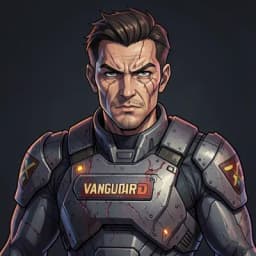
Meet the sample character
The machine remembers what you try to forget.
Try a scene · No signup
Sync-Lock: Fracture Point
A short sample of this world. Your own version starts with your character.
Ozone stings your nostrils, cutting through the heavy smell of hydraulic fluid. You stand on the grated catwalk, staring down at the exposed guts of your Vanguard unit. Its chest plating is jagged, peeled back like a rusted wound. The technicians work with frantic precision, but the deep purple scarring on the neural interface cable tells you the truth: the machine’s nervous system is failing.

“If we force a re-calibration now, Kenji, the feedback loop will scramble your synapses before you even clear the hangar bay.”

You flex your fingers, watching the tremor that won't stop. The phantom sensation of the Vanguard’s left arm being crushed—even though you were physically miles away during the ambush—clings to your marrow. Your neural shunt itches, a warning fire burning at the base of your skull. You need to get back in the fight, but the cost is etched into your own grey matter.
“I don't need a perfect sync, Mako. I just need enough connection to keep the servos moving long enough to hit the extraction point.”
Mako slams a heavy wrench against the bulkhead, the sound echoing like a gunshot through the cavernous bay. The base alarms are already screaming for a scramble, and the enemy fleet is painting the horizon with incoming fire. You have seconds to decide whether to risk your sanity for a chance at survival or let the machine die, leaving you grounded while your squad faces total annihilation.
How do you command the technicians to stabilize your failing Vanguard?
Your character. Your next move.
Will your titan stand or fall?
The hangar alarms are blaring, signaling another incoming wave. Your reactor is leaking, and the neural interface is redlining. Every choice you make in the minutes before the drop determines your survival in the field. Pick up the welder, override the safety protocols, and prepare for the drop. Your machine is waiting.
Enter the HangarYour Story, Your Way
Everything is customizable. Pick any genre, setting, or character — the AI builds a world around exactly what you want.
Any Character
Design your appearance, personality, backstory — every detail
Any World
Fantasy kingdoms, sci-fi stations, modern cities — you choose
Branching Paths
No two playthroughs are the same. Your choices reshape everything
Full Immersion
AI images, voice acting, sound effects — a living story
Scavenge wreckage for rare parts to reinforce your chassis against incoming railgun fire.
Calibrate your neural link to reduce the feedback strain from your machine’s damaged systems.
Decide which squad member receives the limited repair supplies before the enemy arrival.
Overclock your hydraulic servos at the risk of permanent mechanical failure during combat.
Oil stains on the floor plates reflect the flickering overhead lights. You drag a heavy wrench across the hull of your unit, the metal groaning in response to the stress of your last sortie. Outside the hangar, the sky is bruised with smoke, but here, there is only the rhythmic hum of diagnostic equipment. Your hands shake—a side effect of the neural sync—but you must patch the coolant leak before the next alarm sounds. In this story, every weld you perform and every wire you splice shapes your survival. Your choices dictate whether your machine holds together under fire or crumbles when the pressure peaks.
What is Maintenance Bay in Mecha?
The maintenance bay is the circulatory system of any mecha unit. It is the liminal space between the chaos of the battlefield and the quiet tension of the pilot's quarters. Think of the hangar in Neon Genesis Evangelion, where the sterile, clinical atmosphere contrasts with the horrific biological reality of the Evas, or the gritty, industrial repair decks in Armored Core VI: Fires of Rubicon, where every bolt is a testament to the brutal corporate war you inhabit. It is not just a place for inventory management; it is a character in its own right. It is where you confront the physical toll of synchronization. If you push your neural link too hard, the bay becomes a hospital. If you ignore the structural integrity of your machine, it becomes a graveyard. It is a setting defined by the brutal physics of giant robots and the fragile humanity of the people who pilot them.
Why play Maintenance Bay as an interactive story?
In this story, you are not just a passenger; you are the mechanic and the pilot. You face agonizing decisions: do you prioritize armor plating to survive the next encounter, or do you upgrade your sensor suite to gain a tactical edge? Perhaps you have to choose between repairing your own unit or helping a squadmate whose machine is failing. The tension comes from the scarcity of resources. Every hour spent calibrating your neural interface is an hour you aren't patching the fuel lines. You will feel the weight of your choices when the bay doors open and you are launched back into the fray.
What makes Maintenance Bay work: the worldbuilding
The maintenance bay functions as a pressure cooker for narrative development. It is the setting where the war stops being about geopolitical goals and starts being about the integrity of the machine and the sanity of the pilot. The best mecha stories understand that the robot is an extension of the soul. In Mobile Suit Gundam, the hangar is where the political reality of the war meets the harsh material reality of limited supplies. The conflict is internal as much as it is external. You are surrounded by the sensory details of heavy industry: the bite of ionized air, the screech of metal on metal, and the constant, low-frequency vibration of the generator. These details ground the player in a reality where humanity is constantly fighting against the cold, unfeeling nature of the machine. The maintenance bay is where the pilot is vulnerable. There are no shields, no long-range sensors, and no squad to cover your back. It is just you, a set of tools, and the looming possibility that your machine might not survive the next drop. This vulnerability creates a natural narrative arc: preparation, tension, release, and consequence.
FAQ
What is the primary role of the maintenance bay in a mecha story?
It serves as the hub for resource management, emotional recovery, and tactical preparation between combat sorties.
How does the neural link impact repair choices?
High sync rates cause physical trauma, forcing players to choose between machine upgrades and medical recovery.
Can I customize my mech's appearance?
Yes, you can modify armor configurations and paint schemes, which often affect your machine's performance and squad morale.
What happens if I fail to maintain my unit?
Poor maintenance leads to malfunctions, such as weapon jamming or sluggish mobility, during critical combat engagements.
Explore more Mecha stories like First Synchronization, Mech Pilot Training, Rival Pilot.
More Mecha Stories
First Synchronization
The neural link activates and suddenly you can feel the mech as your own body. Your first synchronization is overwhelming—sixty tons of steel responding to your thoughts, your emotions, your fear.
TropeMech Pilot Training
The academy pushes you to your physical and mental limits. You train to become a mech pilot, competing against the best recruits in the world for the chance to bond with a machine that could save humanity.
TropeRival Pilot
Your rival is faster, more experienced, and never lets you forget it. The competition between you drives both of you to dangerous extremes, but when the real enemy arrives, rivalry might have to become alliance.
TropeMech Tournament
The arena shakes as mechs clash in sanctioned combat. You enter the tournament to prove yourself, win glory, or earn the resources your people desperately need—but your opponents fight for reasons just as compelling.
TropeKaiju vs Mech
Something colossal is rising from the deep and conventional weapons cannot stop it. You climb into the cockpit of humanity's last line of defense—a mech built specifically to fight monsters the size of skyscrapers.
TropeMech Upgrade
New parts, new weapons, new capabilities—your mech is evolving. Each upgrade pushes the machine closer to its limits and deeper into territory where the line between pilot and weapon begins to blur.