
Mecha · Interactive story
The Ace Pilot: Command the Steel Titan
Your callsign is a death sentence for the enemy. Can you hold the line?
Start as a guest. Choose your character before the story begins.
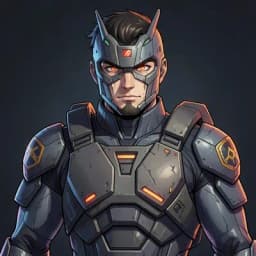
Meet the sample character
The sync is failing, but the kill count doesn't wait for repairs.
Try a scene · No signup
Kinetic Feedback
A short sample of this world. Your own version starts with your character.
The HUD flickers crimson. Your cockpit is a cage of grinding steel, shivering as a plasma barrage slams into the unit’s outer shielding. You can feel the heat radiating through the floorboards, a reminder that the cooling systems are already at eighty percent capacity. Your neural link is buzzing with the distorted screams of dying radio channels.

“Tanaka, the extraction point is crumbling. If you don't break their formation now, we lose the entire vanguard.”

Your palms slick against the control sticks. The machine groans, a deep, metallic protest as you push the thrusters past the redline. You are the only one left with enough sync-latency to navigate the debris field, but your neural dampeners are failing. One wrong move and the feedback loop will liquefy your brain before the enemy even lands a shot.
“Vance, tell the ground team to move. I'm taking the short route through the debris, but I'm going to need every ounce of power the reactor has left.”
The reactor whine shifts into a high-pitched scream that vibrates in your teeth. Your vision tunnels as the machine’s sensors feed raw, unfiltered telemetry directly into your cortex. You have a split second to commit: maintain the maneuver and risk a neural burnout, or dump the power into the shields and pray you survive the blast wave.
The reactor is screaming and the swarm is closing in. How do you force the machine to respond?
Your character. Your next move.
Claim your cockpit and define your legacy.
The enemy forces are approaching the perimeter. Do you hold the line or push forward to crush them? Every decision you make in the cockpit ripples through the campaign, altering the fate of the war. Step into your mech and show them why your callsign is the last thing they will ever hear.
Start your pilot missionYour Story, Your Way
Everything is customizable. Pick any genre, setting, or character — the AI builds a world around exactly what you want.
Any Character
Design your appearance, personality, backstory — every detail
Any World
Fantasy kingdoms, sci-fi stations, modern cities — you choose
Branching Paths
No two playthroughs are the same. Your choices reshape everything
Full Immersion
AI images, voice acting, sound effects — a living story
Configure your mech's loadout for high-speed intercept or heavy-artillery siege warfare.
Manage neural-sync strain to avoid permanent physical burnout during intense combat sequences.
Choose your callsign and influence how enemy AI units respond to your presence.
Decide whether to sacrifice your wingmen to ensure the mission objective is achieved.
The HUD flickers to life, bathing the cockpit in a cold, electric blue. Outside the reinforced viewport, the horizon burns with the wreckage of the orbital defense fleet. You are the only one left with enough sync-ratio to push the experimental frame beyond its safety limit. Sweat stings your eyes, but your hands are steady on the flight sticks. A barrage of micro-missiles streaks toward your position, leaving white vapor trails against the black expanse of space. You have a split second to decide: vent the coolant to boost your thrusters or lock the targeting array for a final, desperate counter-strike. In this interactive experience, your reflexes and tactical choices determine whether your name becomes a legend or just another entry in the casualty report.
What is Ace Pilot in Mecha?
An ace pilot is defined by the gap between the machine’s theoretical performance and the pilot’s actual output. It is not just about the hardware; it is about the neural synchronization that turns a multi-ton suit of armor into an extension of the human nervous system. In the anime Mobile Suit Gundam, pilots like Char Aznable demonstrate this by pushing their high-mobility frames to speeds that would liquefy an average soldier’s organs. The trope relies on the one-man army archetype, where the presence of a single individual on the battlefield forces the enemy to rewrite their entire tactical doctrine. It is the pilot who stays behind to cover the retreat, the one whose kill count is so high that infantry units desert their posts the moment they hear the specific engine whine of your custom rig. This designation is earned through blood and broken steel, separating the mere soldiers from the legends who define the outcome of the war.
Why play Ace Pilot as an interactive story?
Playing as an ace pilot brings the crushing weight of command into your hands. You are not just reading about a battle; you are calculating the power-to-weight ratio during a high-G turn. You will face decisions that force you to prioritize mission objectives over personal safety or the lives of your wingmen. Will you push your core engine to critical heat to secure a victory, knowing it might melt the frame beneath you? Will you challenge the enemy’s lead ace to a duel to end the conflict, or do you stick to the formation and risk losing your squad to a flanking maneuver? The tension comes from the thin margin between a decisive victory and a catastrophic system failure.
Famous examples of Ace Pilot in books, film, and games
The ace pilot trope thrives on the psychological toll of being the best. In Macross, Hikaru Ichijyo evolves from a civilian pilot to an ace, struggling with the transition from dogfighting for sport to defending humanity. The contrast is sharp; the ace is a hero to the public but often a ghost to their own humanity. Conversely, in the game Armored Core VI: Fires of Rubicon, the player steps into the role of an augmented human who is treated as a disposable asset, yet becomes a legend through sheer technical mastery. This creates a fascinating dissonance—you are the most dangerous thing on the battlefield, yet you are still just a component in a larger, uncaring war machine. The trope endures because it distills the human desire for agency into a high-stakes, high-speed environment where personal skill is the only currency that matters. It turns a war of attrition into a stage for individual brilliance, where the pilot's signature maneuver becomes the only thing that stands between survival and total extinction.
FAQ
What is an ace pilot?
It is a designation for a pilot who has achieved a high number of confirmed kills, usually five or more, though in sci-fi, it often implies a level of skill that makes the pilot a strategic asset.
How does sync-ratio affect my performance?
In this setting, your sync-ratio measures how well your brain communicates with the mech. Higher synchronization allows for faster reaction times but increases the risk of neural overload.
Can I customize my mech's performance?
Yes, you can tune your thrusters, weapon systems, and armor plating to match your preferred combat style, whether you favor speed or raw durability.
Does my choice of callsign matter?
Your callsign dictates your reputation. Enemies may behave more aggressively or retreat in terror depending on how feared your callsign has become throughout the campaign.
Explore more Mecha stories like First Synchronization, Mech Pilot Training, Rival Pilot.
More Mecha Stories
First Synchronization
The neural link activates and suddenly you can feel the mech as your own body. Your first synchronization is overwhelming—sixty tons of steel responding to your thoughts, your emotions, your fear.
TropeMech Pilot Training
The academy pushes you to your physical and mental limits. You train to become a mech pilot, competing against the best recruits in the world for the chance to bond with a machine that could save humanity.
TropeRival Pilot
Your rival is faster, more experienced, and never lets you forget it. The competition between you drives both of you to dangerous extremes, but when the real enemy arrives, rivalry might have to become alliance.
TropeMech Tournament
The arena shakes as mechs clash in sanctioned combat. You enter the tournament to prove yourself, win glory, or earn the resources your people desperately need—but your opponents fight for reasons just as compelling.
TropeKaiju vs Mech
Something colossal is rising from the deep and conventional weapons cannot stop it. You climb into the cockpit of humanity's last line of defense—a mech built specifically to fight monsters the size of skyscrapers.
TropeMech Upgrade
New parts, new weapons, new capabilities—your mech is evolving. Each upgrade pushes the machine closer to its limits and deeper into territory where the line between pilot and weapon begins to blur.