
Western · Interactive story
The Last Stop Before the Wilderness
Dust, desperation, and the high price of silence at the edge of the map.
Start as a guest. Choose your character before the story begins.
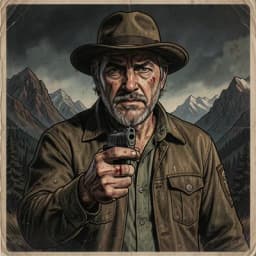
Meet the sample character
The cost of silence at Bitterroot Post.
Try a scene · No signup
Blood and Ledger
A short sample of this world. Your own version starts with your character.
You step off the stagecoach, the wind whipping alkaline dust against your coat. The Bitterroot post is a sagging structure of rough-hewn pine, groaning under the weight of a dying sun. A line of pack mules shifts restlessly in the corral, their breath hitching in the dry air. You feel the weight of the Colt at your hip—a comfort that won't hold back the law for long.

“You look like you've been riding since the world ended, stranger. Don't stand in the doorway—you're letting the flies in and keeping the profit out.”

You ignore the grime under his fingernails and step past the threshold. Inside, the shadows stretch long across shelves stocked with salt pork and rusted traps. The ledger on the counter is open, a fresh ink stain marking a transaction that shouldn't exist. You recognize the sigil on the manifest—the same stamp found on the payroll crate missing from the railhead in Cheyenne.
“Keep your trade secrets, Finch. I’m only here for the man who signed that manifest.”
Finch stops mid-pour, his gaze flickering toward the heavy iron lock on the cellar door. The floorboards above you creak, and the heavy sound of a shotgun cocking echoes from the rafters. You have seconds to decide whether to draw, negotiate, or find an exit before the lead starts flying.
The shotgun click above you is a death sentence if you hesitate. How do you respond to the trap closing in?
Your character. Your next move.
Will you survive the trade?
The sun is setting, and the desert grows cold. You’ve reached the only trading post for a hundred miles, but the man behind the counter has eyes that tell you he’s already counting your gold. Step inside, make your deal, and decide if you're leaving with your life or just another grave marker in the sand.
Start Your Western StoryYour Story, Your Way
Everything is customizable. Pick any genre, setting, or character — the AI builds a world around exactly what you want.
Any Character
Design your appearance, personality, backstory — every detail
Any World
Fantasy kingdoms, sci-fi stations, modern cities — you choose
Branching Paths
No two playthroughs are the same. Your choices reshape everything
Full Immersion
AI images, voice acting, sound effects — a living story
Barter for essential supplies while managing your dwindling gold and reputation.
Choose to intimidate, bribe, or befriend suspicious characters lurking in the shadows.
Decide whether to divulge secret trail information that could save lives or condemn others.
Navigate tense standoffs where one wrong word leads to a high-noon shootout.
The porch boards groan under Silas’s boots, the wood bleached white by a sun that hasn't seen a cloud in three weeks. Inside the trading post, the air hangs heavy with the smell of cured leather, dried tobacco, and the metallic tang of unwashed bodies. A man in a grease-stained duster leans against the counter, his hand hovering inches from a worn Colt, waiting to see if you’re here to trade or to bury someone. Outside, the wind howls through the canyon, carrying the grit of the high desert into your eyes. You have a satchel of gold, a map that might lead to a fortune or a shallow grave, and a limited supply of water. Every word you speak here carries weight. In this lawless corner of the territory, your decisions determine whether you walk away with supplies for the trail or a bullet in your chest. The frontier doesn't care about your past; it only cares about what you can offer to ensure you see the dawn.
What is a Trading Post in Western fiction?
A trading post acts as the vital, beating heart of the frontier. It is the solitary point of civilization where the known map bleeds into the unknown wilderness. In the classic Western, these locations function as neutral ground for trappers, prospectors, outlaws, and indigenous traders to barter for goods that mean the difference between life and death. You see this dynamic clearly in works like Cormac McCarthy’s 'Blood Meridian,' where remote outposts become pressure cookers for violence and shifting loyalties, or in the trading hubs of 'Red Dead Redemption 2,' where the simple act of selling pelts can spiral into a standoff. These settings are defined by their isolation; there is no sheriff to call when a deal goes sour, and the nearest reinforcements are days of hard riding away. It is a place where commerce is inherently dangerous, and the line between a customer and an enemy is frequently blurred by the scarcity of resources.
Why play a Trading Post interactive story?
Playing through a trading post scenario forces you to balance greed against survival. Unlike an action-heavy gunfight, these moments are about the tension of the deal. You might find yourself negotiating the price of a fresh horse with a man who clearly stole it, or deciding whether to share information about a water hole with a desperate traveler. The agency you possess changes the trajectory of your trek. Do you intimidate the shopkeeper to lower your prices, knowing he might alert a local gang to your presence? Do you offer your last bit of medicine to a wounded stranger for a favor later, or keep it for your own protection? The threat of violence is constant, and your ability to read the room—and the people in it—is your most valuable tool. You aren't just observing a story; you are managing the risks of a hostile environment.
What makes Trading Post work: the worldbuilding
The strength of a trading post setting lies in its inherent constraints. By limiting the player to a single, claustrophobic location surrounded by vast, unforgiving geography, the narrative generates immediate conflict. The environment itself acts as an antagonist. Sensory details are paramount here: the grit in the coffee, the flickering oil lamp, the sound of spurs scraping the floorboards, and the oppressive silence of the desert just beyond the door. These elements create a mood of constant vigilance. Successful westerns, such as the gritty reality of HBO’s 'Deadwood' or the desolate landscapes in 'The Revenant,' demonstrate that the most compelling stories happen when resources are scarce and the stakes are personal. The trading post forces characters to interact who would otherwise never meet, creating a diverse cast of archetypes: the weary prospector, the cynical merchant, the dangerous drifter, and the corrupt lawman. When writing for this setting, the focus should be on the weight of the environment. Every character should have a motive for being there, and those motives should collide. When the player enters the post, they shouldn't just be shopping; they should be entering a theater of social maneuvering. The goal is to make the player feel the isolation of the frontier, where the only thing keeping them alive is their wits and their willingness to make difficult choices. By emphasizing the scarcity of goods and the proximity of danger, the setting forces the player to prioritize their own survival, often at the expense of someone else’s.
FAQ
What makes a trading post story different from a standard western?
A standard western often focuses on the open range or the town shootout. A trading post story focuses on the tension of commerce and social interaction in isolation. It is a confined space where you must manage resources and navigate the motives of strangers before you can safely return to the trail.
Can I choose to be an outlaw in this setting?
Yes. The choices you make at the trading post are entirely up to you. You can play as a fair trader, a ruthless bandit looking to rob the merchant, or a cautious survivor just trying to get enough supplies to make it to the next valley.
How do my choices impact my supplies?
Every interaction has a cost. If you fail to secure a trade or choose to resolve a conflict with violence, you may lose valuable supplies, end up wounded, or find yourself barred from returning to the post, making your future journey through the wilderness significantly harder.
Is this setting suitable for a long-term story?
The trading post serves as a pivotal hub. While you can spend hours navigating the drama within a single post, your decisions there will echo throughout your entire journey across the frontier, influencing which paths are open to you later.
Explore more Western stories like Outlaw Redemption, Sheriff Showdown, Gold Rush Fever.
More Western Stories
Outlaw Redemption
You rode the wrong side of the law for years, but something has changed. Now you seek to make amends in a frontier that never forgets and rarely forgives, where your past rides hard on your heels.
TropeSheriff Showdown
The badge on your chest makes you the only thing standing between a lawless town and chaos. When the outlaws ride in, you must rally the townsfolk or face the gang alone in a showdown on Main Street.
TropeGold Rush Fever
Gold has been found in the hills, and the world has gone mad. You join the stampede of dreamers, swindlers, and desperados chasing fortune in a lawless camp where a nugget of gold can buy you everything or cost you your life.
TropeTrain Robbery
The iron horse carries a fortune in gold, and your gang has a plan to take it. Thunder down the tracks on horseback, board the moving train, and pull off the heist before the Pinkertons close in.
TropeFrontier Justice
Out here, the nearest judge is three days' ride away, and justice cannot wait. You take the law into your own hands, but every verdict you pass blurs the line between righteousness and tyranny.
TropeCattle Drive
A thousand head of cattle, a hundred miles of hostile territory, and a crew of cowboys who may not all make it. You lead the drive through storms, rustlers, and river crossings where one wrong move means disaster.