Western · Interactive story
Frontier Justice: Where the Law Ends and You Begin
The sheriff is dead, the jury is absent, and the noose is waiting.
Start as a guest. Choose your character before the story begins.
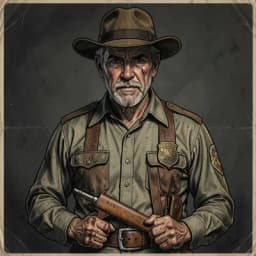
Meet the sample character
Before the law finds this valley, you must decide who deserves a headstone.
Try a scene · No signup
A Grave for Three
A short sample of this world. Your own version starts with your character.
You stare at the boot-sole prints in the mud, still damp with the victim's blood. The heat is thick, smelling of dry sagebrush and stale copper. Behind you, the man responsible leans against his horse, thumbing the hammer of his Colt, waiting to see if you have the gall to act.
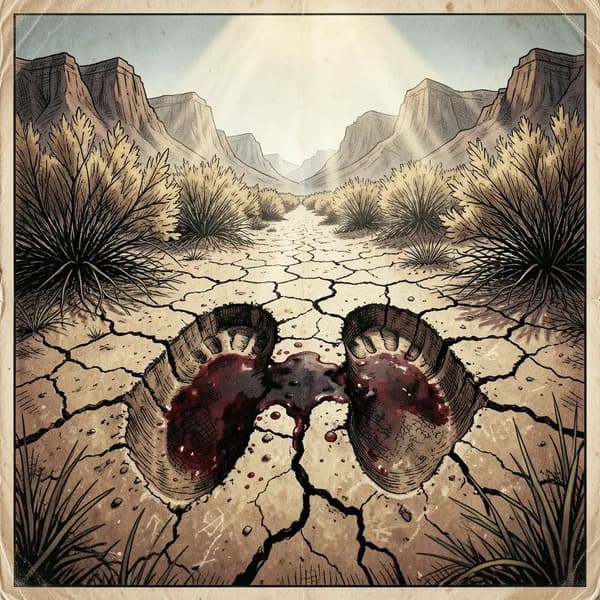
“You keep lookin' at that dirt, Marshal, you're gonna find your own grave instead of the truth.”
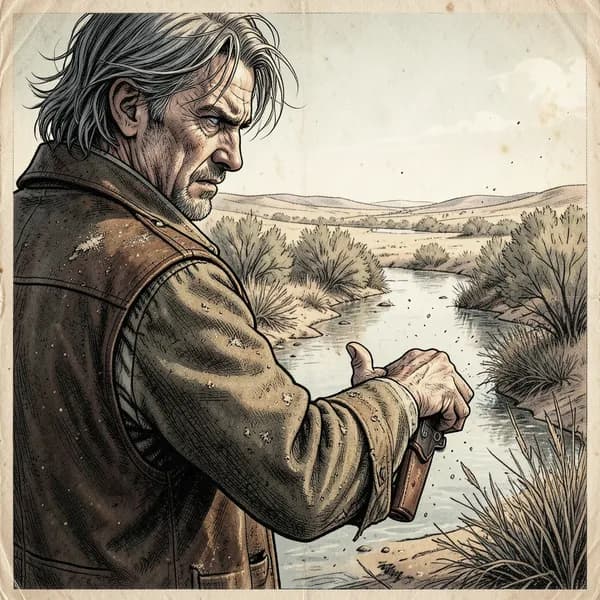
Your palm hovers inches from your holster. The wood grip is worn smooth by years of bad decisions and worse weather. The wind dies down, and for a heartbeat, the only sound is the rhythmic jingling of his spurs. He wants you to move first.
“The truth doesn't care about your patience, Caleb. It's already caught up.”
You shift your weight, feeling the gravel grind under your heel. The sun is a white-hot hammer beating down on your neck. If you draw now, you’re sentencing him before the sun sets. If you wait, you’re letting a killer ride into the canyon where no judge will ever find him.
The standoff is reaching its boiling point. How do you settle this debt?
Your character. Your next move.
The Gavel is in Your Hand.
The sun is setting, and the prisoner is praying for a mercy you aren't sure you can provide. Do you risk your life to ensure a fair trial, or do you end the threat before it can grow? The territory is watching, and your next move will be written in blood.
Decide the Verdict NowYour Story, Your Way
Everything is customizable. Pick any genre, setting, or character — the AI builds a world around exactly what you want.
Any Character
Design your appearance, personality, backstory — every detail
Any World
Fantasy kingdoms, sci-fi stations, modern cities — you choose
Branching Paths
No two playthroughs are the same. Your choices reshape everything
Full Immersion
AI images, voice acting, sound effects — a living story
Decide whether to lynch an accused cattle thief or hold him until the marshal arrives.
Leverage your reputation to intimidate corrupt town officials into dropping false charges against friends.
Navigate the fallout of your verdicts when the family of the executed comes looking.
Choose between professional bounty hunting and acting as a rogue judge for the desperate.
Dust coats your throat as you stare down the man who burned your brother’s barn to ash. His hands are cuffed to a hitching post, but the town’s only judge won’t ride in until the spring thaw. The locals look to you, waiting for a signal. Do you wait for the slow, grinding machinery of a distant court, or do you take the heavy weight of execution into your own hands? In this interactive story, your moral compass is a weapon. Every decision ripples through the canyon, transforming you from a desperate drifter into a legend or a monster. You are the only authority for fifty miles, and the sun is beginning to set on the prisoner’s life.
What is Frontier Justice in Western?
Frontier justice defines the American West as a place where the rule of law was often a suggestion rather than a mandate. In the absence of federal courts, local communities—or solitary individuals—often acted as judge, jury, and executioner. This concept is about the brutal survivalism required to impose order on a chaotic landscape. Think of the tension in The Ox-Bow Incident, where a lynch mob faces the horrific realization that their swift justice resulted in the murder of innocent men. It highlights the fragility of civilization. Without a functioning state, authority defaults to whoever holds the fastest draw or the loudest voice. This trope forces characters to reckon with the heavy cost of shortcuts. When you bypass due process, you solve the immediate problem, but you sacrifice the very morality you claim to be protecting. It is a lonely, bloody road that leaves no room for hesitation.
Why play Frontier Justice as an interactive story?
Playing through a frontier justice narrative means constantly weighing the satisfaction of immediate retribution against the long-term consequences of your actions. You are not a spectator; you are the one deciding if a man deserves the rope. You might encounter a corrupt land baron who owns the local sheriff, leaving the legal system entirely toothless. Do you poison his water supply, challenge him to a duel, or try to gather evidence that will never reach a courtroom? You will face moments where the right choice feels like a weakness, and the wrong choice feels like survival. Your reputation in the territory shifts based on how you handle these crises. If you gain a reputation for killing without a trial, you might find the townspeople fear you more than they respect you, closing off doors that could have been opened with a silver tongue. The tension comes from the lack of a safety net—there is no reload button for your conscience.
Famous examples of Frontier Justice in books, film, and games
The concept of frontier justice has anchored western fiction for decades. In Cormac McCarthy’s Blood Meridian, the violence is so pervasive that justice loses all meaning, replaced by the relentless, nihilistic cycle of survival. Characters like Judge Holden embody the terrifying extreme of this trope, where one man forces his own brutal order onto the world through sheer force of will. Conversely, in the film High Noon, the tension shifts. Will Kane stands alone because the town refuses to take responsibility, highlighting how frontier justice often crumbles when community courage is required. In the Red Dead Redemption series, the player constantly navigates the tension between the dying outlaw lifestyle and the encroaching, bureaucratic law of the federal government. These stories endure because they mirror the eternal human question: what do we owe one another when the structures of society collapse? We are drawn to the image of the lone figure standing in the dust, forced to make a life-altering choice in the space between a heartbeat and a gunshot. Whether it is the moral bankruptcy of a lynch mob or the lonely burden of a sheriff who refuses to bend, these stories remind us that justice is rarely as simple as a gavel strike.
FAQ
What defines the frontier justice trope?
It is characterized by the absence of formal legal systems. In these stories, characters must act as judge, jury, and executioner to resolve disputes, usually due to geographical isolation or government corruption.
How do my choices impact the story?
Your decisions dictate your reputation. Acting as a vigilante may make you feared by townsfolk or hunted by lawmen, while seeking official justice might leave you vulnerable to those who operate outside the law.
Is this story about being a hero or a villain?
The genre focuses on grey areas. You will often find that the line between a hero maintaining order and a villain abusing power is drawn by your specific actions, not by an objective moral code.
Can I play a lawman in this setting?
Yes, you can adopt the role of a sheriff or marshal. However, you will find that a badge provides little protection when you are the only one willing to stand against organized crime in a lawless territory.
Explore more Western stories like Outlaw Redemption, Sheriff Showdown, Gold Rush Fever.
More Western Stories
Outlaw Redemption
You rode the wrong side of the law for years, but something has changed. Now you seek to make amends in a frontier that never forgets and rarely forgives, where your past rides hard on your heels.
TropeSheriff Showdown
The badge on your chest makes you the only thing standing between a lawless town and chaos. When the outlaws ride in, you must rally the townsfolk or face the gang alone in a showdown on Main Street.
TropeGold Rush Fever
Gold has been found in the hills, and the world has gone mad. You join the stampede of dreamers, swindlers, and desperados chasing fortune in a lawless camp where a nugget of gold can buy you everything or cost you your life.
TropeTrain Robbery
The iron horse carries a fortune in gold, and your gang has a plan to take it. Thunder down the tracks on horseback, board the moving train, and pull off the heist before the Pinkertons close in.
TropeCattle Drive
A thousand head of cattle, a hundred miles of hostile territory, and a crew of cowboys who may not all make it. You lead the drive through storms, rustlers, and river crossings where one wrong move means disaster.
TropeBounty Hunter Chase
Dead or alive, the poster says, and you intend to collect. You track your quarry across sun-scorched deserts and through hostile towns, but the closer you get, the more you question whether justice is really what you are serving.