
Western · Interactive story
Claim the Horizon: Your Prairie Homestead Awaits
The sky is endless, the soil is stubborn, and your family's survival depends on you.
Start as a guest. Choose your character before the story begins.
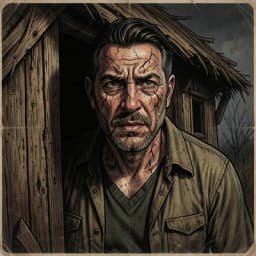
Meet the sample character
The land claims everything it touches.
Try a scene · No signup
Dust on the Threshold
A short sample of this world. Your own version starts with your character.
Your fingers are raw from trying to patch the sod walls, but the dirt just crumbles under your touch. The sun beats down with a steady, punishing rhythm, turning the air inside the house into a stifling oven. You watch the horizon, waiting for a cloud that never comes, listening to the rhythmic creak of the windmill that hasn't pumped a drop of water since Tuesday.

“That windmill isn't going to fix itself, Silas, and the bank doesn't care much for your prayers for rain.”

Jedidiah sits on his porch, watching you with eyes like flint. You know he's been waiting for you to fail, hoping the bank will seize your claim so he can expand his grazing range. Every movement you make is stiff, your muscles screaming for water, but you keep your face blank. You have to decide whether to keep playing the stoic pioneer or show your hand to the vultures.
“My business is my own, Jedidiah. Keep your eyes on your own fence line before I give you a reason to look elsewhere.”
Jedidiah stands, his hand hovering near the heavy iron revolver holstered at his hip. The silence of the prairie is broken only by the distant howl of a coyote, mocking your exhaustion. You realize he isn't just looking for land anymore—he's looking for a reason to draw. The air thickens with the weight of the coming violence, and the choice you make right now will either bury you or keep you standing.
The tension is snapping. How do you handle the threat?
Your character. Your next move.
The Prairie Doesn't Forgive.
The rain hasn't fallen in weeks, and the cattle are thinning. A stranger with a heavy coat and a locked trunk just pulled up to your fence. Your water is low, and your patience is lower. Will you offer hospitality or show them the barrel of your Winchester before the sun goes down? Every choice is yours.
Secure Your ClaimYour Story, Your Way
Everything is customizable. Pick any genre, setting, or character — the AI builds a world around exactly what you want.
Any Character
Design your appearance, personality, backstory — every detail
Any World
Fantasy kingdoms, sci-fi stations, modern cities — you choose
Branching Paths
No two playthroughs are the same. Your choices reshape everything
Full Immersion
AI images, voice acting, sound effects — a living story
Negotiate water rights with desperate neighbors during a record-breaking summer drought.
Decide whether to defend your claim against encroaching cattle barons or flee.
Manage limited rations and supplies to keep your family alive through a brutal blizzard.
Choose how to handle strangers passing through your land with suspicious intentions.
The wind never stops. It whistles through the gaps in the sod walls, carrying the scent of dry grass and impending storms. You stand on the porch of a small, mud-walled structure, squinting into a sun that bleaches the color out of the world. Behind you, a half-plowed field waits for the morning’s labor. Ahead, the horizon stretches flat and indifferent, hiding the threats that come with the isolation of the plains. Every decision you make—from the seeds you plant to the way you handle the stranger riding toward your fence line—will determine if this claim thrives or if it becomes another ghost story whispered by the coyotes. Your path is not paved; it is carved into the earth by your own hands.
What is Prairie Homestead in Western?
The prairie homestead is a core pillar of frontier myth, capturing the brutal friction between human ambition and the unforgiving landscape. It is defined by the 'soddy'—a house built from the very earth it sits upon—and the relentless, back-breaking work required to turn virgin prairie into a productive farm. Think of the crushing isolation in Willa Cather’s 'O Pioneers!' or the stark, high-stakes desperation found in the film 'The Homesman.' Unlike the high-action gunfights of a typical Western town, the homestead setting focuses on endurance. It is about the quiet, mounting dread of a grasshopper plague, the terror of a winter blizzard, and the tension of a land dispute with a neighbor who has more lead than law. In these stories, the biggest enemy is rarely just a man with a pistol; it is the weather, the drought, and the crushing weight of solitude. It is a setting where the struggle to keep a fire burning matters just as much as the struggle to keep a claim.
Why play Prairie Homestead as an interactive story?
Playing a homesteader means managing the thin line between prosperity and ruin. You are the sole authority on this patch of dirt. When the well runs dry in July, do you trade your last rifle to buy water from a passing caravan, or do you risk digging deeper into the bedrock at the cost of your health? When a stranger arrives with a bullet wound and a secret, you must weigh the moral cost of helping against the immediate safety of your family. The tension lies in the scarcity of resources and the slow, deliberate pace of rural life, where one bad harvest can end everything. You are not just reacting to events; you are planning for a future that might never arrive, forcing you to prioritize what you are willing to lose.
What makes Prairie Homestead work: the worldbuilding
The homestead setting thrives on small-scale stakes that feel monumental. In literature and film, from the classic 'Little House on the Prairie' to the gritty survivalism of '1883,' the setting works because it forces characters to confront their own limitations. The sensory landscape is crucial: the sound of a rattling windmill, the sight of a dust storm blotting out the sun, the taste of grit in every meal. These details make the environment an active participant in the story. Works like 'True Grit' or the 'Oregon Trail' games demonstrate that the environment is a character itself. A good homestead story uses geography as a crucible. The flatness of the prairie provides no place to hide, creating constant vulnerability. When crafting or playing in this space, emphasizing the physical toll of the work is essential. Every chore—mending fences, hauling water, churning butter—is a moment where things can go wrong. The conflict is generated by the friction between the promise of the Homestead Act and the reality of a land that does not want you there. By focusing on the cycle of the seasons, you can build a narrative that feels organic and inevitable.
FAQ
What makes a homestead story different from a traditional Western?
Traditional Westerns often focus on the lawless town, outlaws, and gunplay. Homestead stories shift the focus to survival, the struggle against the elements, and the long-term commitment of building a life on the land.
Do I need to know frontier history to play?
Not at all. The story focuses on the immediate, visceral experience of the prairie. If you understand the stakes of survival and the need to protect your family, you have everything you need to start.
Is the homestead setting mostly peaceful?
Far from it. While there are moments of quiet, the isolation of the prairie makes every arrival, storm, or resource failure a high-stakes event. Danger is often more subtle and persistent than a shootout.
Can I lose my claim in the story?
Yes. Your choices have consequences. If you fail to manage your resources, succumb to the pressure of outside forces, or make poor decisions during natural disasters, you can certainly lose everything you have worked to build.
Explore more Western stories like Outlaw Redemption, Sheriff Showdown, Gold Rush Fever.
More Western Stories
Outlaw Redemption
You rode the wrong side of the law for years, but something has changed. Now you seek to make amends in a frontier that never forgets and rarely forgives, where your past rides hard on your heels.
TropeSheriff Showdown
The badge on your chest makes you the only thing standing between a lawless town and chaos. When the outlaws ride in, you must rally the townsfolk or face the gang alone in a showdown on Main Street.
TropeGold Rush Fever
Gold has been found in the hills, and the world has gone mad. You join the stampede of dreamers, swindlers, and desperados chasing fortune in a lawless camp where a nugget of gold can buy you everything or cost you your life.
TropeTrain Robbery
The iron horse carries a fortune in gold, and your gang has a plan to take it. Thunder down the tracks on horseback, board the moving train, and pull off the heist before the Pinkertons close in.
TropeFrontier Justice
Out here, the nearest judge is three days' ride away, and justice cannot wait. You take the law into your own hands, but every verdict you pass blurs the line between righteousness and tyranny.
TropeCattle Drive
A thousand head of cattle, a hundred miles of hostile territory, and a crew of cowboys who may not all make it. You lead the drive through storms, rustlers, and river crossings where one wrong move means disaster.