
Western · Interactive story
Silence in the Dust: A Frontier Ghost Town
The wind howls through empty saloons, but you are not as alone as you think.
Start as a guest. Choose your character before the story begins.
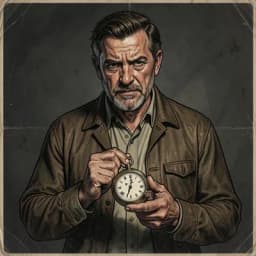
Meet the sample character
The wind here doesn't howl—it whispers names.
Try a scene · No signup
The Last Bell at Calloway
A short sample of this world. Your own version starts with your character.
The wind in Calloway tastes of rust and rotted pine. Every window in the main street acts like a flute, whistling a low, mournful tune that grates against your nerves. You haven't seen a living soul since the rail line went bust, yet the swing-door of the general store just creaked against the rhythm of the gale. A shadow flickers behind the glass, darker than the soot-stained walls.

“Keep your distance, stranger! I’ve got enough lead in this barrel to put a permanent end to your curiosity.”

Your hand brushes the worn leather of your holster, the familiar weight offering a hollow comfort. You recognize that voice—the tremor of a man who has lived on canned peaches and paranoia for too long. If you reach for your Colt, you might silence him, but the secret he’s guarding dies with him. If you move closer, his trigger finger might twitch before you can offer a word.
“Put the iron away, old man. I'm not here for the gold, and I’m definitely not here for the law.”
The silence that follows is thick enough to choke on. The hammer of his revolver clicks back, a sharp, metallic sound that echoes against the stillness of the street. He doesn't lower the barrel; he stares through the grime of the window, his eyes wild and bloodshot. You have one heartbeat to decide whether to de-escalate or prepare for a burial—his, or yours.
How do you handle the man behind the glass?
Your character. Your next move.
The silence is calling. Will you answer?
The sun is setting behind the ridge, and the shadows in the saloon are growing long. You have one bullet left and a mystery that demands an answer. Every decision you make—from how you approach the locked jail cell to whether you light a fire—determines if you make it out of this town by dawn. Step into the dust and claim your story before the frontier claims you.
Enter the Ghost TownYour Story, Your Way
Everything is customizable. Pick any genre, setting, or character — the AI builds a world around exactly what you want.
Any Character
Design your appearance, personality, backstory — every detail
Any World
Fantasy kingdoms, sci-fi stations, modern cities — you choose
Branching Paths
No two playthroughs are the same. Your choices reshape everything
Full Immersion
AI images, voice acting, sound effects — a living story
Search abandoned homes to uncover clues about the sudden, mysterious exodus of residents.
Decide whether to trust the rattling noises coming from the darkness beneath the floorboards.
Manage your dwindling ammunition while facing threats that seem to defy natural laws.
Choose how to interact with the remnants of the town’s past to influence current events.
The floorboards of the general store groan under your weight, sounding like a gunshot in the oppressive stillness of Blackwood Creek. You have not seen a living soul for three days, yet a fresh cup of coffee sits steaming on the counter. The air tastes of grit and something metallic—old copper, or maybe dried blood. You grip your revolver, your knuckles white against the worn wood. This is a place where your next move decides whether you leave with your life or join the shadows that pace the edges of your vision. In this interactive story, your instincts are the only map you have.
What is Ghost Town in Western?
A ghost town is more than just rot and rusted nails; it is a monument to failed ambition and sudden catastrophe. In Western fiction, these locales represent the fragility of civilization against the raw, indifferent landscape. Think of the chilling atmosphere in the series Deadwood or the desolate, sun-bleached ruins found in the game Red Dead Redemption. These are not just empty sets; they are characters with their own histories, waiting for a traveler to uncover why the last residents fled in the dead of night. Whether it is an abandoned mining camp or a railroad stop that never saw a train, the setting forces you to confront the history of those who came before. You are not merely observing the decay; you are interacting with a site that holds the weight of a thousand untold stories, where every relic tells a tale of greed, betrayal, or survival.
Why play Ghost Town as an interactive story?
Playing through a ghost town setting demands more than just a fast trigger finger. You are an investigator, a scavenger, and a survivor. You will have to decide whether to investigate the flickering lantern in the shuttered saloon or keep your back to the wall and move toward the stables. Every choice alters how the town reacts to your presence. Will you attempt to salvage supplies from the abandoned bank, risking a structural collapse, or do you focus on finding the source of the whispering wind? Tension mounts as you realize the town is waiting for someone to finish the business left behind. You must manage your resources and your sanity while the environment itself presents obstacles that test your resolve. The agency you possess ensures that no two playthroughs result in the same outcome, making your survival entirely dependent on your judgment.
What makes Ghost Town work: the worldbuilding
The power of a ghost town lies in its ability to isolate the protagonist. In films like High Plains Drifter, the town serves as a mirror for the protagonist's own sins. The architecture—the sagging porches, the wind-whipped signs, the splintered jailhouse doors—creates a sensory landscape of decay. Quality worldbuilding here relies on contrast: the silence of the present against the imagined noise of the past. You should feel the grit between your teeth and the heat radiating off the parched earth. In The Searchers, the vast, empty landscape is a constant reminder of what is missing. A well-crafted ghost town story uses this emptiness to heighten paranoia. Is that movement in the alley a coyote, or is the town itself shifting? By focusing on sensory details—the scent of ozone before a storm, the way shadows stretch, the way shadows extend unnaturally long at sunset—the setting becomes an antagonist in its own right. Characters who thrive here are often drifters or outcasts, people who are already halfway to becoming ghosts themselves. When you write or play in this space, you are excavating a tomb, and every discovery has a cost. The environment provides the conflict, and your character provides the spark that sets the tragedy—or the redemption—into motion.
FAQ
Can I find treasure in these towns?
You might find gold, but the real challenge is surviving the traps and hazards left behind by those who abandoned the place in a panic.
Are these stories supernatural?
That is for you to define. The frontier is a place where the line between hard reality and fever dreams often blurs, leaving room for both grit and the unexplained.
What happens if I make a bad choice?
The frontier is unforgiving. A single wrong turn or a hesitant trigger pull can leave you stranded in the desert without supplies or facing down an unseen threat.
Do I need to know Western history to play?
Not at all. The setting provides the context, and your intuition will guide you through the dangers whether you are a history buff or a newcomer to the genre.
Explore more Western stories like Outlaw Redemption, Sheriff Showdown, Gold Rush Fever.
More Western Stories
Outlaw Redemption
You rode the wrong side of the law for years, but something has changed. Now you seek to make amends in a frontier that never forgets and rarely forgives, where your past rides hard on your heels.
TropeSheriff Showdown
The badge on your chest makes you the only thing standing between a lawless town and chaos. When the outlaws ride in, you must rally the townsfolk or face the gang alone in a showdown on Main Street.
TropeGold Rush Fever
Gold has been found in the hills, and the world has gone mad. You join the stampede of dreamers, swindlers, and desperados chasing fortune in a lawless camp where a nugget of gold can buy you everything or cost you your life.
TropeTrain Robbery
The iron horse carries a fortune in gold, and your gang has a plan to take it. Thunder down the tracks on horseback, board the moving train, and pull off the heist before the Pinkertons close in.
TropeFrontier Justice
Out here, the nearest judge is three days' ride away, and justice cannot wait. You take the law into your own hands, but every verdict you pass blurs the line between righteousness and tyranny.
TropeCattle Drive
A thousand head of cattle, a hundred miles of hostile territory, and a crew of cowboys who may not all make it. You lead the drive through storms, rustlers, and river crossings where one wrong move means disaster.