
Western · Interactive story
Command the Stockade: A Frontier Fort Western
One hundred miles from civilization, your orders are the only thing keeping chaos at bay.
Start as a guest. Choose your character before the story begins.
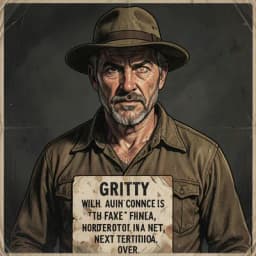
Meet the sample character
Orders are worth nothing when the water runs dry.
Try a scene · No signup
Iron and Salt at Fort Halloway
A short sample of this world. Your own version starts with your character.
The wind howls through the gaps in the stockade, carrying the metallic scent of impending rain that never seems to fall. You stand near the quartermaster’s shed, your boots caked in red clay. The soldiers are restless, their hands hovering near their holsters, knowing the supply wagon is three days overdue. Silence stretches thin between the barracks.

“Keep your eyes on the horizon, Vane. If you aren't here to dig a latrine or haul timber, I suggest you find somewhere else to bleed.”

Miller’s thumb rests on his belt buckle, his eyes tracking your every shift. He knows something is off—he saw you arrive with a horse that didn't have a brand and a saddlebag that clinks with more than just trail rations. The heat makes your collar itch, and your hand twitches toward the heavy iron at your hip.
“I’m just looking for a drink, Sergeant. The desert has a way of drying out a man’s throat and his patience.”
He doesn't blink. Behind him, one of the younger privates steps out from the shadows, rifle leveled at your chest. The fort is small, and the walls are thick, but the space between you and the gate is suddenly an impossible distance to cross. You have to move now, or spend the night in irons—or worse.
How do you handle the standoff before the private decides to pull the trigger?
Your character. Your next move.
The horizon is closing in. Take command.
The scouts report smoke on the northern ridge, and the water barrels are nearly empty. Your garrison looks to you for a decision. Will you fortify the gates or ride out to meet the threat? The fate of the frontier is in your hands.
Assume command of the fortYour Story, Your Way
Everything is customizable. Pick any genre, setting, or character — the AI builds a world around exactly what you want.
Any Character
Design your appearance, personality, backstory — every detail
Any World
Fantasy kingdoms, sci-fi stations, modern cities — you choose
Branching Paths
No two playthroughs are the same. Your choices reshape everything
Full Immersion
AI images, voice acting, sound effects — a living story
Select which scouts to send into the canyon to intercept a rumored supply train.
Choose to uphold strict military protocol or favor local alliances to ensure peace.
Manage limited water and gunpowder supplies during a prolonged, tense standoff with outlaws.
Interrogate captured drifters to uncover the truth behind a series of sabotaged water wells.
Dust kicks up against the unpeeled pine logs of the palisade. Silas wipes grit from his brow, his hand resting near the holster at his hip. Beyond the gate, the horizon is a flat, unforgiving line of heat haze and silence. Inside, the barracks are thick with the smell of wet wool, stale coffee, and unspoken resentment. You stand at the threshold of the command office, where a single decision determines if this garrison stands through the night or burns before dawn. Your choices hold the weight of every life behind these walls. Whether you choose to prioritize the safety of the settlers or the strict mandates of the cavalry, the consequences will ripple through the dry, red dirt of the territory.
What is Fort on the Frontier in Western?
A frontier fort functions as a fragile island of order in a vast, indifferent wilderness. These wooden stockades represent the reach of the government, but they are often underfunded, undermanned, and perpetually on the edge of collapse. In classic western literature and film, such as John Ford’s 'Fort Apache,' the fort serves as a pressure cooker where military discipline clashes with the brutal reality of survival. It is a setting defined by isolation, where the soldiers are as much prisoners of their own duty as they are protectors of the surrounding territory. You aren't just looking at a map; you are managing a living, breathing social hierarchy. From the cookhouse to the stables, the fort is a microcosm of the conflicts that shaped the American West, including land disputes, broken treaties, and the constant threat of bandit raids. It is a place where the scarcity of water and ammunition makes every diplomatic interaction or tactical maneuver a high-stakes gamble.
Why play Fort on the Frontier as an interactive story?
Playing in this setting places the burden of command squarely on your shoulders. You are not a passive observer; you are the one signing the orders that might lead to a peaceful trade agreement or a bloody ambush. The tension arises from the competing interests of the people you lead: the hardened sergeant who wants to shoot first, the weary settlers who just want to plant their crops, and the local factions watching your every move from the treeline. You will face moments where you must decide whether to hang a deserter to maintain order or grant mercy at the risk of mutiny. You might find yourself managing a dwindling supply of rations during a harsh winter, or deciding if a suspicious stranger found near the perimeter is a scout for a raiding party or a desperate traveler. The agency you hold means that the fort's survival depends on your ability to weigh moral integrity against cold-blooded survivalism.
What makes Fort on the Frontier work: the worldbuilding
The effectiveness of the frontier fort as a narrative setting lies in its inherent claustrophobia. Even in the middle of a wide-open plain, the walls create a psychological boundary that separates 'us' from 'them.' This binary is the engine for conflict. When writers like Cormac McCarthy in 'Blood Meridian' or directors like those behind 'Deadwood' approach the West, they emphasize the sensory details: the grit of sand in food, the sound of wind through dry timber, and the constant, low-level hum of anxiety. To make this setting work, a story must lean into the limitations. The fort is not a bastion of invincible power; it is a rotting, sun-bleached structure held together by sheer willpower. The characters who thrive here are rarely the polished heroes of dime novels. They are frayed, cynical, and tired. The best stories in this setting use the environment to strip away the pretense of civilization. When the heat hits 100 degrees and the telegraph line goes silent, the true nature of your garrison comes to the surface. Is your fort a home, or is it a graveyard waiting to happen? By focusing on the gritty, tactical realities of 19th-century logistics—the weight of a rifle, the slow pace of a mule train, the difficulty of communication—you create a grounded experience where the stakes feel tangible. The fort is not just a backdrop; it is a character that demands constant attention, repair, and justification for its very existence.
FAQ
How do my choices affect the garrison's morale?
Every decision you make, from how you distribute rations to how you handle disciplinary issues, influences the loyalty of your troops. Harsh leadership might keep the men in line, but it increases the risk of mutiny or desertion when the situation turns dire.
Can I play as a character other than the fort commander?
While the core experience focuses on the commander, the story often branches into the perspectives of scouts, settlers, or even travelers passing through. Each perspective provides different information and unique challenges to overcome.
Is this setting purely focused on combat?
Not at all. While the threat of attack is constant, much of the tension comes from diplomacy, resource management, and social maneuvering. You will spend as much time negotiating with local leaders as you will cleaning your rifle.
What makes this different from other western stories?
Unlike stories that follow a wandering gunslinger, this setting forces you to stay in one place and deal with the long-term consequences of your actions. You cannot simply ride away from your mistakes.
Explore more Western stories like Outlaw Redemption, Sheriff Showdown, Gold Rush Fever.
More Western Stories
Outlaw Redemption
You rode the wrong side of the law for years, but something has changed. Now you seek to make amends in a frontier that never forgets and rarely forgives, where your past rides hard on your heels.
TropeSheriff Showdown
The badge on your chest makes you the only thing standing between a lawless town and chaos. When the outlaws ride in, you must rally the townsfolk or face the gang alone in a showdown on Main Street.
TropeGold Rush Fever
Gold has been found in the hills, and the world has gone mad. You join the stampede of dreamers, swindlers, and desperados chasing fortune in a lawless camp where a nugget of gold can buy you everything or cost you your life.
TropeTrain Robbery
The iron horse carries a fortune in gold, and your gang has a plan to take it. Thunder down the tracks on horseback, board the moving train, and pull off the heist before the Pinkertons close in.
TropeFrontier Justice
Out here, the nearest judge is three days' ride away, and justice cannot wait. You take the law into your own hands, but every verdict you pass blurs the line between righteousness and tyranny.
TropeCattle Drive
A thousand head of cattle, a hundred miles of hostile territory, and a crew of cowboys who may not all make it. You lead the drive through storms, rustlers, and river crossings where one wrong move means disaster.