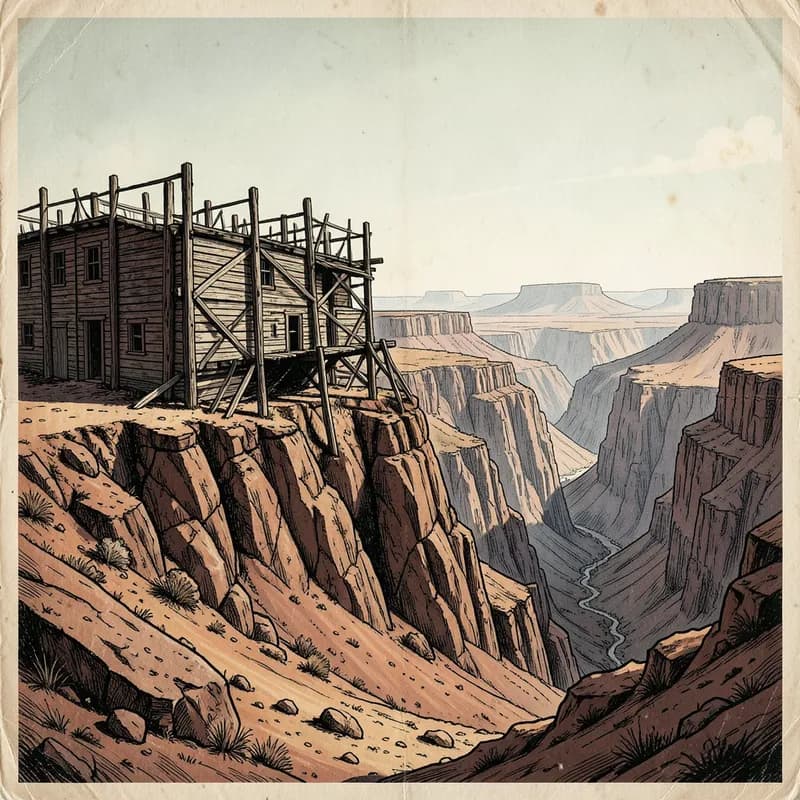
Western · Interactive story
Command the Frontier: Cavalry Outpost Tales
The desert wind carries smoke. Do you hold the fort, or do you break?
Start as a guest. Choose your character before the story begins.
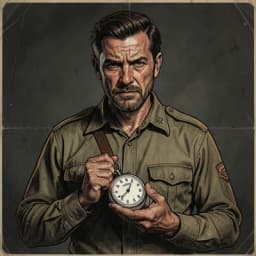
Meet the sample character
Duty is a burden that weighs heavier than lead.
Try a scene · No signup
The Salt of Bitter Creek
A short sample of this world. Your own version starts with your character.
You press your palm against the sun-warped timber of the watchtower, feeling the grit of alkaline dust beneath your nails. It is 110 degrees in the shade, and the only sound is the rhythmic creak of the gate hinges and the low, drone of desert flies. You were sent here to watch for movement, but the horizon has been empty for three weeks. Your canteen is half-empty, and the silence is beginning to itch.

“Vance, quit staring at the rocks and load your carbine. We’ve got riders coming up the arroyo, and they aren't wearing blue.”

The tension snaps, taut as a piano wire. You squint through the heat haze. Three figures emerge from the shimmering air, their horses lathered in white foam. They aren't soldiers, and they aren't traveling under a flag of truce. Your finger finds the trigger guard, the cold steel a stark contrast to the blistering heat of the railing.
“I can't see their colors, Sergeant, but that lead rider is carrying a repeater, not a hunting rifle.”
The lead rider raises a hand—not in greeting, but as a signal. The group fans out into the brush with practiced, lethal coordination. They are positioning for a siege, and the outpost's southern wall is crumbling. You have seconds to act before the first volley of lead splinters the gate. Do you trust your aim or your wits?
The riders are fanning out to surround the gate. How do you respond to the incoming threat?
Your character. Your next move.
The horizon is closing in.
The scouts have returned with news of a raid. The men are looking to you for orders. Will you hold your ground and wait for reinforcements, or lead a desperate sortie into the canyon? Your command is the only thing standing between the fort and total collapse.
Take command nowYour Story, Your Way
Everything is customizable. Pick any genre, setting, or character — the AI builds a world around exactly what you want.
Any Character
Design your appearance, personality, backstory — every detail
Any World
Fantasy kingdoms, sci-fi stations, modern cities — you choose
Branching Paths
No two playthroughs are the same. Your choices reshape everything
Full Immersion
AI images, voice acting, sound effects — a living story
Allocate dwindling water rations between the horses and the men during a heat wave.
Decide whether to execute a deserter or offer mercy that could compromise your authority.
Fortify the perimeter against a rumored attack while your ammunition supply runs dangerously low.
Negotiate uneasy peace treaties with local tribes while your superiors demand total conquest.
The sun beats down on Fort Madero until the wood warps and the water barrels run dry. You wake to the sound of a scout’s horse hitting the hard-packed dirt, his breathing ragged, his hand pressed against a fresh wound. Behind him, the horizon is a blur of heat and rising dust. You are the ranking officer here, miles from the nearest telegraph, with a handful of tired men and a supply line that stopped arriving weeks ago. In this cavalry outpost interactive story, your decisions dictate whether this fort becomes a graveyard or a bastion of order in a lawless territory. The tension between your oath to the uniform and the reality of the dying sun is yours to manage. Every choice you make echoes through the barracks, and the desert does not forgive mistakes.
What is Cavalry Outpost in Western?
A cavalry outpost is a static anchor in a shifting, dangerous landscape. It is the military's reach into territory that refuses to be tamed, usually comprised of a few barracks, a stable, and a perimeter fence that offers more psychological comfort than physical protection. In classic westerns, the outpost is a crucible for character. Think of the crushing isolation in Fort Apache or the psychological decay in The Last Outpost. It is not just about battles; it is about the mundane grind of survival, the rot of morale, and the looming threat of an enemy you can only see when they want to be seen. The outpost represents the thin line between civilization and the raw, unyielding frontier. It is where the weight of command feels heaviest because there is nowhere to run when the rations vanish or the local tensions boil over into violence. This setting forces characters to face the consequences of their orders, stripping away the comfort of distance and making every tactical decision feel intensely personal.
Why play Cavalry Outpost as an interactive story?
Playing through an outpost scenario forces you to confront the cost of your own integrity. You aren't just a hero; you are a manager of misery. You will face dilemmas that don't have a clean resolution. Do you enforce strict discipline on a starving soldier who stole a ration, knowing it might spark a mutiny? Do you pursue a raiding party at the risk of leaving your gates undefended? Your choices ripple through the garrison. If you are lenient, you might win loyalty but lose order. If you are harsh, you might keep the fort standing while losing the respect of the men you lead. The desert environment itself acts as an antagonist, demanding resources you do not have. Every decision you make is logged in the annals of this desolate place, and the consequences manifest in the faces of your men and the strength of your defenses.
What makes Cavalry Outpost work: the worldbuilding
The effectiveness of a cavalry outpost story lies in the confined space. By limiting the geography, the internal conflicts explode. When characters cannot leave, they are forced to deal with each other’s flaws. The best stories in this subgenre, such as She Wore a Yellow Ribbon or the grim atmosphere of Blood Meridian, lean heavily into the sensory details: the grit of sand in coffee, the sound of leather creaking, and the unnatural silence of the plains at night. The conflict is always twofold: the external threat of the frontier—raiders, starvation, climate—and the internal rot of command. An effective outpost narrative thrives on the contrast between the rigid bureaucracy of the military and the chaotic, shifting reality of the West. When you write or play in this space, focus on the sensory pressure. The heat should feel stifling. The isolation should be palpable. Characters should be defined by their weariness and their specific, often conflicting, motivations. Whether it’s a grizzled sergeant who has seen too much or a green lieutenant trying to apply textbook tactics to a nightmare, the outpost is a pressure cooker. It is the perfect setting for testing the limits of human morality under the weight of an uncaring sky.
FAQ
What defines a cavalry outpost story?
It is a narrative set in a remote military fortification. The focus is on isolation, limited resources, and the clash between military orders and frontier survival.
How do my choices impact the garrison?
Your decisions dictate morale, supply levels, and military readiness. Choices you make early on can lead to mutiny, starvation, or a successful defense against an ambush.
Is this setting more about action or politics?
It is a balance. You will manage internal politics and morale, but you must also prepare for tactical combat when the frontier demands a response.
What if I don't know much about Western history?
You do not need a history degree. The narrative provides the context; you just need to decide how to handle the pressure of command when things go wrong.
Explore more Western stories like Outlaw Redemption, Sheriff Showdown, Gold Rush Fever.
More Western Stories
Outlaw Redemption
You rode the wrong side of the law for years, but something has changed. Now you seek to make amends in a frontier that never forgets and rarely forgives, where your past rides hard on your heels.
TropeSheriff Showdown
The badge on your chest makes you the only thing standing between a lawless town and chaos. When the outlaws ride in, you must rally the townsfolk or face the gang alone in a showdown on Main Street.
TropeGold Rush Fever
Gold has been found in the hills, and the world has gone mad. You join the stampede of dreamers, swindlers, and desperados chasing fortune in a lawless camp where a nugget of gold can buy you everything or cost you your life.
TropeTrain Robbery
The iron horse carries a fortune in gold, and your gang has a plan to take it. Thunder down the tracks on horseback, board the moving train, and pull off the heist before the Pinkertons close in.
TropeFrontier Justice
Out here, the nearest judge is three days' ride away, and justice cannot wait. You take the law into your own hands, but every verdict you pass blurs the line between righteousness and tyranny.
TropeCattle Drive
A thousand head of cattle, a hundred miles of hostile territory, and a crew of cowboys who may not all make it. You lead the drive through storms, rustlers, and river crossings where one wrong move means disaster.