Western · Interactive story
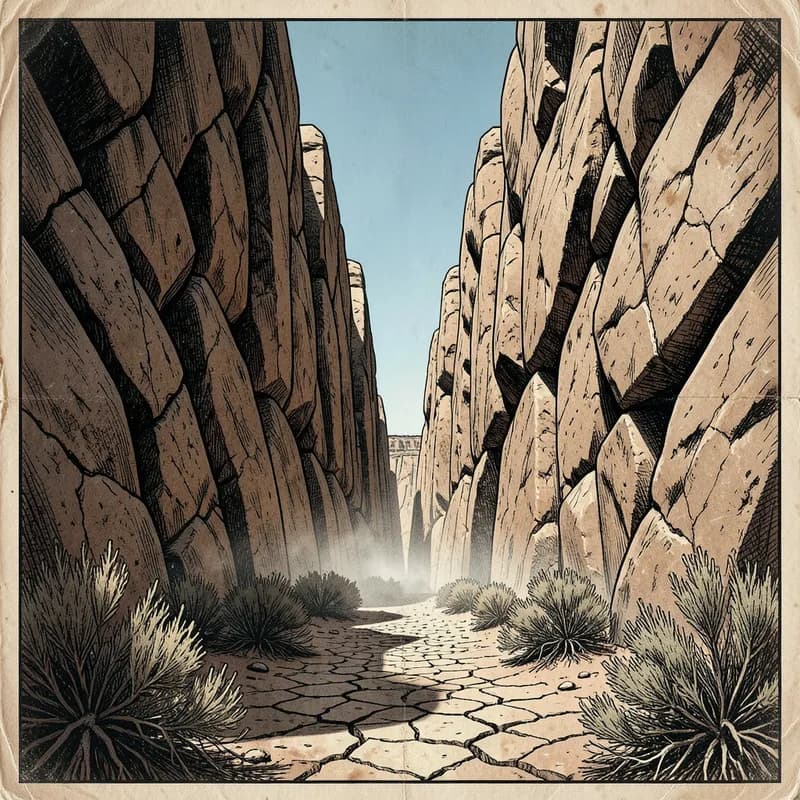
Trapped in the Box Canyon
The walls are closing in. Your next move decides who leaves the canyon alive.
Start as a guest. Choose your character before the story begins.
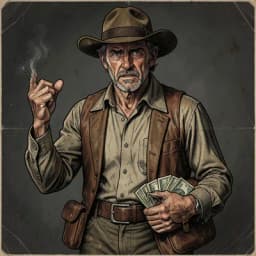
Meet the sample character
The trap is set, and the walls are closing in.
Try a scene · No signup
Dead Man’s Echo
A short sample of this world. Your own version starts with your character.
The sheer granite walls of the canyon press against your shoulders, turning the sky into a jagged ribbon of blue. Dust coats your tongue, tasting of copper and failure. Behind you, the trail ends at a vertical face of solid rock. Ahead, the only path out is blocked by three horses and the men riding them. The shade offers no comfort, only the smell of crushed sage and impending violence.
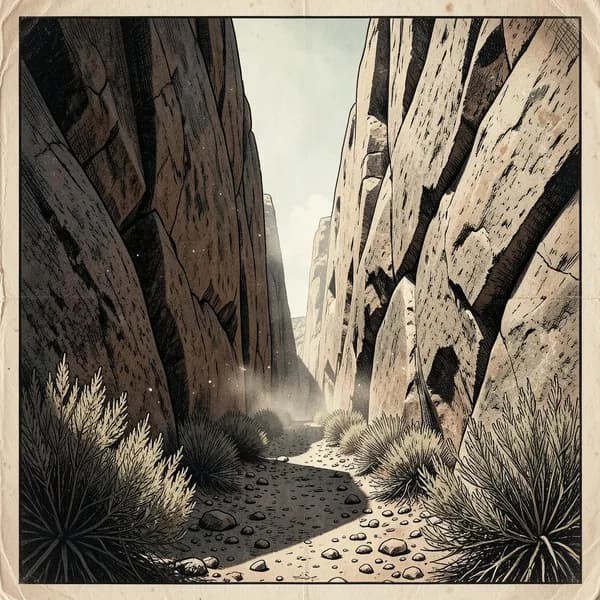
“End of the line, Vane. Hand over that satchel, or we see how much lead your carcass can soak up before you stop twitching.”

Your hand drifts toward the Colt on your hip, but your fingers tremble. It is a rhythmic, mocking pulse that refuses to stop. Miller’s grip on his Winchester is steady, and his eyes show the cold, flat calculation of a man who has already spent your blood money in his head. You have nowhere to retreat, and the sun is beating down with enough heat to crack bone.
“If I drop the bag, you’ll let me walk out of this hole? I know your word is worth less than the dust under my boots.”
Miller spits a glob of tobacco juice into the dirt, his grin widening just enough to show yellowed teeth. He doesn't bother answering. Instead, his finger curls tighter around the trigger guard, and the horses shuffle, kicking up a wall of grit that obscures your vision. You have three seconds before the canyon erupts in gunfire. The weight of the satchel is heavy, but not as heavy as the life you are about to lose.
The air thickens with the smell of gunpowder. How do you meet your end—or fight for a way out?
Your character. Your next move.
The canyon entrance is closing.
The dust cloud from the posse is getting closer. You have seconds to choose: prepare an ambush, try to scale the cliff, or face them head-on. The canyon doesn't care if you live or die, but your next decision will. Claim your spot in the pass and see if you can survive the day.
Draw your iron nowYour Story, Your Way
Everything is customizable. Pick any genre, setting, or character — the AI builds a world around exactly what you want.
Any Character
Design your appearance, personality, backstory — every detail
Any World
Fantasy kingdoms, sci-fi stations, modern cities — you choose
Branching Paths
No two playthroughs are the same. Your choices reshape everything
Full Immersion
AI images, voice acting, sound effects — a living story
Scramble up unstable scree slopes to secure a sniper’s nest above the trail.
Negotiate a tense parley with the leader of the pursuing posse at gunpoint.
Trigger a controlled rockfall to seal the canyon mouth against incoming riders.
Scout for hidden animal trails that might offer a desperate, vertical escape route.
Red dust coats your throat, tasting of copper and dry earth. High above, the rimrock casts long shadows that stretch like reaching fingers toward your horse’s hooves. You thought the trail led to safety, but the path has narrowed into a vertical cage of limestone. Behind you, the sound of iron-shod hooves echoes off the cliffs—a rhythmic, relentless death toll. Ahead, there is only a dead end. Your choices here ripple outward, determining if you emerge as a legend or just another set of bleached bones left for the vultures. This is a story where the terrain is your greatest ally or your final witness, and every decision you make determines your survival.
What is Box Canyon in Western?
A box canyon is a geological dead end, a narrow gorge that opens into a widening base before cutting off abruptly against sheer cliff faces. In the history of the American frontier, it served as both a sanctuary for rustlers and a slaughterhouse for those caught unaware. Think of the climactic tension in films like '3:10 to Yuma' or the brutal, claustrophobic standoffs seen in 'The Searchers'. When you find yourself in such a place, the geography dictates the rules of engagement. You cannot flank your enemy, and you cannot run. You are forced to confront the threat directly, using the terrain—boulders, crevices, and precarious ledges—to even the odds. It is the ultimate test of tactical thinking in a landscape that offers zero room for error. The setting turns the environment into a secondary antagonist, forcing you to think like a scout if you want to see another sunrise.
Why play Box Canyon as an interactive story?
Survival hinges on how you interpret the terrain. Do you scramble up the loose shale to gain the high ground, risking a fall for a better vantage point? Or do you stand your ground, using your saddlebags as cover while the sun blinds your pursuers? The tension lies in the lack of options. Every decision carries weight because the canyon walls amplify every sound, making stealth nearly impossible. You might negotiate with an outlaw leader from behind a limestone pillar, or choose to trigger a rockslide to block the entrance. Your strategy defines the outcome. You aren't just reading about a showdown; you are managing your ammunition, scouting for exits, and gauging the resolve of those hunting you. The agency provided by this setting forces you to be deliberate, as a single wrong turn leaves you pinned against the rock face.
What makes Box Canyon work: the worldbuilding
The box canyon functions as an engine for conflict. It strips away the luxury of movement, forcing characters into a crucible. In classic westerns like 'The Good, the Bad and the Ugly' or the tense sequences in 'Red Dead Redemption', the setting acts as a character in the drama. The walls are not just scenery; they are acoustic chambers where a match strike sounds like a gunshot and whispers carry across the floor. To build a scene here, focus on the sensory details: the heat radiating off the rock, the smell of sagebrush crushed underfoot, and the claustrophobia of looking up and seeing nothing but a sliver of blue sky. Characters defined by their patience or their desperation thrive here. A lawman might use the acoustics to trick his prey, while a cornered outlaw might rely on the canyon’s natural traps to even a lopsided fight. It is a place where the environment itself demands a reckoning, rewarding those who observe their surroundings over those who simply charge in with guns blazing.
FAQ
What makes a box canyon dangerous?
It restricts movement to a single point, making it impossible to outmaneuver an opponent. Once you are inside, your only options are to hold the entrance or find an impossible way out.
How do I survive an ambush here?
You must use the environment, such as boulders, crevices, or high ground, to mitigate the enemy's advantage. Identifying cover before the shooting starts is the difference between life and death.
Can I escape if I’m cornered?
Depending on the specific terrain, you might find hidden goat paths or use tools to clear a new exit. It requires careful scouting and a bit of luck.
Why is this setting common in Westerns?
It creates immediate, high-stakes tension because there is nowhere to retreat. It forces characters to confront their problems rather than running away.
Explore more Western stories like Outlaw Redemption, Sheriff Showdown, Gold Rush Fever.
More Western Stories
Outlaw Redemption
You rode the wrong side of the law for years, but something has changed. Now you seek to make amends in a frontier that never forgets and rarely forgives, where your past rides hard on your heels.
TropeSheriff Showdown
The badge on your chest makes you the only thing standing between a lawless town and chaos. When the outlaws ride in, you must rally the townsfolk or face the gang alone in a showdown on Main Street.
TropeGold Rush Fever
Gold has been found in the hills, and the world has gone mad. You join the stampede of dreamers, swindlers, and desperados chasing fortune in a lawless camp where a nugget of gold can buy you everything or cost you your life.
TropeTrain Robbery
The iron horse carries a fortune in gold, and your gang has a plan to take it. Thunder down the tracks on horseback, board the moving train, and pull off the heist before the Pinkertons close in.
TropeFrontier Justice
Out here, the nearest judge is three days' ride away, and justice cannot wait. You take the law into your own hands, but every verdict you pass blurs the line between righteousness and tyranny.
TropeCattle Drive
A thousand head of cattle, a hundred miles of hostile territory, and a crew of cowboys who may not all make it. You lead the drive through storms, rustlers, and river crossings where one wrong move means disaster.