
Sword & Sorcery · Interactive story
King of Uruk: The Gilgamesh Epic
Two-thirds god, one-third man, and a crown heavy with the weight of mortality.
Start as a guest. Choose your character before the story begins.
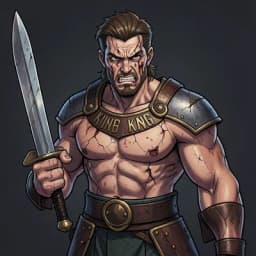
Meet the sample character
The cedar forest holds a king’s mortality in its roots.
Try a scene · No signup
The Breath of Humbaba
A short sample of this world. Your own version starts with your character.
You stand before the towering, blackened trunks of the Cedar Forest, your bronze axe heavy and cold in your grip. The air reeks of damp decay and ancient sap, a thick mist clinging to the gold-inlaid armor that marks you as the King of Uruk. Somewhere ahead, the ground tremors—a rhythmic, heavy thud that promises the approach of something far larger than a man.

“Listen to the wind, Gilgamesh. It carries his scent—the stench of a beast that has never known a master's whip.”

You tighten your jaw, the phantom ache of your own mortality throbbing in your chest like a war drum. Every tree in this grove is a living monument to a power that predates your kingdom, and you are here to tear it down. Enkidu watches you, his eyes reflecting the flickering torchlight, waiting to see if the king will lead or if the man will falter.
“Let him come, Enkidu. I did not cross the burning wastes to trade insults with a tree-tender.”
A roar tears through the canopy, shattering the heavy silence. The branches above explode outward, and a pair of eyes, burning like furnace coals, lock onto yours from the shifting darkness. The forest floor buckles beneath you, and you have one heartbeat to decide how you will challenge this guardian of the old gods.
The guardian lunges from the foliage, its massive claws tearing through the earth. How will you meet the charge?
Your character. Your next move.
Claim the throne of Uruk today.
The Cedar Forest awaits your blade, and the gods are watching your every move. Will you be the king who conquered death, or will you be the one who finally learns to live? The path to immortality is paved with the choices you make right now. Don't let your legend fade into the sands of time.
Begin your reignYour Story, Your Way
Everything is customizable. Pick any genre, setting, or character — the AI builds a world around exactly what you want.
Any Character
Design your appearance, personality, backstory — every detail
Any World
Fantasy kingdoms, sci-fi stations, modern cities — you choose
Branching Paths
No two playthroughs are the same. Your choices reshape everything
Full Immersion
AI images, voice acting, sound effects — a living story
Decide whether to embrace Enkidu as a brother or execute him as a threat.
Command the construction of Uruk’s defenses against encroaching divine wrath.
Navigate the treacherous journey to the Garden of the Sun to seek eternal life.
Choose your final legacy: a king who sought power or a man who sought truth.
The mud-brick walls of Uruk bake under a relentless sun. You sit on the throne, your grip tight on a bronze scepter, while citizens murmur of your tyranny. Outside, the wild man Enkidu approaches, sent by the gods to humble you. In this interactive story, your reactions to his arrival change the history of Mesopotamia. Will you crush this challenger beneath your heel, or find a brother in the untamed plains? Every order you bark, every sacrifice you demand, ripples through the city. The gods watch from the clouds, waiting to see if you will rise as a hero or fall as a tyrant. Your choices dictate whether your name is carved into history or buried under the shifting sands of time.
What is Gilgamesh in Sword & Sorcery?
Gilgamesh is the archetype of the hero-king, the protagonist of the oldest surviving literary work in human history. The Epic of Gilgamesh traces his transformation from a brutal ruler of Uruk to a man obsessed with the fragility of life. He is not a polished knight in shining armor; he is a force of nature, driven by pride, grief, and a desperate fear of the grave. You might recognize echoes of his journey in modern media, such as the philosophical weight found in the Fate/stay night anime series or the monster-slaying tropes seen in games like Hades. Unlike later mythological heroes who seek glory through conquest alone, Gilgamesh seeks something far more elusive: a way to cheat the finality of death. He travels to the edges of the world, speaks to the survivor of a great flood, and confronts the limits of his own divinity. By participating in this story, you inhabit a character who exists at the intersection of myth and humanity, where the sword is sharp but the sting of mortality is sharper.
Why play Gilgamesh as an interactive story?
Playing as Gilgamesh means balancing the raw power of a god with the crushing anxieties of a man. You face the tension between ruling a city that fears you and finding a companion who understands you. Will you prioritize the construction of Uruk’s massive walls, or hunt the demon Humbaba in the Cedar Forest to prove your strength? These decisions aren't just tactical; they define your humanity. When Enkidu falls, the narrative shifts from conquest to mourning. You must choose how to process that loss. Do you descend into a nihilistic rage, or do you pursue wisdom? Every dialogue option tests whether you value the legacy of stone monuments or the fleeting warmth of human connection. The agency you possess forces you to confront the same existential questions that haunted the king of Uruk: is power worth the price of solitude?
The literary legacy of Gilgamesh
The Epic of Gilgamesh was etched into clay tablets by the Sumerians thousands of years ago, long before the invention of the printing press or the novel. Its rediscovery in the 19th century fundamentally altered our understanding of ancient literature, revealing that humanity’s deepest questions—what happens when we die, and what do we leave behind—have remained unchanged for millennia. The story has been reimagined in everything from the graphic novels of the 20th century to the complex characterizations in the Sid Meier’s Civilization series. Unlike the stoic heroes of later centuries, Gilgamesh is messy. He cries, he rages, and he fails. This vulnerability is why his story endures. He is the first literary figure to suffer from the human condition, a concept that makes him remarkably relatable in an interactive format. By placing you in the driver’s seat, the narrative gains a layer of urgency missing from static texts. You aren't just reading about a king who lost his friend; you are holding his grief in your hands. This is a story about the transition from a life of selfish conquest to a life of wisdom, and it remains the gold standard for character-driven conflict.
FAQ
What makes Gilgamesh different from other mythological heroes?
He is defined by his limitations. Most heroes seek wealth or kingdom; Gilgamesh seeks an answer to his own mortality, making his motivation deeply personal and existential rather than purely martial.
Can I change the ending of the epic?
Yes. You can choose to prioritize different goals throughout your journey, which can alter the fate of Uruk, the status of your relationships, and the ultimate outcome of your quest for immortality.
Is this story historically accurate?
It blends historical figures with mythological elements. While Uruk was a real city and Gilgamesh was likely a historical king, the events of the narrative are rooted in ancient Sumerian myth and legend.
How do my choices impact the story?
Your decisions affect your character's traits and relationships, which dictate how other characters react to you and which paths through the world become available to you as you progress.
Explore more Sword & Sorcery stories like Barbarian Quest, Ancient Tomb Raid, Sorcerer Duel.
More Sword & Sorcery Stories
Barbarian Quest
You come from the wild lands with nothing but a blade and iron will. Carve your path through civilized treachery, ancient ruins, and sorcerous enemies who underestimate the fury of the uncivilized.
TropeAncient Tomb Raid
A forgotten king's tomb lies unsealed, its corridors lined with traps, curses, and treasures that haven't seen daylight in millennia. Plunder the dead — if you can survive what guards them.
TropeSorcerer Duel
Two wielders of dark power face off in a contest of will, cunning, and raw magical force. Challenge a rival sorcerer to a duel where the loser pays with far more than their life.
TropeMercenary Contract
Gold is gold, and you don't ask questions — until the job turns out to be far darker than the contract described. Navigate double-crosses, moral dilemmas, and enemies on every side.
TropeGladiator Arena
The crowd roars and the gate rises. Fight beasts, warriors, and sorcerers on the blood-soaked sand, winning your freedom one kill at a time — or die entertaining the masses.
TropeCursed Blade
The sword whispers to you, promising victory at a terrible cost. Wield a weapon of legendary power that feeds on your soul, and discover whether you master the blade or it masters you.