
Solarpunk · Interactive story
Life Inside the Glass Spire
The sun hits the glass, and the city waits for your harvest.
Start as a guest. Choose your character before the story begins.

Meet the sample character
One bad harvest could starve the district.
Try a scene · No signup
Roots of the Spire
A short sample of this world. Your own version starts with your character.
You kneel on the damp slats of Level 22, the scent of mycelium and rich, turned earth hanging heavy in the recycled air. Golden light filters through the exterior glass, illuminating the algae vats that power your district. You hold a vial of runoff water, its color slightly off—a sickly, metallic violet instead of the healthy, muddy brown of thriving rot.

“The sensors say the batch is clean, Jiro. Put the sample down before the morning shift notices you're still obsessing over the pH levels.”
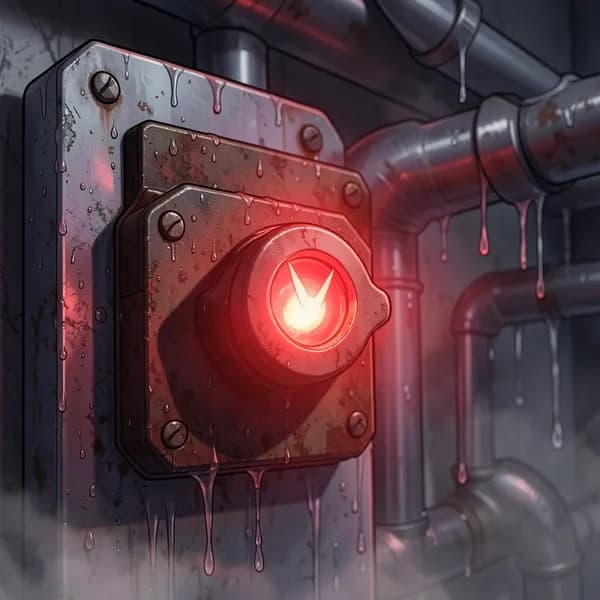
The hum of the atmospheric scrubbers vibrates against your palms as you steady your breathing. Sora’s hand hovers near the emergency purge valve, her eyes darting toward the surveillance camera at the far end of the aisle. The entire harvest for the lower sectors depends on this cycle, and your gut screams that the automated system is being bypassed to prioritize industrial supply over neighborhood food.
“The sensors are lying, Sora. If we don't dump this batch, the blight will reach the hydroponic tubers by midnight. Are you really going to let them poison the people we feed just to hit a quota?”
The silence stretches, broken only by the distant drip of condensation from the overhead irrigation pipes. You see Sora’s fingers tremble; she looks at the red manual override switch, then back at you. Outside the glass, the city’s solar array catches the fading sun, but in here, the shadows are deepening into a choice that could cost both of you your professional licenses—or save the entire tower from a week of hunger.
The security camera light turns red as the system detects your unauthorized probe. How do you stop the blight?
Your character. Your next move.
Will your harvest sustain the city?
The sun is setting, and the nutrient levels on floor fifteen are dropping. The district is waiting for your decision on the next harvest. Take control of the spire and prove that a sustainable future is possible.
Begin Your HarvestYour Story, Your Way
Everything is customizable. Pick any genre, setting, or character — the AI builds a world around exactly what you want.
Any Character
Design your appearance, personality, backstory — every detail
Any World
Fantasy kingdoms, sci-fi stations, modern cities — you choose
Branching Paths
No two playthroughs are the same. Your choices reshape everything
Full Immersion
AI images, voice acting, sound effects — a living story
Allocate limited water resources between high-yield hydroponics and local community garden plots.
Negotiate with the district council on how to distribute surplus produce during a heatwave.
Repair antique automated irrigation systems before the delicate saplings on level twelve perish.
Choose to experiment with new, unproven crop varieties to increase long-term food security.
Jiro wipes the condensation from the hydroponic tray on level twenty-two. Beneath his boots, the city hums, but up here, it is only the sound of misting systems and the scent of ripening heirloom tomatoes. Every decision made within these walls ripples outward to the hungry district below. In this interactive story, your choices dictate whether the tower flourishes or withers under the pressure of a changing climate. Managing the logistics of a vertical farm requires more than agricultural knowledge; it requires an understanding of the fragile community relying on your output. You are the steward of the spire, and the next crop cycle starts with your first command.
What is Vertical Farm Tower in Solarpunk?
Vertical farms are the heart of solarpunk design, turning concrete jungles into living, breathing ecosystems. Instead of sprawling fields, crops grow in stacked layers, often integrated into the very architecture of the city. Becky Chambers’ 'Psalm for the Wild-Built' captures this ethos well, where technology and nature exist in a symbiotic loop rather than opposition. A tower acts as a local hub, processing waste into compost and sunlight into calories. It is a closed-loop system where efficiency meets communal care. Unlike traditional industrial agriculture, these towers focus on hyper-local distribution, reducing the carbon footprint of every meal. In these stories, the architecture is a character itself, with floors dedicated to different climates, from humid mushroom chambers to arid herb terraces. You are not just managing plants; you are maintaining a piece of the city's infrastructure that keeps the neighborhood fed and self-sufficient.
Why play Vertical Farm Tower as an interactive story?
Playing through a vertical farm management narrative puts the weight of the district on your shoulders. You move beyond simple resource tracking and into the difficult social dynamics of a post-scarcity society trying to maintain its equilibrium. You will face moments where the nutrient system malfunctions, forcing you to choose between saving the high-value medicine crops or the staple grains that feed the schoolhouse. You interact with technicians, community organizers, and desperate neighbors, each with their own agenda for how the tower’s resources should be allocated. The tension arises from the fragility of your closed-loop system—one mistake in the water filtration settings can jeopardize a month of labor. Agency matters here because every harvest you successfully complete strengthens the community, while every failure pushes the district closer to reliance on external, less sustainable sources.
What makes Vertical Farm Tower work: the worldbuilding
The vertical farm setting generates conflict through the intersection of biology and bureaucracy. It is a closed environment where the stakes are immediate and physical. Kim Stanley Robinson’s 'Mars' trilogy provides a blueprint for how resource management drives human drama, while the architectural density of 'Cloud Atlas' helps visualize the scale of these structures. In a solarpunk context, the conflict is rarely about external villains; it is about the internal struggle to maintain balance in a changing environment. Character types thrive here: the weary agronomist who remembers when farming was done in soil, the idealistic apprentice who believes technology can solve any scarcity, and the local fixer who knows which pipes to bypass to keep the misting systems running. Sensory details ground the narrative: the persistent hum of UV lamps, the smell of damp mulch on the upper levels, the heat radiating from the glass exterior, and the sound of water cycling through the central vein of the building. These elements transform the tower from a static background into a living machine that requires constant, thoughtful intervention. When the player understands the rhythm of the tower—the daily cycles of light, the seasonal shifts in nutrient requirements, and the social pressure of the neighborhood—the story becomes an exercise in stewardship. The goal is not to conquer the tower, but to synchronize with it, turning a glass spire into a permanent monument to human and ecological cooperation.
FAQ
What is the goal of the Vertical Farm Tower story?
The goal is to maintain the tower's productivity while balancing the needs of the community. You are responsible for crop yields, infrastructure maintenance, and social harmony within the district.
How does the AI handle my agricultural decisions?
The AI tracks the state of your tower's ecosystems. Your choices regarding water, light, and labor allocation directly impact the success of your harvests and the well-being of the residents who depend on them.
Is this story setting appropriate for beginners?
Yes. While the management mechanics provide depth, the narrative is accessible. You are guided through the daily operations of the tower, making it easy to learn the rhythm of the life-support systems.
Can I influence the politics of the district?
Absolutely. Decisions you make about the tower’s output, such as donating surplus to the local school or trading with neighboring districts, directly influence the political and social standing of your tower.
Explore more Solarpunk stories like Green City Utopia, Community Garden Revolution, Solar Harvest.
More Solarpunk Stories
Green City Utopia
The city breathes. Vertical gardens climb every building, solar panels coat every surface, and the air is cleaner than it has been in centuries. But maintaining this utopia requires sacrifices not everyone is willing to make.
TropeCommunity Garden Revolution
It started with a single garden and grew into a movement. You lead a community that is reclaiming urban space one plot at a time, feeding neighborhoods and challenging the corporations that control the food supply.
TropeSolar Harvest
The sun provides everything your community needs—if you can build the technology to harvest it. You race to complete a solar array that will free your people from dependency on fossil fuel corporations.
TropeEco-Sabotage
The megacorp's pipeline will destroy the last wild river. Legal channels have failed, and you face the moral weight of sabotage—breaking the law to save what cannot speak for itself.
TropeCooperative Governance
No presidents, no kings—just the community deciding together. You navigate the messy, beautiful reality of cooperative governance where every voice matters and consensus is both the goal and the greatest challenge.
TropeRewilding Mission
The concrete is being torn up and the forests are coming back. You lead a rewilding mission to restore a devastated landscape, reintroducing species and rebuilding ecosystems that took millennia to develop.