
Solarpunk · Interactive story
The Last Tide: Healing the Pacific
The horizon isn't lost; it is waiting for someone to clear the mess.
Start as a guest. Choose your character before the story begins.
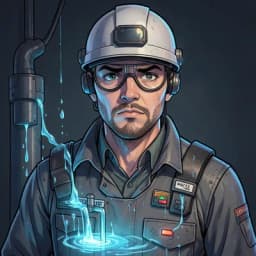
Meet the sample character
The last filter is failing, and the currents are turning.
Try a scene · No signup
Salt-Crusted Circuits
A short sample of this world. Your own version starts with your character.
You press your palm against the vibrating bulkhead of the Gyre Station. Outside, the bioluminescent filtration membranes pulse with a rhythmic, sickly glow, struggling to catch the micro-plastics swirling in the current. The scent of brine and ozone is sharp, a reminder that the ocean here is a fragile machine you are desperately trying to repair. A red light pulses in the corner of your vision, signaling a critical blockage in the primary intake.

“The intake pressure is climbing, Jiro. If we don’t clear the debris manually, the whole grid goes dark.”

You stare at the console, where the data streams paint a grim picture of the surrounding water. The mechanical strain is evident in the rhythmic groan of the metal supports holding back the tide. If you force the turbines to reverse, you might shatter the fragile coral polyps that have begun colonizing the exterior of the station—a success story you promised the council you would protect at all costs.
“I’m going out there. If I don't clear it now, the coolant leak will contaminate the entire nursery.”
You pull your thermal suit tight, the fabric cold against your skin, and step toward the airlock. The alarm blares, a sharp, dissonant sound that cuts through your focus. Through the reinforced viewport, you see a massive tangled web of ghost nets and jagged plastic drifting toward the main intake, far larger than your standard clearance tools can handle. You have seconds before the turbine grinds to a permanent halt.
The turbine is screeching as the ghost net tangles in the blades. How do you intervene?
Your character. Your next move.
The Tides Are Waiting for Your Command
The plastic is piling up, and the coral is struggling to breathe. Your team is ready to deploy, but your protocols will determine whether this mission saves the region or causes more harm. Will you prioritize speed or sensitivity? The decision is yours to make.
Start the Cleanup OperationYour Story, Your Way
Everything is customizable. Pick any genre, setting, or character — the AI builds a world around exactly what you want.
Any Character
Design your appearance, personality, backstory — every detail
Any World
Fantasy kingdoms, sci-fi stations, modern cities — you choose
Branching Paths
No two playthroughs are the same. Your choices reshape everything
Full Immersion
AI images, voice acting, sound effects — a living story
Calibrate autonomous drone swarms to filter microplastics without harming local krill populations.
Negotiate water rights with maritime trade guilds to secure safe passage for restoration vessels.
Repair damaged collection arrays during high-intensity storms while maintaining a low carbon footprint.
Haruto adjusts the tether, the salt air stinging his eyes as the drone swarm descends into the Great Pacific Garbage Patch. Beneath him, the water is a swirling soup of synthetic fibers and bleached plastic, a silent witness to a century of excess. You are the pilot of this reclamation vessel, tasked with separating the debris from the living currents. Every decision—from how you filter the microplastics to how you handle the local fishing guilds who view your tech as a threat—shapes the health of the ecosystem. You must weigh the efficiency of your equipment against the preservation of the delicate marine life caught in the wake of your cleanup. This is an interactive story where your choices determine whether the ocean returns to life or remains a ghost of the industrial age.
What is Ocean Cleanup in Solarpunk?
Ocean cleanup in solarpunk is more than a technical challenge; it is an act of defiance against apathy. It centers on the transition from exploitation to stewardship. Unlike cyberpunk, which often treats the environment as a lost cause, solarpunk narratives focus on restorative justice for the planet. Consider the film Nausicaä of the Valley of the Wind, where the protagonist works to understand and heal a toxic ecosystem rather than simply destroying it. Or look at the game Subnautica, where the survival mechanics shift from mere extraction to understanding the deep biology of an alien ocean. In these stories, the ocean is a character with its own agency, responding to the healing efforts of the protagonist. Cleanup is a slow, methodical process that requires patience, modular engineering, and diplomacy between factions who rely on the sea for their survival. It frames the environment as the primary stakeholder in every political and economic interaction.
Why play Ocean Cleanup as an interactive story?
You are not just pushing buttons; you are balancing the needs of a broken world. You face the choice of deploying high-speed filtration that clears plastic quickly but disturbs the migratory patterns of whales, or opting for a slower, quieter collection method that risks missing the peak currents. You will encounter internal disputes within your crew: some want to prioritize the most visible pollution, while others argue for tackling the invisible microplastic toxins first. The tension comes from the scarcity of resources and the pressure of time. When a sudden storm threatens to rip your collection arrays from their moorings, do you sacrifice the hardware to save the data you have collected, or do you prioritize the safety of your team? Each outcome ripples forward, affecting the biodiversity counts in your next sector and your reputation among coastal communities.
Famous examples of Ocean Cleanup in books, film, and games
Stories about ocean restoration often mirror the real-world shift from industrial extraction to circular ecology. In The Blue World by Jack Vance, the protagonist survives on a planet covered by water, forcing a deep understanding of marine ecology to survive. In more modern contexts, the anime A Lull in the Sea explores the relationship between surface dwellers and the ocean floor, emphasizing the consequences of human activity on aquatic civilizations. These narratives emphasize that the ocean is not a bottomless waste bin, but a living system. The trope endures because it taps into a universal human desire to fix what we have broken. It moves away from the hero saves the day trope and into the community restores the balance reality, making the act of cleanup a profound moral statement rather than just a chore. By focusing on the scientific and social hurdles of restoration, these stories highlight that healing the planet is a collective, ongoing effort.
FAQ
What makes ocean cleanup stories unique?
They focus on restoration rather than destruction, prioritizing long-term ecological health over immediate industrial output. The conflict arises from the difficulty of fixing past mistakes.
How does the environment affect gameplay?
Currents, weather, and marine migration patterns act as changing variables that challenge your strategy. You must adapt your cleanup methods to match the local ecosystem.
Can I focus on diplomacy?
Yes, you can choose to spend your resources building relationships with coastal communities to secure better cleanup sites and gain local support for your mission.
Is this right for me?
If you enjoy strategic problem-solving and stories that emphasize environmental hope and community building, this genre is a perfect fit.
Explore more Solarpunk stories like Green City Utopia, Community Garden Revolution, Solar Harvest.
More Solarpunk Stories
Green City Utopia
The city breathes. Vertical gardens climb every building, solar panels coat every surface, and the air is cleaner than it has been in centuries. But maintaining this utopia requires sacrifices not everyone is willing to make.
TropeCommunity Garden Revolution
It started with a single garden and grew into a movement. You lead a community that is reclaiming urban space one plot at a time, feeding neighborhoods and challenging the corporations that control the food supply.
TropeSolar Harvest
The sun provides everything your community needs—if you can build the technology to harvest it. You race to complete a solar array that will free your people from dependency on fossil fuel corporations.
TropeEco-Sabotage
The megacorp's pipeline will destroy the last wild river. Legal channels have failed, and you face the moral weight of sabotage—breaking the law to save what cannot speak for itself.
TropeCooperative Governance
No presidents, no kings—just the community deciding together. You navigate the messy, beautiful reality of cooperative governance where every voice matters and consensus is both the goal and the greatest challenge.
TropeRewilding Mission
The concrete is being torn up and the forests are coming back. You lead a rewilding mission to restore a devastated landscape, reintroducing species and rebuilding ecosystems that took millennia to develop.