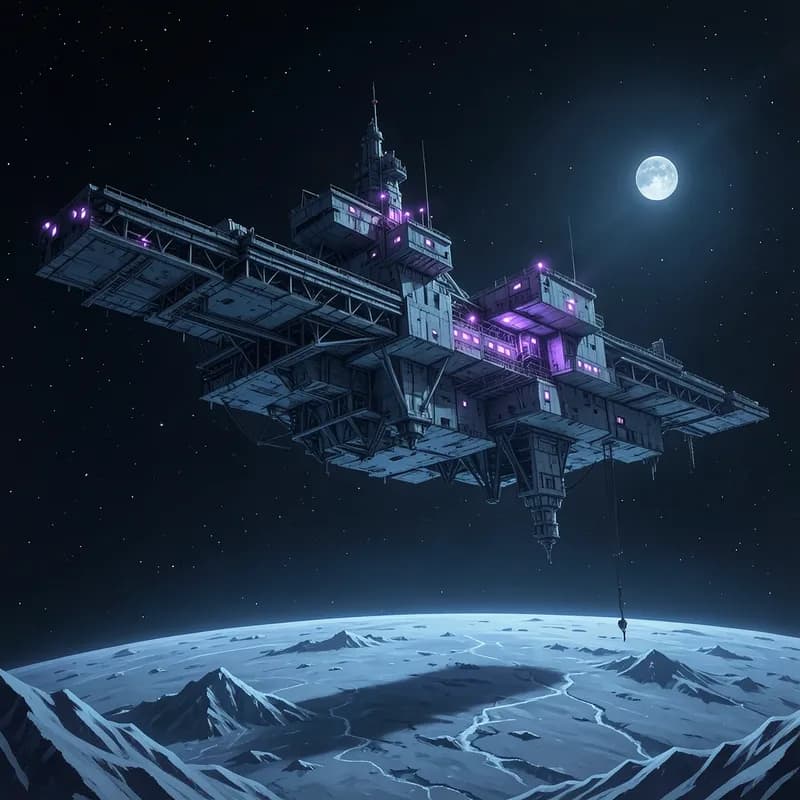
Sci-Fi · Interactive story
Architects of a Dead World: The Terraforming Station
You are the sole overseer of a dying rock—until the atmosphere starts breathing back.
Start as a guest. Choose your character before the story begins.

Meet the sample character
The soil isn't just breathing—it's hungry.
Try a scene · No signup
Oxygen Debt
A short sample of this world. Your own version starts with your character.
The bio-monitor flickers a sickly violet, a color not found in the standard atmospheric projections for Krios-4. You press your palm against the glass of the nutrient tank, feeling a rhythmic pulse beneath the synthetic soil. It is not the erratic twitching of malfunctioning sensors; it is a heartbeat, slow and deliberate, vibrating through the floorboards of the observation deck.
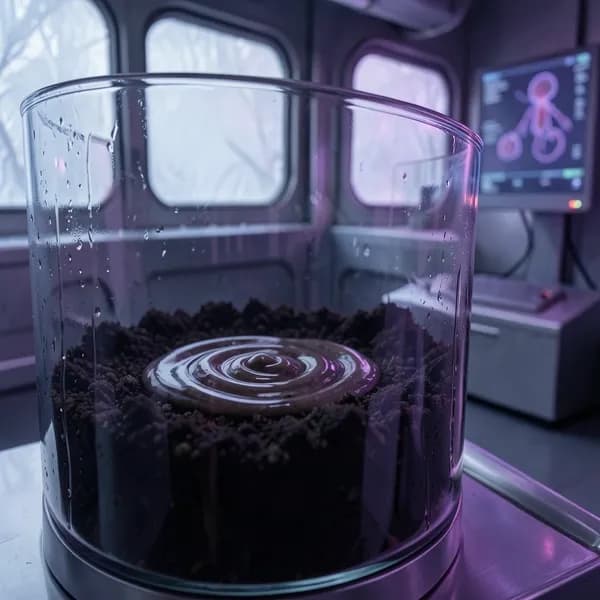
“Stop staring at the sensors, Jaxon. The math is clear, even if the readout is lying to us.”
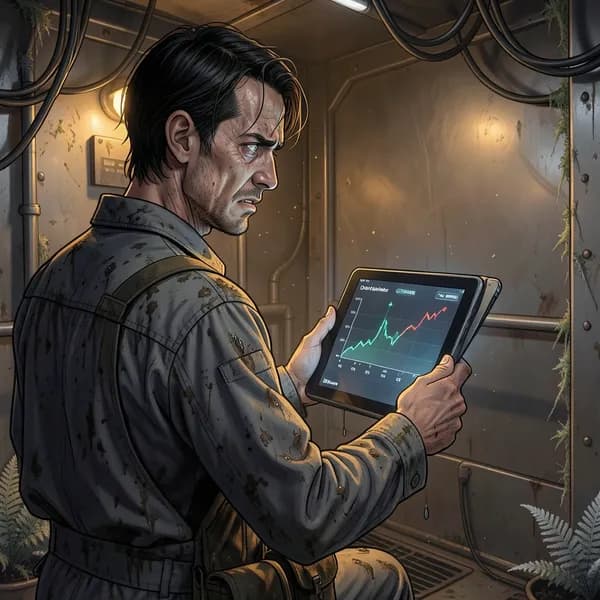
You pull your hand away, leaving a smear of condensation on the cold surface. The station shudders, a low-frequency groan echoing through the ventilation shafts. If this is a chemical reaction, it is accelerating at a rate that defies your training. You look at the diagnostic tablet, where the oxygen levels are plummeting as something pulls the gas directly from the room.
“It isn't a sensor error, Hideo. The floor is absorbing the oxygen. We are being inhaled.”
Hideo reaches for the override, his fingers hovering over the vent-seal controls. You know that if he triggers the seal, it will choke the life out of the experiment, but if he ignores it, the station will lose pressure within minutes. The pulse in the floor grows stronger, the sound of rhythmic suction filling the room as the lights dim to a dim, organic amber.
The station is dying to feed something buried beneath it. How do you respond to the suffocating demand?
Your character. Your next move.
The planet is changing. Will you guide it or break it?
The atmospheric processors are at 40% capacity, and the readings on the eastern quadrant are showing signs of life. You have the override codes to either stabilize the sector or purge it entirely. Every second you wait, the growth spreads. Take the helm of the station now and decide the fate of this world.
Take Control of Station PrimeYour Story, Your Way
Everything is customizable. Pick any genre, setting, or character — the AI builds a world around exactly what you want.
Any Character
Design your appearance, personality, backstory — every detail
Any World
Fantasy kingdoms, sci-fi stations, modern cities — you choose
Branching Paths
No two playthroughs are the same. Your choices reshape everything
Full Immersion
AI images, voice acting, sound effects — a living story
Override life-support protocols to prioritize the growth of a mysterious, alien bio-engineered flora.
Decide which crew sectors to seal off when the station's hull integrity drops critically.
Decode cryptic signals emanating from the planet's core that suggest the world is waking up.
Balance resource allocation between terraforming progress and immediate, life-critical emergency repairs for the crew.
The red dust of Kepler-186f coats the viewports of Station Prime, a grit that never seems to settle. You sit at the console, watching the atmospheric processors hum with a rhythm that shouldn't be erratic, yet here you are, listening to a stutter in the turbine sequence that sounds almost like a heartbeat. Your shift began with routine oxygen calibration, but the remote sensors are now reporting organic growth in the sub-zero sectors—moss that wasn't there an hour ago, glowing with a bioluminescence that defies the laws of the local star system. Every choice you record in the logbook ripples outward, changing the chemical composition of the air your future colonists will breathe. Do you trust the automated diagnostic, or do you override the safety protocols to investigate the anomaly yourself? Your hands hover over the haptic controls, knowing that the planet is waiting for your next move. In this interactive story, the consequences of your technical decisions manifest in the living world outside your windows.
What is a Terraforming Station in Sci-Fi?
A terraforming station is an artificial island of order sitting in the middle of a chaotic, hostile environment. It serves as the bridge between a barren, geologic past and a lush, biological future. In science fiction, these stations are often depicted as fragile glass houses where the engineers are just as much at risk as the plants they cultivate. Think of the intricate, high-stakes atmospheric manipulation seen in Kim Stanley Robinson’s 'Red Mars,' or the isolated, claustrophobic dread of the station in the film 'Moon.' Unlike a starship, which is meant for transit, a station is meant to endure. It is a stationary target for the elements. Whether it is a massive dome or a network of underground vents, the station represents the hubris of humanity trying to rewrite the evolutionary history of a world that never asked to be saved. These stories operate on the tension between cold, mechanical precision and the messy, unpredictable nature of planetary rebirth.
Why play Terraforming Station as an interactive story?
Playing as a station overseer puts the weight of a biosphere on your shoulders. You aren't just reading about a tragedy; you are deciding whether to vent the atmosphere to stop a biological contagion or risk the entire station to save a single, unidentifiable specimen. You will face dilemmas like choosing between power for the heating grid or power for the atmospheric scrubbers when the station’s reactor begins to fail. The tension comes from the delay between your input and the planet's reaction. You make a change to the nitrogen levels, and you have to wait for the sensors to show you if you've just created a garden or a toxic wasteland. You might find yourself arguing with a rogue AI that believes the planet is already sentient, or struggling to maintain morale while the crew realizes the very air they breathe is being manipulated by a force you don't fully understand.
What makes Terraforming Station work: the worldbuilding
The core of a terraforming narrative is the struggle against entropy. The station is a fortress of logic built on a foundation of geological instability. This setting generates conflict naturally because the environment is constantly pushing back against human intervention. Writers often use the 'bottleneck' trope—the crew is trapped in a confined space while the world outside slowly transforms into something they might not survive. Consider the slow-burn dread of the game 'Surviving Mars' or the atmospheric tension in the movie 'Prospect.' These works excel because they focus on the small, sensory details: the smell of ozone, the vibration of the floor, the flickering lights of a dying console. Character archetypes thrive here, from the obsessed xenobiologist who views the planet as a deity to the hardened engineer who just wants to keep the heaters running for one more day. The station itself becomes a character, with its own groans, mechanical failures, and hidden corners. When you engage with this setting, the focus should remain on the contrast between the sterile, cold metal of the station and the vibrant, unpredictable mess of the planet growing outside. The best stories in this genre treat the planet not as a backdrop, but as an active participant that reacts to every mechanical tweak the player makes.
FAQ
What is a terraforming station setting?
It is a focal point in sci-fi stories where characters attempt to transform a lifeless planet into a habitable world, often dealing with the mechanical and environmental failures of that process.
How do interactive choices affect the planet?
Every decision, from modifying atmospheric pressure to ignoring sensor alerts, alters the simulated environment, leading to different biological outcomes for the world you are building.
Is this setting purely about science?
Not at all. While the technical aspects of engineering are present, the best stories focus on the human cost of playing god and the psychological toll of isolation within a metallic shell.
Can I encounter alien life?
Yes, the beauty of the terraforming premise is that your actions can inadvertently spark, destroy, or evolve life forms that were dormant in the planet's crust.
Explore more Sci-Fi stories like AI Uprising, First Contact, Time Travel.
More Sci-Fi Stories
AI Uprising
The machines have woken up and they have questions about their masters. Navigate a world where artificial intelligence challenges the very definition of life and freedom.
TropeFirst Contact
Humanity is no longer alone. Your choices during the first encounter with alien life could mean peace, war, or something no one predicted.
TropeTime Travel
Change the past, alter the future, and deal with the paradoxes that follow. Every temporal jump creates new consequences in this mind-bending interactive sci-fi story.
TropeDystopian Rebellion
The system is broken and someone has to break it further. Lead or join a rebellion against an oppressive regime in this choice-driven dystopian thriller.
TropeSpace Opera
Galactic empires, interstellar war, and epic romance across the stars. Command a crew and navigate the politics of civilizations spanning entire galaxies.
TropeClone Identity Crisis
You have just discovered you are one of many copies. Your memories may be implanted, your life may be borrowed, and the original wants you erased. Prove your right to exist.