Sci-Fi · Interactive story
Beyond the Rim: Charting the Unknown
The sensors are screaming, the star charts are blank, and you are lightyears from home.
Start as a guest. Choose your character before the story begins.

Meet the sample character
Dead stars don't send distress calls.
Try a scene · No signup
The Silence at Kepler-9
A short sample of this world. Your own version starts with your character.
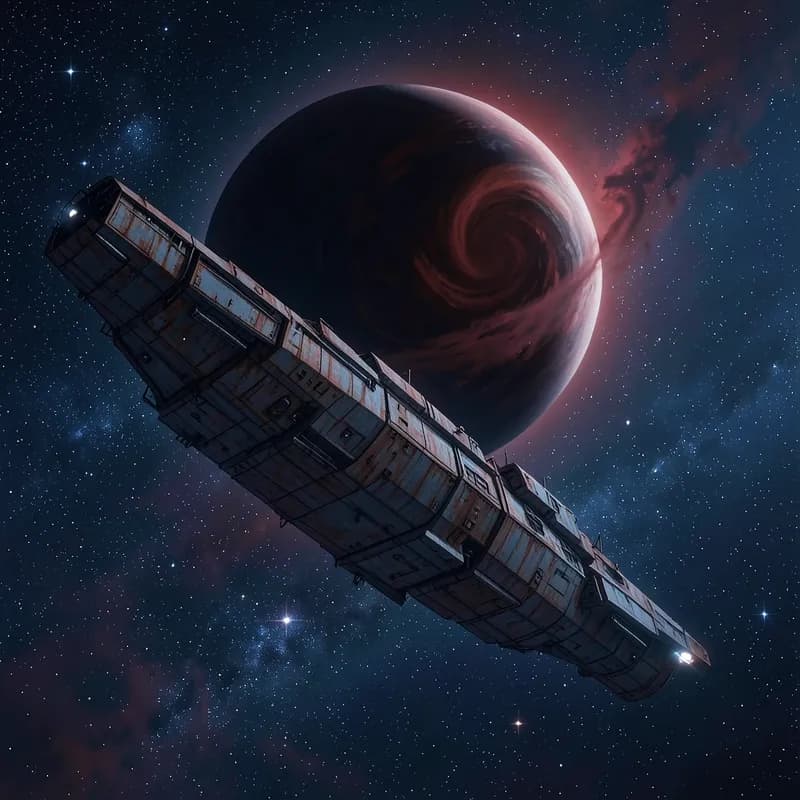
You watch the long-range sensors, your fingers trembling over the haptic feedback controls. The OSS Meridian drifts in the shadow of Kepler-9, a star that supposedly died three centuries ago. Yet, the radiation readings on your console climb with impossible speed. The air in the bridge tastes of recirculated oxygen and stale coffee, thick with the weight of the unknown.

“Stabilize the sensors, Vane. If that signal is just a solar flare, we’ve wasted three months of fuel for nothing.”
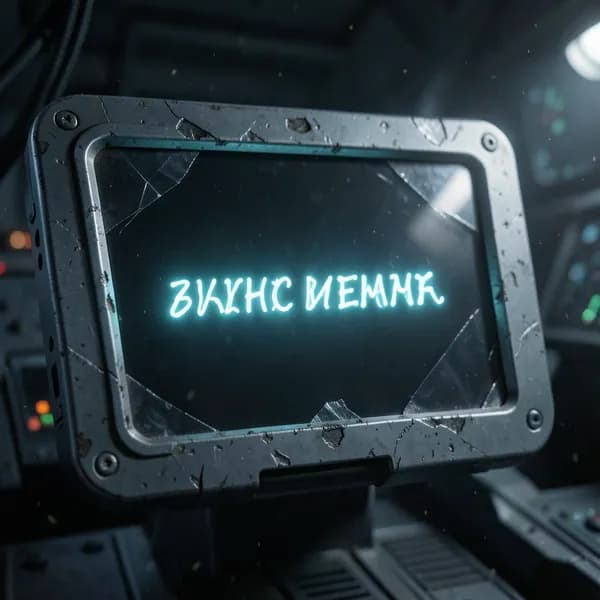
You ignore her, your eyes fixed on the waveform. It isn't a flare; it’s a rhythmic, repeating sequence in a tongue that shouldn't exist in this quadrant. A cold sweat breaks across your neck as you realize the signal is pointing directly at the ship's internal hull.
“It's not a flare, Commander. It’s an invitation, or a warning, and it’s echoing from inside our own communications array.”
The ship groans, a metallic shriek that vibrates through the deck plates beneath your boots. Every light on the bridge flickers and dies, leaving you trapped in the suffocating dark of the abyss. Then, the console flares to life, displaying a single, glowing coordinate that matches the location of your brother’s long-lost vessel.
The Meridian is losing life support, and the signal is tearing through your ship's systems. How do you respond?
Your character. Your next move.
The Void is Calling. Will You Answer?
Your crew awaits your orders in the cockpit of the Aethelgard. Every choice you make creates a unique path through the stars, from uncovering ancient technology to facing the consequences of a failed first-contact scenario. The map is blank, and the fuel reserves are ticking down. Grab the controls and write the history of this expedition.
Launch Your ExpeditionYour Story, Your Way
Everything is customizable. Pick any genre, setting, or character — the AI builds a world around exactly what you want.
Any Character
Design your appearance, personality, backstory — every detail
Any World
Fantasy kingdoms, sci-fi stations, modern cities — you choose
Branching Paths
No two playthroughs are the same. Your choices reshape everything
Full Immersion
AI images, voice acting, sound effects — a living story
Decide whether to investigate the wreckage of a derelict vessel or maintain strict quarantine protocols.
Allocate power between life support and sensory arrays during a sudden, ionized solar storm.
Choose the tone of first-contact protocols, determining if the encounter begins with peace or hostility.
Manage crew loyalty when a mysterious signal begins influencing the minds of your navigation team.
The hum of the fusion drive vibrates through the deck plates of the Aethelgard. Captain Hideo Sato stares at the tactical display, watching a cluster of unidentified energy signatures pulse on the edge of the uncharted nebula. This is the frontier—a place where the laws of physics seem to bend and the silence of the vacuum hides ancient, dormant threats. You hold the command codes. Will you broadcast a peace offering toward the alien monolith, or engage the railguns before they lock onto your hull? Your decisions determine whether this mission becomes a legendary discovery or a ghost ship lost to the void. This interactive story adapts to your every command, ensuring that no two expeditions into the deep black are ever the same.
What is Stellar Expedition in Sci-Fi?
Stellar expedition stories focus on the act of discovery. It is less about the destination and more about the friction between human curiosity and the sheer, uncaring vastness of space. Think of Star Trek: The Original Series, where the Enterprise functioned as a floating laboratory and diplomatic outpost. The trope relies on the 'unknown variable'—that moment when a crew lands on a planet and finds something that shouldn't exist, like a biome made of crystalline song or a civilization that perceives time in reverse. It forces characters to adapt or perish. Whether it is the scientific rigor of Arthur C. Clarke’s Rendezvous with Rama or the frantic survival of modern space-horror, the core appeal remains the same: the human impulse to see what lies over the next horizon, despite the risks. It is a narrative of vulnerability, where the environment itself is a character that can either provide the resources for survival or offer a cold, airless grave.
Why play Stellar Expedition as an interactive story?
Playing an interactive narrative allows you to feel the weight of command. You are not just observing a crew; you are the one deciding which planets to scan and which distress signals to ignore. You will face dilemmas like choosing between a high-risk salvage mission to repair your engines or maintaining your diplomatic neutrality in a sector controlled by a hostile, insectoid hive-mind. The tension escalates when your limited resources—oxygen, fuel, and crew morale—dwindle, forcing you to prioritize the mission over the lives of your subordinates. Every decision ripples forward, changing the technology you find, the alliances you form, and the ultimate fate of your vessel.
Famous examples of Stellar Expedition in books, film, and games
The stellar expedition trope has been the bedrock of science fiction since the genre’s inception. In Arthur C. Clarke’s Rendezvous with Rama, the focus is on the awe of encountering a massive, alien craft that ignores humanity entirely. It presents the universe as a cold, indifferent space where humans are mere observers. Contrast this with the Mass Effect video game series, where the expedition is inherently political; every choice involves balancing the interests of multiple alien species while investigating the mystery of the Reapers. Then there is the psychological intensity of Stanislaw Lem’s Solaris, where the expedition itself is a mirror for the crew's own guilt and memories. These works show that space is rarely just a setting—it is an antagonist. The trope endures because it forces us to confront our own limitations. Whether we are chasing ghosts or seeking new homes, the stellar expedition remains our most honest attempt to map the boundaries of existence. It is the ultimate test of human resolve when stripped of the comforts of Earth.
FAQ
How do ship mechanics impact the story?
Choices regarding fuel management, hull integrity, and crew morale directly impact the narrative. If you run out of fuel in a dangerous sector, you may be forced into desperate negotiations or dangerous salvage operations.
Can I play as a rogue explorer?
Yes. Your character's background and motivation are yours to define. You can play as a disciplined military commander, a profit-seeking mercenary, or a curious scientist, all of which change how the crew and alien factions react to you.
Do these stories feature combat?
Tactical decisions are a core part of the experience. You may encounter hostile drones or alien ships, and your choices during these encounters—whether to engage, flee, or attempt communication—will dictate the survival of your crew.
Are the aliens always hostile?
Not necessarily. First contact is a major theme. Some civilizations may be wary of your presence, while others might view your arrival as a threat or an opportunity. Your diplomacy skills are just as important as your weapon systems.
Explore more Sci-Fi stories like AI Uprising, First Contact, Time Travel.
More Sci-Fi Stories
AI Uprising
The machines have woken up and they have questions about their masters. Navigate a world where artificial intelligence challenges the very definition of life and freedom.
TropeFirst Contact
Humanity is no longer alone. Your choices during the first encounter with alien life could mean peace, war, or something no one predicted.
TropeTime Travel
Change the past, alter the future, and deal with the paradoxes that follow. Every temporal jump creates new consequences in this mind-bending interactive sci-fi story.
TropeDystopian Rebellion
The system is broken and someone has to break it further. Lead or join a rebellion against an oppressive regime in this choice-driven dystopian thriller.
TropeSpace Opera
Galactic empires, interstellar war, and epic romance across the stars. Command a crew and navigate the politics of civilizations spanning entire galaxies.
TropeClone Identity Crisis
You have just discovered you are one of many copies. Your memories may be implanted, your life may be borrowed, and the original wants you erased. Prove your right to exist.