
Post-Apocalyptic · Interactive story
The Silence After the Tripods
Earth won, but the cost was everything. How will you survive the ruins?
Start as a guest. Choose your character before the story begins.
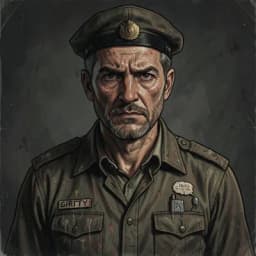
Meet the sample character
The invasion ended, but the silence is hungry.
Try a scene · No signup
Iron Husks and Red Vines
A short sample of this world. Your own version starts with your character.
You pick your way through the blackened stumps of what was once an orchard. The air tastes of ozone and copper, thick with the suffocating scent of the red weed that creeps over the tripod's cooling leg. You need the brass circuitry from the alien hull to trade for your brother’s medicine, but every scrap of metal feels like you are poking a sleeping god.

“Leave it, Silas. That rot is still pulsing, and I do not intend to be the next feast for those heat-ray bastards.”

You ignore the tremor in Arthur’s voice, your fingers brushing against the blistered, metallic plating. It is warm—unnaturally so. You know the history of the invasion better than most, and you know these machines were left behind as silent, dormant monoliths. A soft, rhythmic clicking emanates from deep within the wreckage, vibrating through the soles of your boots.
“If I do not extract this casing, we will not see the sun rise tomorrow. Keep your eyes on the ridge, not the metal.”
Your pry bar catches on a seam, and the panel groans, shifting an inch. A faint, violet glow bleeds from the aperture, illuminating the dust motes dancing in the stagnant air. You have a handful of seconds before the vibrations grow into a localized tremor—or worse, a signal. The choice is yours: force it open, flee, or try to dampen the machine's humming core.
The tripod's pulse accelerates; the metal groans under your touch. How do you proceed?
Your character. Your next move.
The tripods are dead. What will you build in their shadow?
The red weed is fading, but the hunger remains. You have a chance to lead a group of survivors through the ruins of England, but every scrap of food and every decision carries a heavy cost. Will you be the one to restore order, or will you let the world succumb to the chaos left behind by the invaders? Step into the aftermath today.
Begin your survival storyYour Story, Your Way
Everything is customizable. Pick any genre, setting, or character — the AI builds a world around exactly what you want.
Any Character
Design your appearance, personality, backstory — every detail
Any World
Fantasy kingdoms, sci-fi stations, modern cities — you choose
Branching Paths
No two playthroughs are the same. Your choices reshape everything
Full Immersion
AI images, voice acting, sound effects — a living story
Salvage alien technology from downed tripods while avoiding dangerous, residual heat radiation.
Manage a group of survivors with conflicting agendas as winter approaches the ruins.
Navigate the ethical crisis of rationing medicine in a world without hospitals.
Form precarious alliances with local militias fighting over the remaining fuel.
The red weed chokes the Thames, a rust-colored carpet over the skeletal remains of London. High above, the massive, silent legs of a tripod loom over the ruins of Westminster, a monument to a war that ended when the smallest organisms on Earth did the heavy lifting. You wake up in a shallow trench, your lungs burning from the sulfurous air. There are no sirens, only the occasional groan of cooling metal and the desperate cries of those who lost everything. Your next move is yours alone. Every decision you make—from scavenging a rusted tin of rations to trusting a stranger in the fog—determines whether you build a future or become another casualty of the invasion's shadow. The invasion is over, but the struggle for survival has only begun.
What is War of the Worlds Aftermath in Post-Apocalyptic?
H.G. Wells’ 1898 masterpiece, The War of the Worlds, famously concluded when the Martian invaders perished due to terrestrial bacteria. While the original novel focuses on the terror of the attack, the aftermath is a landscape ripe for exploration. This genre focuses on the period immediately following the collapse of the Martian war machine. It is a world of scavenging, where the advanced technology of the invaders is now dangerous, alien scrap metal that holds the key to either salvation or total destruction. You might recognize this vibe from adaptations like Jeff Wayne’s Musical Version, which captures the eerie melancholy of a ruined England, or the 1953 film’s focus on the sudden power vacuum. Unlike the high-octane panic of the invasion, the aftermath is a slower, grittier test of human resilience. It asks what happens when the existential threat leaves, but the infrastructure of society remains shattered. You are not fighting Martians anymore; you are fighting hunger, cold, and the desperate instincts of your fellow survivors.
Why play War of the Worlds Aftermath as an interactive story?
Playing through the aftermath puts you in the boots of a survivor forced to make impossible calls in a landscape defined by decay. You are not a hero with a plan; you are a person with a hollow stomach and a heavy heart. The agency provided by this experience forces you to prioritize. Do you spend your limited ammunition to defend a cache of medical supplies, or do you trade it for information on a rumored safe zone in the north? The tension comes from the scarcity of resources and the unpredictability of other survivors who have seen the sky burn. You will face dilemmas such as deciding whether to scavenge the dangerous, irradiated crash sites of the tripods or stay in the relative safety of the countryside. Every choice ripples forward, affecting the morale of your group and your ability to weather the coming winter. The story reacts to your pragmatism, your cruelty, or your compassion, building a narrative that is entirely your own.
The literary legacy of War of the Worlds Aftermath
H.G. Wells effectively invented the alien invasion genre, but his focus was as much on the fragility of human civilization as it was on the Martians themselves. The novel remains a cornerstone of science fiction because it challenges the notion of human supremacy. When the Martians die, they don't die by human hand, but by nature’s smallest agents, leaving humanity to pick up the pieces of a broken social order. This theme has been adapted countless times, from Orson Welles’ infamous 1938 radio broadcast—which convinced listeners the invasion was happening in real-time—to Steven Spielberg’s 2005 film, which highlighted the desperate, frantic flight of refugees. These works all share a fascination with the collapse of the familiar. The aftermath is particularly compelling because it allows for a grounded look at human nature. Without the pressure of the aliens, the real conflict becomes how people treat each other when the rules of law and order have evaporated. The enduring power of this setting lies in its ambiguity. Is humanity better off for having faced such a threat? Does the destruction of the old world offer a clean slate, or just a more brutal way of life? By exploring these questions, you engage with the same anxieties that Wells captured over a century ago, now filtered through the lens of your own choices.
FAQ
Is this a combat-focused game?
While conflicts with other survivors occur, the focus is on survival, resource management, and social dilemmas. You are a scavenger, not a soldier, and every bullet or bandage is a precious, limited resource.
Does the story follow the original H.G. Wells book?
The story takes place in the world established by Wells, but it is an original narrative set in the wake of the events in the book. You are creating a unique path through the wreckage, not just reading a retelling.
What happens if I make a bad decision?
Your choices have weight. A bad decision might lead to the death of a companion, the loss of your home base, or a shift in how other survivors perceive you. Failure is a part of the story, and the narrative adapts to your setbacks.
Can I play as a villain?
The moral compass of the story is entirely in your hands. You can choose to be a ruthless scavenger who puts your own needs above all else, or a beacon of hope for others. The world will react accordingly to your actions.
Explore more Post-Apocalyptic stories like Zombie Survival, Nuclear Wasteland, Plague Aftermath.
More Post-Apocalyptic Stories
Zombie Survival
The dead walk and every stranger is a threat. Scavenge for weapons, fortify your shelter, and make brutal choices about who lives and who gets left behind in this undead nightmare.
TropeNuclear Wasteland
The bombs fell and civilization crumbled. Now you wander a scorched earth where radiation is as deadly as the desperate survivors who stalk the ruins.
TropePlague Aftermath
A pandemic wiped out most of humanity. You survived, but survival is just the beginning as you navigate a world where disease still lurks and trust is the scarcest resource.
TropeFaction Warfare
Rival factions carve up what remains of the world, each with their own vision for the future. Choose your allegiance carefully because neutrality is not an option.
TropeScavenger Hunt
Every ruined building could hold the supplies that keep you alive another week. Risk raiders, traps, and structural collapse as you pick through the bones of civilization.
TropeBunker Emergence
You have lived underground your entire life. The bunker door is finally opening and the world outside is nothing like the old recordings promised.