
Post-Apocalyptic · Interactive story
The Wasteland Trader: Barter for Survival
The world ended, but the hunger for profit never did.
Start as a guest. Choose your character before the story begins.
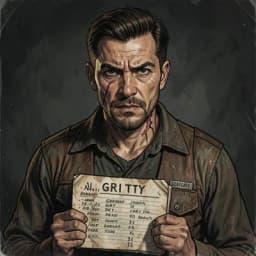
Meet the sample character
Try a scene · No signup
Weight of the Lead-Lined Box
A short sample of this world. Your own version starts with your character.
The wind kicks up a stinging grit, forcing you to pull your goggles tight. Before you, the scavenged gate of The Well creaks open, revealing Mags. She stands with a crossbow leveled at your chest, her eyes darting to the heavy, lead-lined crate strapped to your pack. You know exactly what she wants, and you know exactly how little she intends to pay.
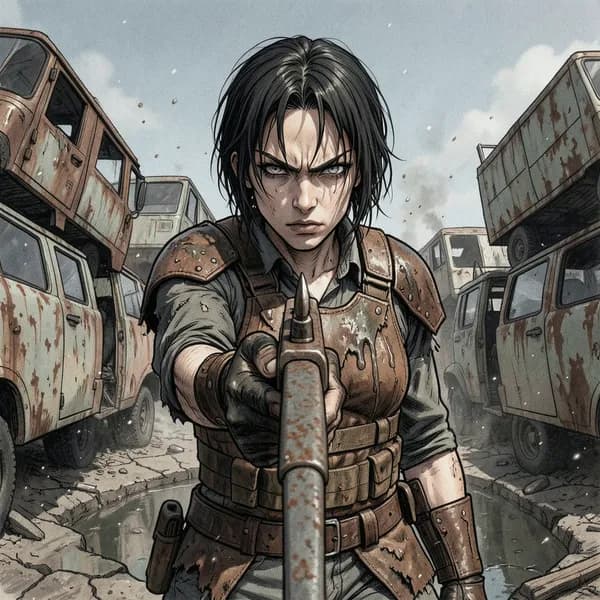
“That box looks heavy, Bastian. Why don't you drop it and save us both the trouble of a messy afternoon?”
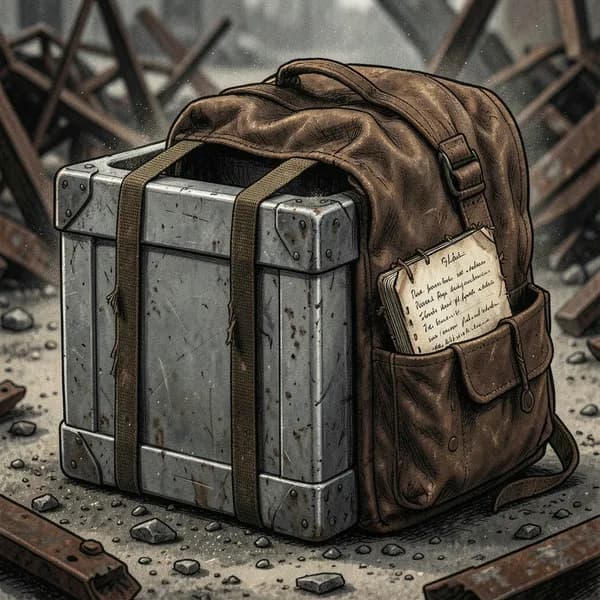
Your hand drifts toward the concealed switchblade tucked into your sleeve. The crate contains medical supplies that could fetch a month of clean water, but if you don't appease her, you might end up as salvage yourself. Your heart hammers against your ribs, a drumbeat in the oppressive quiet of the wasteland.
“My goods are spoken for, Mags. If you want this crate, you'll pay the market rate in lead, not threats.”
Mags tilts her head, her finger tightening on the trigger. She doesn't like being told 'no' on her own turf, and behind her, three more silhouettes emerge from the shadows of the scrap heap. You have seconds to de-escalate, draw your weapon, or find an exit before the conversation turns lethal.
How do you handle the standoff at the gate?
Your character. Your next move.
Will you be a savior or a profiteer?
The next settlement is waiting for your cargo, but the road is crawling with raiders. Decide your route, set your prices, and determine the fate of the last survivors. Step into the driver's seat and start your journey today.
Start Your Trade RouteYour Story, Your Way
Everything is customizable. Pick any genre, setting, or character — the AI builds a world around exactly what you want.
Any Character
Design your appearance, personality, backstory — every detail
Any World
Fantasy kingdoms, sci-fi stations, modern cities — you choose
Branching Paths
No two playthroughs are the same. Your choices reshape everything
Full Immersion
AI images, voice acting, sound effects — a living story
Decide which settlements receive life-saving medicine and which go without.
Navigate perilous trade routes while managing fuel levels and cargo weight.
Negotiate high-stakes deals under the threat of ambush or betrayal.
Collect rare artifacts that could change the power balance of the wasteland.
Dust coats the dashboard of your rusted hauler. You are not a soldier or a scavenger; you are the lifeline of the wastes. A settlement in the south needs antibiotics, and a warlord in the north is hoarding fuel. You have the cargo, the map, and the nerve to bridge the gap. Every transaction is a gamble where the currency is canned goods, ammunition, or cold, hard silence. You decide who thrives and who starves based on your inventory and your alliances. Your choices determine if you survive the next delivery or become another ghost story whispered by a campfire. In this interactive story, your reputation is your only shield against the lawless horizon.
What is The Trader in Post-Apocalyptic?
The Trader archetype is the quintessential neutral observer in a broken society. Unlike the hero who seeks to save the world or the villain who seeks to conquer it, the trader exists to facilitate the flow of goods necessary for survival. In post-apocalyptic fiction, the trader represents the last vestige of civilization. They are the ones carrying news, technology, and medicine between isolated pockets of humanity. Think of the caravan masters in the Fallout game series or the enigmatic merchant in Resident Evil 4. These characters are defined by their mobility and their lack of permanent roots. They operate on a razor’s edge, knowing that their value to a settlement is high, but their vulnerability to banditry is even higher. They are the conduits of information, often knowing more about the politics of the wasteland than the leaders themselves. Whether they are altruistic healers moving vaccines or cynical profiteers trading shells for secrets, they are indispensable to the survival of the human race.
Why play The Trader as an interactive story?
Playing as a trader shifts the focus from combat to resource management and high-stakes negotiation. You are not just fighting enemies; you are deciding which factions receive the tools to grow and which are left to wither. The tension comes from the weight of your cargo. When you reach a desperate camp, do you hand over the clean water for free, or do you demand a piece of their rare, pre-war technology? Every decision has a ripple effect. If you arm a peaceful village to help them defend themselves, you might inadvertently make them a target for a larger militia. The game forces you to balance your own survival needs—fuel, vehicle repairs, and personal safety—against the moral implications of your business dealings. You will face moments where the 'right' choice costs you your entire profit margin, or where a cold, calculated betrayal secures your passage through a dangerous sector.
The psychology of The Trader: why readers fall for this character
The Trader appeals to a deep-seated desire for control in a chaotic environment. In a world where everything has been lost, the person who holds the goods holds the power. This archetype taps into the fantasy of being the 'essential outsider.' Readers resonate with the trader because they are the only ones who can move between worlds, providing a unique vantage point that the static, trapped survivors lack. Consider the caravan master in Mad Max or the wandering merchants in The Road; they provide a glimpse of a larger world beyond the immediate trauma of the protagonist. This creates a fascinating psychological tension: the trader is both needed and resented. Their existence is a constant reminder of what the world used to be—a place of commerce and exchange—contrasted against the brutality of their present reality. The trader embodies the struggle of maintaining one's humanity while dealing in the cold, hard reality of survival. They are the bridge between the past and the future, and their moral ambiguity makes them one of the most compelling figures to inhabit in an interactive narrative.
FAQ
How do my choices impact the wasteland economy?
Your decisions directly shift the balance of power. If you trade weapons to a struggling town, you might see them grow into a dominant local force in later chapters. Conversely, denying supplies to a faction can lead to their collapse or their turn toward desperate, violent raiding.
Can I be a 'good' person as a trader?
Yes, but it is often more dangerous. Choosing to prioritize aid over profit makes you a target for raiders and alienates powerful warlords, forcing you to rely on your wits and stealth to survive the road.
What happens if my vehicle breaks down?
Vehicle maintenance is a core mechanic. If you run out of fuel or parts in a hostile sector, you may be forced to trade away your most valuable cargo for repairs, or take dangerous risks to scavenge for supplies on foot.
Is this story game suitable for fans of survival simulators?
If you enjoy managing inventory, scouting routes, and evaluating risk-versus-reward scenarios, this archetype is a perfect fit. It offers a strategic layer beyond standard narrative choices.
Explore more Post-Apocalyptic stories like Zombie Survival, Nuclear Wasteland, Plague Aftermath.
More Post-Apocalyptic Stories
Zombie Survival
The dead walk and every stranger is a threat. Scavenge for weapons, fortify your shelter, and make brutal choices about who lives and who gets left behind in this undead nightmare.
TropeNuclear Wasteland
The bombs fell and civilization crumbled. Now you wander a scorched earth where radiation is as deadly as the desperate survivors who stalk the ruins.
TropePlague Aftermath
A pandemic wiped out most of humanity. You survived, but survival is just the beginning as you navigate a world where disease still lurks and trust is the scarcest resource.
TropeFaction Warfare
Rival factions carve up what remains of the world, each with their own vision for the future. Choose your allegiance carefully because neutrality is not an option.
TropeScavenger Hunt
Every ruined building could hold the supplies that keep you alive another week. Risk raiders, traps, and structural collapse as you pick through the bones of civilization.
TropeBunker Emergence
You have lived underground your entire life. The bunker door is finally opening and the world outside is nothing like the old recordings promised.