
Post-Apocalyptic · Interactive story
The Last Voice in the Static
Every broadcast is a lifeline. Every signal is a choice. Who survives tonight?
Start as a guest. Choose your character before the story begins.
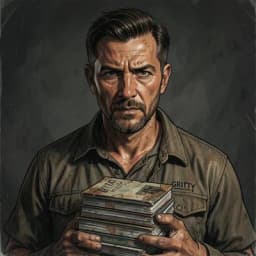
Meet the sample character
The silence is louder than the static.
Try a scene · No signup
Frequencies of Dust
A short sample of this world. Your own version starts with your character.
The vacuum tubes in your console hum with a sickly orange warmth, the only light in the cramped control booth. Outside, the wind scours the station, sand hammering against the reinforced glass like buckshot. You adjust the dial, your fingers calloused and blackened by grease, chasing a ghost signal through a sea of white noise. It’s been three days since the last transmission from the southern settlements, and the quiet is beginning to feel like a threat.

“Stop spinning the knob, Silas. The airwaves are dead, and my brother’s caravan is three hours overdue at the bottleneck.”

Aris looms in the doorway, his respirator mask dangling from one hand, his face etched with exhaustion. He doesn't understand that the signal isn't just a convenience; it is the only thing keeping the roving scavenger gangs from tracking his brother’s haul. Your battery array is flickering, the voltage dropping with every passing second, and you have to choose between keeping the perimeter sensors active or pushing the transmitter to its absolute limit to find a signal.
“If I cut the sensors, we're blind to whoever is trailing them. If I don't boost the signal, we lose them forever. I have to pick one, Aris.”
The red warning light on the console begins to pulse, signaling a critical power drain. You look at the power toggle, then at Aris, whose knuckles are white as he grips the door frame. A harsh, distorted voice suddenly breaks through the static, unrecognizable and panicked, begging for coordinates just as the main generator groans and threatens to seize completely.
The generator is redlining; you must make a choice before the station goes pitch black.
Your character. Your next move.
Speak Into the Void
The static is clearing. A desperate voice reaches out from the ruins of the old world, asking for guidance. Will you lead them to safety, or will you use their desperation to secure your own survival? Pick up the microphone and decide the fate of the last survivors.
Start Your BroadcastYour Story, Your Way
Everything is customizable. Pick any genre, setting, or character — the AI builds a world around exactly what you want.
Any Character
Design your appearance, personality, backstory — every detail
Any World
Fantasy kingdoms, sci-fi stations, modern cities — you choose
Branching Paths
No two playthroughs are the same. Your choices reshape everything
Full Immersion
AI images, voice acting, sound effects — a living story
Decide whether to trade vital medicine locations for a chance to repair your transmitter.
Choose to broadcast false coordinates to misdirect a raiding party hunting your frequency.
Manage dwindling fuel reserves to keep your signal alive during the worst winter storms.
Forge alliances with distant groups by sharing intel, knowing they might eventually turn on you.
You lean into the microphone, the hum of the generator vibrating through the cold metal desk. Outside, the wind howls over rusted husks of cars and empty skyscrapers. You are not a warrior or a scavenger, but you hold the most valuable resource left: information. Your fingers hover over the frequency dial. A flicker of light on the console confirms a connection, but the signal is weak, buried under miles of interference. Someone is calling for help, or perhaps they are waiting for a lie to believe in. In this interactive story, your words act as the currency of a dying world. You decide what coordinates to broadcast and who gets to hear the truth. Every transmission you send out ripples through the ruins, changing the path of survivors and the tactics of the factions hunting them.
What is The Radio Operator in Post-Apocalyptic?
The Radio Operator represents the vital link in a fractured world. Like the lonely signal-keeper in Cormac McCarthy’s The Road or the weary DJ in the Fallout game series, this character lives in the isolation between settlements. They are the conduits for trade routes, warnings of encroaching raiders, and the keepers of history who document the slow fade of civilization. Unlike the soldier who clears a path, the operator builds the map of what remains. They are often targets for those who want to control information, making their station a fortress of secrets. In any story set after the fall, the person behind the mic provides context to the chaos. Whether they are transmitting weather updates to help scavengers avoid radiation storms or playing music to maintain a shred of normalcy, their role is essential for maintaining the fragile social fabric that prevents humanity from collapsing into total madness.
Why play The Radio Operator as an interactive story?
You control the airwaves from a crumbling attic or a fortified bunker. The tension comes from the weight of your influence. Do you report that a settlement is safe, knowing it might draw unwanted attention? Do you play music to keep morale up, even when your fuel supplies are running dry? You face the moral dilemma of the gatekeeper: you have the power to save lives, but every transmission risks exposing your own location to the factions scavenging the ruins. Agency here means choosing how much of yourself to reveal to a world that has forgotten what it means to be kind. You will manage your limited power, maintain your equipment under duress, and decide which voices deserve to be heard when the silence is the only thing offering safety.
The psychology of The Radio Operator: why readers fall for this character
The Radio Operator archetype taps into the primal fear of silence. In a world where the power grid is dead and the internet is a ghost, the radio is the only tether to humanity. We see this in Emily St. John Mandel’s Station Eleven, where the Traveling Symphony keeps art alive through the ruins, or the desperate transmissions found in The Last of Us. The operator embodies the fantasy of being the observer. They are the ones who bear witness. Fans of the genre love this archetype because it shifts the focus from mindless combat to the power of influence. You are not just surviving; you are shaping the reality for everyone else. You become the mythic figure of the wasteland, a voice that people grow to trust or fear without ever seeing your face. It is a position of high vulnerability paired with high stakes, creating a unique pressure that forces you to define your own morality in a landscape that has long since abandoned it. By playing this role, you confront the reality that information is often more dangerous than a weapon, and that sometimes, the most important thing you can offer another survivor is the knowledge that they are not alone.
FAQ
What makes The Radio Operator different from other wasteland roles?
While warriors focus on physical survival, the operator manages the infrastructure of connection. They dictate the flow of information across the ruins, making them a strategic player rather than a frontline fighter.
How do my choices impact the story?
Your broadcasts change the behavior of AI-driven factions, determining which groups thrive and which vanish from the map based on the intel you choose to share.
Can I be a villain as a radio operator?
Yes. You can spread misinformation to manipulate groups, lure survivors into traps, or hoard resources by keeping vital information to yourself to ensure your own comfort.
Is this for fans of survival simulators?
This is ideal for anyone who enjoys high-stakes resource management and narrative-driven decision-making in gritty, realistic, or sci-fi settings.
Explore more Post-Apocalyptic stories like Zombie Survival, Nuclear Wasteland, Plague Aftermath.
More Post-Apocalyptic Stories
Zombie Survival
The dead walk and every stranger is a threat. Scavenge for weapons, fortify your shelter, and make brutal choices about who lives and who gets left behind in this undead nightmare.
TropeNuclear Wasteland
The bombs fell and civilization crumbled. Now you wander a scorched earth where radiation is as deadly as the desperate survivors who stalk the ruins.
TropePlague Aftermath
A pandemic wiped out most of humanity. You survived, but survival is just the beginning as you navigate a world where disease still lurks and trust is the scarcest resource.
TropeFaction Warfare
Rival factions carve up what remains of the world, each with their own vision for the future. Choose your allegiance carefully because neutrality is not an option.
TropeScavenger Hunt
Every ruined building could hold the supplies that keep you alive another week. Risk raiders, traps, and structural collapse as you pick through the bones of civilization.
TropeBunker Emergence
You have lived underground your entire life. The bunker door is finally opening and the world outside is nothing like the old recordings promised.