
Post-Apocalyptic · Interactive story
The Last Days of Pompeii: Outrun the Mountain
The mountain is screaming, and the streets of Rome are turning into a tomb.
Start as a guest. Choose your character before the story begins.
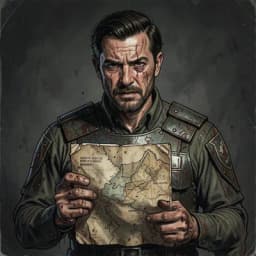
Meet the sample character
The mountain is waking, and the gold in your purse won't save you from the falling sky.
Try a scene · No signup
Ash Over the Forum
A short sample of this world. Your own version starts with your character.
The ground beneath your sandals groans, a deep, guttural sound that vibrates through your very marrow. You stand in the center of the Forum, where the white marble dust has begun to mix with falling gray ash. People are frozen, their eyes locked on the mountain peak that has started to exhale a plume of suffocating black smoke.

“Stop looking at the sky, Marcus. The eruption isn't coming for the men with gold, it’s coming for us—and I have a ship leaving the coast in an hour.”

Gaia grips your cloak, her fingers stained with the same gray grit that is slowly burying the streets. The silence that follows is unnatural, broken only by the distant, panicked scream of a stray hound. You feel the weight of the smuggled exit route map against your ribs, a secret that could save hundreds or buy your own passage to safety alone.
“If I give you that map, Gaia, you’re taking the only path I have to get my sister out of this death trap. I need more than a promise of a ship.”
The earth heaves again, stronger this time, knocking a merchant’s stall to the ground in a cacophony of shattered pottery. Gaia pulls a jagged dagger from her belt, the steel glinting against the darkening sky. You have seconds before the next tremor flattens the gate, and you must decide whether to protect your own or gamble on a stranger’s mercy.
The mountain is breathing down your neck; how do you secure your escape?
Your character. Your next move.
Will you escape the ash or become history?
The mountain is rumbling, and the sky is turning an unnatural shade of dark grey. You have only moments to decide: hold onto your gold, or trade it for a life-saving passage on the last ship out of the harbor. Your choices in the streets of Pompeii will determine if you survive the fire. Step into the ruins and write your own ending before the city is silenced forever.
Start your escape nowYour Story, Your Way
Everything is customizable. Pick any genre, setting, or character — the AI builds a world around exactly what you want.
Any Character
Design your appearance, personality, backstory — every detail
Any World
Fantasy kingdoms, sci-fi stations, modern cities — you choose
Branching Paths
No two playthroughs are the same. Your choices reshape everything
Full Immersion
AI images, voice acting, sound effects — a living story
Secure a passage out of the city by bargaining with corrupt harbor officials.
Navigate crumbling villa basements to scavenge water and protective gear before the heat rises.
Choose between abandoning a friend to save yourself or risking everything to reach the gates.
Interpret the subtle tremors of the earth to predict which routes will collapse first.
Ash falls like grey snow, coating the vibrant frescos of the atrium in a layer of suffocating dust. Outside, the citizens of Pompeii look toward Vesuvius with a mix of confusion and mounting terror, unaware that the ground beneath their sandals is about to liquefy. You stand in the center of the forum, your lungs burning as the air grows heavy with sulfur. Every decision you make—whether to hoard supplies, warn the local magistrate, or flee toward the harbor before the pyroclastic flow hits—alters the fate of those around you. The clock is ticking, and the gods offer no mercy to those who hesitate. In this interactive story, your survival depends on your ability to read the signs of the earth and the desperation of the people.
What is The Last Days of Pompeii in Post-Apocalyptic?
Edward Bulwer-Lytton’s 1834 novel, The Last Days of Pompeii, is the definitive account of the city’s final hours. It blends historical tragedy with a sprawling narrative of forbidden love and religious conflict. While the book provides a fixed ending, the setting itself has become a cornerstone of historical disaster fiction. You see its influence everywhere, from the tense, claustrophobic atmosphere of the 1959 film The Last Days of Pompeii to the archaeological intrigue found in Robert Harris’s novel Pompeii. It is a tale of inevitability, yet it presents a fascinating sandbox for those who want to know what they would do if they were caught in the shadow of a volcanic god. Whether it’s the political corruption of the Roman elite or the quiet lives of the merchants, the story captures a civilization on the precipice of total erasure.
Why play The Last Days of Pompeii as an interactive story?
Playing through this narrative shifts the focus from historical observation to brutal, split-second decision-making. You aren't just reading about a tragedy; you are managing the fallout of a city that refuses to believe its own destruction is imminent. You might find yourself bribing a ship captain for a seat on the last boat, or perhaps you choose to lead a group of children through the collapsing aqueducts. The tension comes from the limited time you have to act. Every item you scavenge, from a sturdy cloak to a bag of coins, could be the difference between a successful escape and being trapped in the debris. Do you prioritize your own life, or do you lose precious minutes trying to save a stranger who might be the only one with the map to the coastal caves? You face the moral weight of survival in a world that is literally coming apart at the seams.
The literary legacy of The Last Days of Pompeii
When Bulwer-Lytton penned his classic in the early 19th century, he was capitalizing on a newfound European obsession with the excavations at the site. The tragedy of the city—frozen in a single, violent moment—has since served as a template for disaster storytelling. The juxtaposition of sophisticated Roman luxury against the raw, unthinking power of nature creates a unique narrative friction. In modern adaptations like the 2014 blockbuster Pompeii, the focus shifted toward the visual spectacle of the eruption, but the underlying questions remain the same: how do you maintain your humanity when the institutions that protect you have vanished? The character archetypes established in the 1834 text—the tragic hero, the corrupt official, the stoic survivor—have evolved into modern tropes seen in everything from zombie outbreaks to nuclear winter scenarios. By placing yourself inside this narrative, you engage with a centuries-old tradition of asking what remains of a person after the sky turns black. It works because the threat is universal. Nature is indifferent to status, wealth, or piety. Whether in the 1st century or a hypothetical future, the struggle to outrun a cataclysm is a primal, gripping experience that connects us to our ancestors who faced the same fire.
FAQ
Can I change the outcome of the eruption?
The eruption is an inevitable historical event, but your survival—and the survival of those you choose to protect—depends entirely on the decisions you make as the disaster unfolds.
How does the Roman setting impact gameplay?
The setting limits your tools to period-appropriate gear, such as woven cloaks, leather sandals, and trade coins. This forces you to rely on ingenuity rather than modern technology, making the struggle feel more desperate.
What makes this different from other post-apocalyptic games?
Unlike games featuring long-term resource-scavenging in a wasteland, this experience focuses on a singular, high-stakes event where time is your most limited and valuable resource.
Is this suitable for history fans?
Absolutely. The story meticulously recreates the social tensions, geography, and cultural atmosphere of the Roman era, providing a grounded experience for those who appreciate historical detail.
Explore more Post-Apocalyptic stories like Zombie Survival, Nuclear Wasteland, Plague Aftermath.
More Post-Apocalyptic Stories
Zombie Survival
The dead walk and every stranger is a threat. Scavenge for weapons, fortify your shelter, and make brutal choices about who lives and who gets left behind in this undead nightmare.
TropeNuclear Wasteland
The bombs fell and civilization crumbled. Now you wander a scorched earth where radiation is as deadly as the desperate survivors who stalk the ruins.
TropePlague Aftermath
A pandemic wiped out most of humanity. You survived, but survival is just the beginning as you navigate a world where disease still lurks and trust is the scarcest resource.
TropeFaction Warfare
Rival factions carve up what remains of the world, each with their own vision for the future. Choose your allegiance carefully because neutrality is not an option.
TropeScavenger Hunt
Every ruined building could hold the supplies that keep you alive another week. Risk raiders, traps, and structural collapse as you pick through the bones of civilization.
TropeBunker Emergence
You have lived underground your entire life. The bunker door is finally opening and the world outside is nothing like the old recordings promised.