
Post-Apocalyptic · Interactive story
The Static Promise: Chasing Signals in the Ruins
The airwaves are dead, but one voice remains. Is it salvation or a trap?
Start as a guest. Choose your character before the story begins.
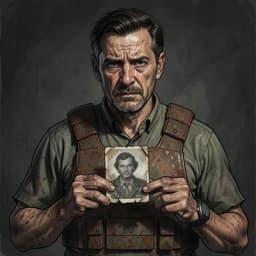
Meet the sample character
A ghost signal won't feed you, but it might kill you.
Try a scene · No signup
Static in the Dust
A short sample of this world. Your own version starts with your character.
You hunker beneath the rusted ribs of the collapsed freeway, your fingers cramped from clutching the radio dial. Outside, the dust storm gnaws at the concrete pillars like a starving beast. Inside the cab, the only sound is the rhythmic, jagged hiss of a signal that shouldn't exist in this wasteland.

“It’s repeating, Jory. That frequency hasn't drifted in three days. Someone is actually broadcasting from the valley.”

You press your ear against the cold casing of the receiver. Through the static, a faint, melodic hum drifts through—a lullaby your mother used to sing. The realization hits your gut harder than a lead pipe; that tune wasn't public record. It was private. You stare at the map, the coordinates pointing directly into the irradiated dead-zone.
“It’s a lure, Mara. Either someone’s playing with dead memories to trap us, or we're losing our minds.”
Suddenly, the radio cuts to a sharp, high-pitched screech. A voice crackles through, distorted but urgent: 'The gate is open... but the perimeter is failing.' The signal drops dead, leaving you in a silence so heavy it makes your ears ache. You have enough fuel for one trip, and the sky is turning a bruised, violent purple.
The signal has gone quiet, but the path is open. What is your move?
Your character. Your next move.
Will you answer the call?
The radio is hissing, the battery is dying, and you are running out of time. Someone is waiting at the other end of that frequency—or someone is waiting to trap you. Make your choice and see if you can lead your group to safety or if you are walking into the last mistake you will ever make.
Start your survival storyYour Story, Your Way
Everything is customizable. Pick any genre, setting, or character — the AI builds a world around exactly what you want.
Any Character
Design your appearance, personality, backstory — every detail
Any World
Fantasy kingdoms, sci-fi stations, modern cities — you choose
Branching Paths
No two playthroughs are the same. Your choices reshape everything
Full Immersion
AI images, voice acting, sound effects — a living story
Decide whether to trust a suspicious broadcast or conserve fuel by staying hidden.
Choose to trade your only working medicine for a map to the signal's origin.
Navigate tense encounters with NPCs who may be guarding the radio station's source.
Determine if the signal is a genuine call for help or a calculated lure.
Dust coats your lungs and the horizon offers nothing but jagged concrete skeletons. You adjust the dial on a rusted receiver, the static biting at your ears until a human voice cuts through the white noise. It speaks of a sanctuary, a place with clean water and walls that hold. You have spent months scavenging for scraps, but this broadcast feels different. It offers something more dangerous than hunger: hope. Your survival depends on how you interpret this transmission. Do you pack your limited supplies and head toward the coordinates, or do you assume the voice is a lure set by scavengers? Every decision ripples across the barren landscape. The path you choose dictates whether you reach a community of survivors or walk straight into an ambush. You hold the receiver tight, listening for clues in the cadence of the speaker, deciding if this signal is worth the risk of leaving your shelter behind.
What is Radio Signal Hope in Post-Apocalyptic?
The Radio Signal Hope trope functions as the primary motivator for survivors in a shattered world. It provides a destination in a landscape defined by aimlessness. When civilization collapses, the radio becomes a lifeline—a bridge between the isolated individual and the possibility of a larger group. In stories like the early chapters of the Fallout series, radio stations are more than just background noise; they are beacons that define the culture of the wasteland. Whether it is a looped message from a government bunker or a frantic plea from a desperate group of settlers, the signal forces the protagonist to leave the safety of their known environment. This trope relies on the tension between cynicism and longing. The protagonist must reconcile the reality of the harsh world they inhabit with the promise of something better. It is a classic setup that moves the story forward by giving the character a tangible goal, shifting the narrative from a focus on passive survival to active pursuit. It highlights the human tendency to look for patterns and meaning even when the world has gone silent.
Why play Radio Signal Hope as an interactive story?
Agency changes the stakes of a radio signal. In a static medium, you watch the character walk toward the trap. Here, you decide whether the risk is worth the reward. You will encounter moments where you must weigh the integrity of the voice on the radio against your current resources. Do you burn your last gallon of fuel to reach the transmission site by nightfall, or do you take the slow, hidden route and risk arriving too late? You might find yourself interrogating the radio operator through short, coded responses, trying to gauge their sincerity before you show your face. The tension comes from the lack of information. You might have to choose between keeping your weapon drawn or revealing your hands as you approach the source of the broadcast. Every encounter forces you to evaluate the morality of a world that rewards paranoia. You are not just observing a character; you are the one deciding if the voice in the static is a friend or a predator.
Famous examples of Radio Signal Hope in books, film, and games
The Radio Signal Hope trope appears frequently because it effectively bridges the gap between isolation and community. In the video game The Walking Dead, the radio serves as a crucial plot device in the first season, where a mysterious voice contacts the protagonist, forcing them to make impossible choices about who to trust and where to lead their group. The signal acts as a catalyst, pushing characters out of their familiar zones and into high-stakes environments. Similarly, in the film A Quiet Place, the entire narrative arc revolves around finding a way to communicate and locate others, even if the 'radio' is a signal of a different kind. The trope also appears in Station Eleven, where the remnants of the Traveling Symphony rely on shared memories and the hope of reconnecting with a larger world, even if the technology is mostly gone. These stories work because they strip away the comforts of modern life, leaving only the sound of a voice as a tether to humanity. The trope endures because it speaks to a fundamental human desire: the need to be heard and the hope that someone, somewhere, is still waiting to answer.
FAQ
What makes the Radio Signal Hope trope effective in survival games?
It provides a clear goal in an otherwise open-ended, chaotic environment. By giving the player a specific location to reach or a person to find, it creates a narrative arc that moves beyond mere resource management, adding emotional stakes to the survival process.
How does the choice to trust the signal impact the game?
Your choices determine your outcome. Trusting a signal blindly might lead you into an ambush or a trap set by other survivors. Conversely, ignoring a genuine signal might result in missing out on vital supplies, allies, or critical information about the state of the world.
Is this trope suitable for players who prefer gritty, realistic survival?
Yes. This trope excels in gritty settings because it highlights the difficulty of communication in a post-collapse society. It forces players to deal with the scarcity of information and the constant danger of human deception, which are core elements of realistic survival fiction.
Can I influence the outcome of the radio broadcast?
Yes. Through your actions and the choices you make during encounters, you can determine if you reach the source of the signal, if you arrive with your resources intact, and whether the interaction at the end turns into a partnership or a conflict.
Explore more Post-Apocalyptic stories like Zombie Survival, Nuclear Wasteland, Plague Aftermath.
More Post-Apocalyptic Stories
Zombie Survival
The dead walk and every stranger is a threat. Scavenge for weapons, fortify your shelter, and make brutal choices about who lives and who gets left behind in this undead nightmare.
TropeNuclear Wasteland
The bombs fell and civilization crumbled. Now you wander a scorched earth where radiation is as deadly as the desperate survivors who stalk the ruins.
TropePlague Aftermath
A pandemic wiped out most of humanity. You survived, but survival is just the beginning as you navigate a world where disease still lurks and trust is the scarcest resource.
TropeFaction Warfare
Rival factions carve up what remains of the world, each with their own vision for the future. Choose your allegiance carefully because neutrality is not an option.
TropeScavenger Hunt
Every ruined building could hold the supplies that keep you alive another week. Risk raiders, traps, and structural collapse as you pick through the bones of civilization.
TropeBunker Emergence
You have lived underground your entire life. The bunker door is finally opening and the world outside is nothing like the old recordings promised.