
Post-Apocalyptic · Interactive story
When the Gods Sent the Great Deluge
The sky turns black, the earth trembles, and the tide is coming for us all.
Start as a guest. Choose your character before the story begins.
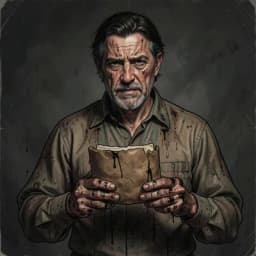
Meet the sample character
Before the tide, there was only the sound of splitting wood.
Try a scene · No signup
Salt-Caked Hull of the Old World
A short sample of this world. Your own version starts with your character.
You press your palm against the bitumen-smeared wood. The air smells of ozone and rotting river-reeds, a heavy dampness that clings to your lungs. Outside, the sky has turned the color of bruised copper, and the horizon is nothing but a wall of white, churning foam that devours the foundations of the Ziggurat. You have spent months hammering the hull, fingers raw, just to keep the water from the floorboards.

“The gods don't care about the nails you've driven, Sin-liqe. They only care about the weight of what we carry.”

The old man’s voice is a dry rasp, barely audible over the thunderous groaning of the timber. Water is already seeping through the pitch, pooling around your ankles with an icy, biting sting. You look at the crate of clay tablets, the last records of your people, and then at the heavy latch of the hold.
“If I don't secure the grain, we starve before the sun even touches the horizon again, Utnapishtim.”
A violent shudder rocks the ark, knocking a jug of oil across the deck. The pitch is cracking. You have mere heartbeats to act. The water is rising faster than the gods promised, and the weight of the tablets is shifting, threatening to tear the bottom of the ship open. The roar of the coming wave drowns out your internal protest; you must decide whether to save the knowledge of your ancestors or the tools of your immediate survival.
The ship is groaning under the pressure of the rising surge; how do you prioritize the ship's integrity?
Your character. Your next move.
The Deluge is Coming. Will You Survive?
The rain has already begun to fall, and the riverbanks are starting to buckle under the pressure. Utnapishtim is waiting for your help to finish the hull, but the townspeople are growing violent as they realize the truth. Every moment you waste is another inch of water rising against the walls. Gather your supplies, secure your legacy, and prepare for the storm.
Board the Vessel NowYour Story, Your Way
Everything is customizable. Pick any genre, setting, or character — the AI builds a world around exactly what you want.
Any Character
Design your appearance, personality, backstory — every detail
Any World
Fantasy kingdoms, sci-fi stations, modern cities — you choose
Branching Paths
No two playthroughs are the same. Your choices reshape everything
Full Immersion
AI images, voice acting, sound effects — a living story
Ration precious grain and fresh water as the storms intensify over the Sumerian plains.
Negotiate with desperate survivors clamoring for a place on the vessel before the levee breaks.
Determine which ancient artifacts to preserve, knowing you cannot save everything from the deluge.
The mud-brick walls of Shuruppak are crumbling. You stand on the banks of the Euphrates, watching the horizon darken with a storm that smells of ozone and ancient judgment. The gods have decided that humanity is too loud, too chaotic, and they intend to silence the world beneath a wall of water. Utnapishtim stares at the horizon, his hands busy with the pitch and timber of the great boat, but he is only one man. You are the one who must decide what to save when everything is destined to drown. Every choice you make here ripples through time, determining which secrets survive the coming tide and which are washed into the silt of history. This is an interactive story where your actions dictate the fate of the survivors.
What is Gilgamesh and the Great Flood in Post-Apocalyptic?
The Epic of Gilgamesh is the oldest written story in human history, etched into clay tablets millennia before modern literature. The flood myth represents a brutal account of divine retribution that mirrors the post-apocalyptic survival tropes seen in works like Cormac McCarthy’s The Road or the atmospheric desperation of Metro 2033. Utnapishtim, the Noah-like figure of Sumerian lore, is tasked by the god Enki to abandon his possessions and build a vessel to preserve life. It is not a tale of sunshine and salvation; it is a story of grit, divine cruelty, and the heavy burden of being the last witness to a dying world. When you inhabit this myth, you are not just reading a poem; you are scavenging for life in the face of an extinction-level event.
Why play Gilgamesh and the Great Flood as an interactive story?
In this interactive retelling, the pressure is not just about building a boat; it is about managing the dwindling resources of a civilization that refuses to believe the end is near. You will face the scrutiny of your neighbors who call you mad for abandoning your home, and you must decide whether to share the warning or hoard your limited supplies for your own kin. When the rains begin, the game shifts from resource management to moral survival. Do you lock the gates of the vessel to keep the structure sound, or do you risk the lives of everyone on board to save one more soul from the rising current? The tension lies in the scarcity. Every plank of wood you gather and every animal you choose to bring aboard is a sacrifice of something else.
The literary legacy of Gilgamesh and the Great Flood
The Epic of Gilgamesh was rediscovered in the 19th century in the ruins of Nineveh, specifically within the library of Ashurbanipal. It changed how we understand human connection to catastrophe. While many know the biblical account of Noah, the Sumerian flood is harsher, lacking the covenant of the rainbow. Later adaptations, such as the haunting imagery in the film Noah (2014) or the subtle nods to ancient myths in Horizon Zero Dawn, explore the same terrifying question: what remains when the world resets? The story remains relevant because it taps into the primal fear of losing our footing in a changing climate. It is the ultimate survival narrative, devoid of modern technological crutches, forcing us to face the raw, unforgiving power of nature. By placing the player in the role of a survivor during the deluge, the narrative highlights the fragility of human achievement against the backdrop of an indifferent and powerful natural world.
FAQ
What is the focus of this story?
It focuses on the survival of Utnapishtim during the great flood, challenging you to manage resources and make brutal ethical decisions as the world ends.
Is this historically accurate?
It is based on the Sumerian Epic of Gilgamesh, blending ancient mythology with survival mechanics to create a believable, high-stakes experience.
How do choices affect the outcome?
Your decisions impact the structural integrity of your vessel, the morale of your crew, and who survives to see the dry land again.
Is this suitable for fans of post-apocalyptic games?
Yes, the scarcity, environmental hostility, and moral dilemmas align perfectly with the core themes of the post-apocalyptic genre.
Explore more Post-Apocalyptic stories like Zombie Survival, Nuclear Wasteland, Plague Aftermath.
More Post-Apocalyptic Stories
Zombie Survival
The dead walk and every stranger is a threat. Scavenge for weapons, fortify your shelter, and make brutal choices about who lives and who gets left behind in this undead nightmare.
TropeNuclear Wasteland
The bombs fell and civilization crumbled. Now you wander a scorched earth where radiation is as deadly as the desperate survivors who stalk the ruins.
TropePlague Aftermath
A pandemic wiped out most of humanity. You survived, but survival is just the beginning as you navigate a world where disease still lurks and trust is the scarcest resource.
TropeFaction Warfare
Rival factions carve up what remains of the world, each with their own vision for the future. Choose your allegiance carefully because neutrality is not an option.
TropeScavenger Hunt
Every ruined building could hold the supplies that keep you alive another week. Risk raiders, traps, and structural collapse as you pick through the bones of civilization.
TropeBunker Emergence
You have lived underground your entire life. The bunker door is finally opening and the world outside is nothing like the old recordings promised.