
Post-Apocalyptic · Interactive story
The Sun Has Gone Cold
Fire is the only currency left. Will you burn it to survive or share it?
Start as a guest. Choose your character before the story begins.
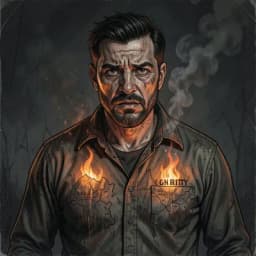
Meet the sample character
When the sun dies, fire dictates the law.
Try a scene · No signup
The Frozen Hearth
A short sample of this world. Your own version starts with your character.
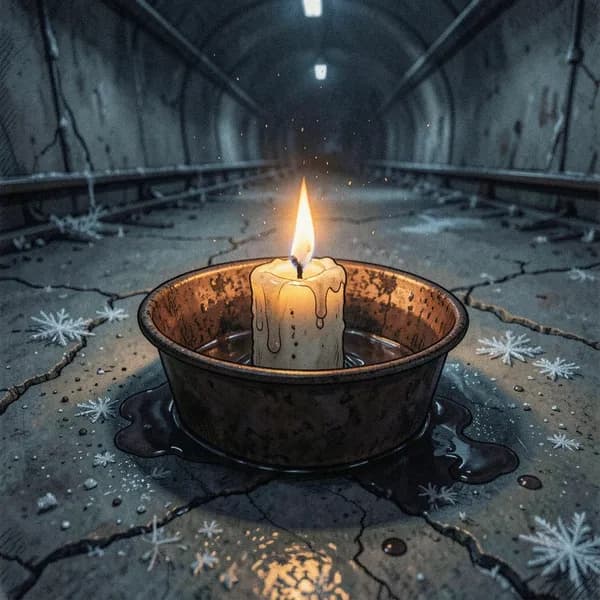
Your breath hangs in the air like shredded silk, thick with the smell of wet soot. The sun hasn't crested the horizon for seven years, and the absolute dark has turned the city into a tomb. You hunch over your last flickering candle, the wax pooling like blood in the basin. Every movement costs calories you cannot afford to replace.
“Please, Silas. My child has stopped crying, and that’s the worst sound of all. Just one handful of kindling to boil a cup of snow.”

You feel the weight of the matches in your pocket—a treasure worth more than gold, or even life itself. To give her fuel is to shorten your own survival by a day. To refuse is to watch her fade into the same frost that claimed the rest of the world. You look at her sunken eyes, then down at the dying flame.
“That wood is all I have to make it to the surface, Martha. You know the price of heat as well as I do.”
She reaches for your sleeve, her fingers brittle and blue. A shadow moves in the far corner of the tunnel—a scavenger gang attracted by the glow of your candle. They are closing in, smelling the potential for fire. You have seconds to decide whether to sacrifice your leverage, fight for your hoard, or run into the freezing blackness.
The scavengers are twenty paces away. How do you protect your flame?
Your character. Your next move.
Will you be the last light in a dying world?
The frost is spreading, and your fuel is running low. Every decision you make determines if your group survives the night or becomes another frozen memory in the dark. Step into the ruins and decide your fate.
Begin your survivalYour Story, Your Way
Everything is customizable. Pick any genre, setting, or character — the AI builds a world around exactly what you want.
Any Character
Design your appearance, personality, backstory — every detail
Any World
Fantasy kingdoms, sci-fi stations, modern cities — you choose
Branching Paths
No two playthroughs are the same. Your choices reshape everything
Full Immersion
AI images, voice acting, sound effects — a living story
Manage dwindling fuel reserves to keep your shelter above freezing temperatures.
Choose between hoarding supplies or sharing with starving strangers in the ruins.
Navigate complex social dynamics as desperation turns former neighbors into rivals.
Scavenge through frozen remnants of the old world for rare, life-saving artifacts.
The mercury in the thermometer dropped until the glass shattered, leaving behind a silence louder than the dying gales. You stand in the center of a city that no longer knows light, clutching a rusted kerosene lamp. The horizon holds no dawn, only the encroaching frost of a starless void. Your fingers are numb, but your mind is sharp enough to know that the handful of coal in your pack will not last the night. You are a scavenger in a world where the sun has been extinguished, a concept once thought to be the fever dream of a poet, now your reality. Every decision you make—whether to hoard your dwindling supplies or barter with the desperate souls huddled in the shadows—alters the fate of your small, trembling community. In this interactive story, your choices are the only thing keeping the encroaching winter from your door.
What is Darkness (Byron) in Post-Apocalyptic?
Lord Byron’s 1816 poem, Darkness, remains one of literature’s most chilling depictions of the end of all things. It describes a world where the sun is extinguished, the stars go out, and humanity descends into a frantic, starving madness. This vision has rippled through centuries, influencing the bleak, atmospheric dread of Cormac McCarthy’s The Road and the freezing, resource-starved landscapes found in games like Frostpunk. Unlike typical zombie-filled apocalypses, the threat here is not a monster, but the absolute, crushing indifference of a dead solar system. It is a slow, methodical erasure of society where the cold is the primary adversary. Understanding this vision means accepting that morality is a luxury of the warm. When the world freezes, the only things that remain are the raw, unvarnished instincts of those who refuse to stop breathing. By placing you in the center of this literary nightmare, the experience forces you to confront the same existential terror that Byron captured in his darkest stanzas.
Why play Darkness (Byron) as an interactive story?
In this interactive experience, you are not a hero; you are a survivor managing the last embers of human warmth. You face decisions that weigh the value of a single life against the survival of a group. Do you trade your last warm coat for a day’s worth of rations? Do you turn away the freezing traveler knocking at your barricaded door, knowing your fire is already dying? The tension lies in the scarcity. Every action you take consumes resources, and every silence you maintain might be the difference between life and death. You decide how much of your humanity you are willing to sacrifice to keep the frost at bay. The consequences ripple out, changing how other survivors view you and whether your small settlement stands or falls to the encroaching shadows.
The literary legacy of Darkness (Byron)
Lord Byron penned Darkness during the 'Year Without a Summer,' a period of global climate abnormality caused by the eruption of Mount Tambora. His poem captures the existential terror of a world devoid of light. This theme of environmental collapse is a cornerstone of modern speculative fiction. You can see echoes of Byron’s bleakness in the film The Day After Tomorrow, where weather becomes a weapon, or in the stark, minimalist survival mechanics of I Have No Mouth, and I Must Scream. The character of the survivor in a sunless world appears frequently in post-apocalyptic media because it strips away the artifice of civilization. When the light goes out, people are revealed for who they truly are. Modern adaptations often focus on the psychological toll of isolation. Byron’s work remains relevant because it taps into our primal fear of the dark and the cold—a fear that does not age, even as our technology evolves. It serves as a reminder that we are only as stable as the environment that sustains us, making it a perfect foundation for a narrative that tests the limits of the human spirit.
FAQ
What is the central conflict in a Byron-inspired story?
The central conflict is survival against an indifferent, freezing environment. Unlike narratives focused on external villains, the struggle here is against the lack of resources and the psychological toll of living in total darkness.
How does the environment influence choices?
Resources are finite and non-renewable. Every choice involves a trade-off: using fuel to heat a room means you cannot use it to light a path, forcing you to prioritize immediate survival over long-term comfort.
Is this a combat-focused game?
No. The focus is on resource management, moral dilemmas, and survival strategy. Combat is rare and usually a sign that your diplomatic or scavenging efforts have failed.
What makes this distinct from other apocalypse stories?
Most apocalypse stories focus on rebuilding or fighting monsters. This experience focuses on the slow, creeping reality of a dying world where the primary enemy is the cold itself.
Explore more Post-Apocalyptic stories like Zombie Survival, Nuclear Wasteland, Plague Aftermath.
More Post-Apocalyptic Stories
Zombie Survival
The dead walk and every stranger is a threat. Scavenge for weapons, fortify your shelter, and make brutal choices about who lives and who gets left behind in this undead nightmare.
TropeNuclear Wasteland
The bombs fell and civilization crumbled. Now you wander a scorched earth where radiation is as deadly as the desperate survivors who stalk the ruins.
TropePlague Aftermath
A pandemic wiped out most of humanity. You survived, but survival is just the beginning as you navigate a world where disease still lurks and trust is the scarcest resource.
TropeFaction Warfare
Rival factions carve up what remains of the world, each with their own vision for the future. Choose your allegiance carefully because neutrality is not an option.
TropeScavenger Hunt
Every ruined building could hold the supplies that keep you alive another week. Risk raiders, traps, and structural collapse as you pick through the bones of civilization.
TropeBunker Emergence
You have lived underground your entire life. The bunker door is finally opening and the world outside is nothing like the old recordings promised.