
Post-Apocalyptic · Interactive story
Reclaiming the Wilds: After London
The great city has fallen, replaced by silence, damp earth, and the creeping green.
Start as a guest. Choose your character before the story begins.
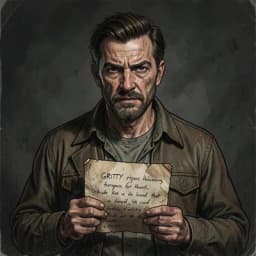
Meet the sample character
Try a scene · No signup
The Mire of Lost Crowns
A short sample of this world. Your own version starts with your character.
You haul your boots out of the suffocating muck, the smell of sulfur and ancient decay coating your throat. Ahead, the jagged stone skeleton of a skyscraper pokes through tangled vines like a rotted tooth, its base swallowed by the rising black water of the swamp.

“Don't step further, Osric. The ground here drinks the unwary, and the Lords of the Hill want their tithe in blood, not mud.”

You freeze, your hand instinctively drifting to the rusted shortsword at your hip. The silence of the drowned city offers no comfort, only the prickling sensation of unseen archers waiting in the canopy above, watching for a single misstep.
“Tithes are for the living, Maud. I am here for the iron vault that sank beneath the silt, and I don't intend to leave empty-handed.”
The ground beneath you shifts, a wet, sucking sound echoing from the depths as the swamp rises to greet your boots. You realize too late that the structure you were aiming for is tilting, threatening to slide into the abyss and take your only lead on the past with it.
The structure groans under your weight, and the muck is pulling you down. How do you secure your prize before the ruins vanish forever?
Your character. Your next move.
Will you survive the green silence?
The winter is coming, and your grain stores are nearly empty. A group of travelers arrives at your gates with news of a hidden cache of tools in the ruins of the swamp. Do you trust them, or do you turn them away? Your decision starts here.
Begin your survivalYour Story, Your Way
Everything is customizable. Pick any genre, setting, or character — the AI builds a world around exactly what you want.
Any Character
Design your appearance, personality, backstory — every detail
Any World
Fantasy kingdoms, sci-fi stations, modern cities — you choose
Branching Paths
No two playthroughs are the same. Your choices reshape everything
Full Immersion
AI images, voice acting, sound effects — a living story
Trade precious clean water for iron tools needed to secure your makeshift wooden fortress.
Choose whether to hunt the mutated wildlife of the swamp or risk foraging unknown flora.
Negotiate peace treaties with local feudal lords who claim the high ground as their own.
Decide the fate of deserters who threaten the stability of your dwindling scavenger camp.
The Thames has burst its banks, turning the heart of the capital into a stagnant, gas-choked basin. You stand on the high ground of the North Downs, looking down at a horizon that should be steel and glass, seeing only the tangled canopy of an encroaching forest. The wind carries the scent of mold and salt, not the smoke of industry. You have a rusted knife, a heavy wool coat, and the weight of a dying civilization on your shoulders. Every decision you make here dictates whether your small band of scavengers finds shelter before the frost hits or becomes another forgotten layer of soil in this reclaimed landscape. Whether you trade for passage across the flooded lowlands or fight to hold your small plot of land against roving feudal clans, your survival depends on your ability to read the changing weather and the shifting loyalties of those you meet.
What is After London in Post-Apocalyptic?
Richard Jefferies’ 1885 novel, After London, is one of the earliest examples of the post-apocalyptic genre. Unlike modern survival fiction that focuses on zombies or nuclear fallout, Jefferies presents a world where civilization simply fades away. The machines stop, the maintenance crews vanish, and the plants return to reclaim the stone structures of man. This is a story about the victory of the natural world over the artificial. In this setting, the focus shifts from high-octane action to the grueling reality of hunting, gathering, and navigating a landscape that has returned to a medieval state. Works like John Wyndham’s The Day of the Triffids or modern environmental fiction like Emily St. John Mandel’s Station Eleven share this DNA, prioritizing the slow, methodical struggle of humanity as it adapts to a world without electricity, medicine, or central government. It is a quiet, atmospheric approach to the end of the world, where the primary antagonist is the environment itself and the desperate humans who cling to the ruins of the past.
Why play After London as an interactive story?
Playing through this setting forces you to prioritize survival over ambition. You are not a hero with a destiny; you are a survivor managing dwindling resources. You will face dilemmas such as whether to share your limited stores of dried grain with a neighboring settlement during a harsh winter, or if you should risk a trek through the poisonous, swampy ruins of the city to scavenge for tools left behind by the 'Old Ones.' The tension lies in the scarcity. Every encounter with a stranger carries the risk of betrayal, and every trek into the woods demands a choice between speed and stealth. You will decide how to govern your group: will you enforce strict, draconian laws to ensure order, or rely on a loose, cooperative system that might crumble under pressure? The agency provided by this interactive format turns the act of survival into a high-stakes strategy game where the environment acts as a living, breathing participant in your downfall or your triumph.
The literary legacy of After London
Richard Jefferies’ work remains a cornerstone of speculative fiction because it refuses to romanticize the collapse. Written at the height of the British Empire, the book serves as a sobering reminder of how fragile human achievement truly is. Jefferies was a naturalist, and his attention to the behavior of the landscape gives the story a haunting authenticity. Over the decades, this vision has influenced countless writers and filmmakers. The concept of a 'green apocalypse'—where the ruins of cities are slowly strangled by ivy and reclaimed by wildlife—has become a standard trope in modern media, visible in everything from the lush, overgrown environments of The Last of Us to the desolate, rural survivalism in A Canticle for Leibowitz. What makes the original work endure is its refusal to provide easy answers. There is no grand quest to restore the old world; there is only the ongoing, difficult work of living within the new one. By placing the player in this environment, we honor the original intent of the work: to show that in the absence of society, the only thing that matters is the strength of your character and the reach of your hands.
FAQ
Is this based on the original Richard Jefferies book?
Yes. The setting draws directly from the themes, geography, and tone of the 1885 novel, focusing on the return of England to a wild, feudal state after the collapse of civilization.
How does the survival mechanic work in these stories?
Survival is managed through resource tracking and choice-based consequences. You must balance food, warmth, and group morale. Failing to secure enough resources before the seasons change will lead to the collapse of your settlement.
What makes this different from typical zombie apocalypse games?
Unlike zombie settings, there is no supernatural threat or cure to find. The focus is on the long-term reality of ecological change, scarcity, and the return to medieval social structures.
Can I choose to rebuild society in this game?
Your actions can lead to the formation of a stable community or a return to nomadic life. There is no single predefined ending; the state of England at the end of your story depends entirely on the choices you make.
Explore more Post-Apocalyptic stories like Zombie Survival, Nuclear Wasteland, Plague Aftermath.
More Post-Apocalyptic Stories
Zombie Survival
The dead walk and every stranger is a threat. Scavenge for weapons, fortify your shelter, and make brutal choices about who lives and who gets left behind in this undead nightmare.
TropeNuclear Wasteland
The bombs fell and civilization crumbled. Now you wander a scorched earth where radiation is as deadly as the desperate survivors who stalk the ruins.
TropePlague Aftermath
A pandemic wiped out most of humanity. You survived, but survival is just the beginning as you navigate a world where disease still lurks and trust is the scarcest resource.
TropeFaction Warfare
Rival factions carve up what remains of the world, each with their own vision for the future. Choose your allegiance carefully because neutrality is not an option.
TropeScavenger Hunt
Every ruined building could hold the supplies that keep you alive another week. Risk raiders, traps, and structural collapse as you pick through the bones of civilization.
TropeBunker Emergence
You have lived underground your entire life. The bunker door is finally opening and the world outside is nothing like the old recordings promised.