
Post-Apocalyptic · Interactive story
Echoes in the Dead Mall
Sunlight streams through shattered glass ceilings, illuminating the decay of a forgotten era.
Start as a guest. Choose your character before the story begins.
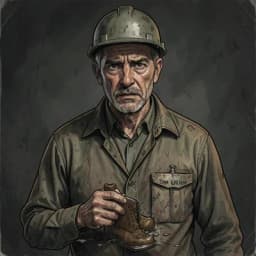
Meet the sample character
The price of survival is written on the storefronts.
Try a scene · No signup
Echoes in the Food Court
A short sample of this world. Your own version starts with your character.
You crouch behind a toppled kiosk selling long-expired perfumes, the scent of stagnant air clinging to your jacket. Above, the glass dome of the atrium groans under the weight of winter debris. You aren't here for trade goods; you are here for the filtration unit Bram is holding hostage in the darkened electronics shop across the mezzanine.

“Drop the bag, Merrick. I see your shadow stretching across the linoleum, and I’m tired of playing tag in this mausoleum.”

Your boots press hard against the cracked floor tiles. You have three magazines of ammunition and a single emergency flare, but if you trigger a firefight, the sound will draw the predators crawling in the subterranean parking garage. Bram is desperate, and desperate men make lethal mistakes, but he holds the only unit that keeps your settlement’s water supply drinkable.
“I’m not dropping anything, Bram. You know that unit is useless to you without the power coupling I’m carrying.”
Silence stretches thin between you, punctuated only by the rhythmic drip of rainwater hitting a metal bucket somewhere in the food court. Bram shifts, his grip tightening on the heavy steel unit. He is looking for an opening, and you are calculating the odds of reaching him before he decides to smash the equipment out of spite.
How do you secure the filtration unit without destroying your only leverage?
Your character. Your next move.
Claim your territory before the sun sets.
The shutters are rusted, and the scavengers are closing in. You have enough supplies for one more night, but the choice of how to spend it is yours. Will you fortify the main gate or slip into the dark tunnels to find a better way out? Every second counts in the ruins.
Start Your Survival StoryYour Story, Your Way
Everything is customizable. Pick any genre, setting, or character — the AI builds a world around exactly what you want.
Any Character
Design your appearance, personality, backstory — every detail
Any World
Fantasy kingdoms, sci-fi stations, modern cities — you choose
Branching Paths
No two playthroughs are the same. Your choices reshape everything
Full Immersion
AI images, voice acting, sound effects — a living story
Barricade the main atrium to hold off hostile raiding parties during the night.
Scavenge through looted pharmacies for medical supplies while managing your exposure to toxins.
Negotiate complex trade agreements with other survivor factions for rare ammunition and clean water.
Choose whether to clear the ventilation shafts to establish a secret escape route.
The smell of stale perfume still clings to the air, mixing with the sharp scent of wet concrete and rust. You step over a pile of disintegrated store flyers, your boots crunching on broken display glass. Around you, headless mannequins wear tattered rags that were once high-end fashion, their plastic limbs frozen in perpetual, hollow poses. Above, the skylights are jagged teeth of glass, letting in enough moonlight to cast long, dancing shadows across the concourse. This was a place of abundance once, but now, every storefront is a potential trap or a lifeline. You are low on ammunition and your water filter is failing; you have to decide whether to risk the dark depths of the department store basement or try your luck with the scavengers trading near the food court. Every decision you make carries weight, altering the path of your survival as you balance the need for resources against the constant threat of those who hunt in the dark. Your next move could save your life or mark your final hour in this concrete tomb.
What is Abandoned Mall in Post-Apocalyptic?
An abandoned mall is a classic trope in post-apocalyptic fiction, transforming a symbol of modern consumer excess into a claustrophobic survival arena. These structures are ideal for storytelling because they function as self-contained microcosms. With their multiple levels, vast corridors, and fortified storefronts, they provide a distinct geography that forces characters into tactical, high-stakes situations. George A. Romero’s 1978 classic 'Dawn of the Dead' perfectly captured this dynamic, using the mall as a sanctuary that eventually becomes a prison when the outside world pushes its way in. In these stories, the mall acts as a physical representation of the past—a place built for comfort that now offers none. Whether serving as a makeshift base for a growing survivor colony or a dangerous hunting ground for rival factions, the setting dictates the pace of the narrative. It turns every escalator into a potential choke point and every shop window into a display of what has been lost. For writers and players, the setting offers a rich environment where the environment itself feels like an antagonist, constantly threatening to collapse under the weight of its own history.
Why play Abandoned Mall as an interactive story?
Playing through a survival scenario in a ruined mall places the burden of command squarely on your shoulders. You aren't just watching a story; you are managing the scarcity of a world that has forgotten mercy. The tension comes from the constant calculation of risk: do you use your last flare to illuminate the basement, or do you conserve it in case you are cornered? You will face moments where you must choose between helping a wounded stranger or prioritizing your own group's safety. The agency provided by this setting means your tactical decisions have immediate consequences—perhaps you successfully fortify the main entrance, only to realize you have trapped yourself inside with a dwindling food supply. The game forces you to weigh the moral cost of survival, where empathy can be a death sentence and selfishness is often the only way to see another sunrise. You will constantly assess the structural integrity of your hideout, negotiate trade deals with wary wanderers, and decide when to abandon your post before the predators close in.
What makes Abandoned Mall work: the worldbuilding
The effectiveness of the abandoned mall as a setting relies on the contrast between the intended purpose of the space and its current, grim reality. In titles like 'The Last of Us Part II', the Seattle mall serves as a haunting, overgrown playground that emphasizes how nature reclaims human hubris. This setting creates natural conflicts: the struggle for vertical territory, the reliance on narrow sightlines, and the constant threat of structural collapse. A well-constructed mall story leverages sensory details—the sound of wind howling through empty corridors, the sight of faded advertisements for products that no longer exist, and the smell of rot in the food court. Character archetypes thrive here, from the cynical scavenger who knows every shortcut to the idealistic leader trying to rebuild a semblance of community in a place built for commerce. Works like 'The Mist' demonstrate how being trapped in a large retail space forces disparate personalities to clash, turning the building into a pressure cooker of human emotion. To make this setting work, a story must emphasize the claustrophobia. The mall is a maze, and the threat is rarely just the physical danger—it is the psychological realization that you are trapped in a monument to a civilization that has already failed. By focusing on the scarcity of resources within this vast, empty expanse, you force the reader to engage with the reality of their situation. Every item found is a victory, and every noise heard in the distance becomes a source of genuine dread.
FAQ
What makes the abandoned mall setting different from other post-apocalyptic environments?
Unlike open-world ruins, a mall is a contained, artificial environment. It provides a unique blend of verticality and interior navigation, turning a familiar layout into a labyrinthine trap where the architecture itself becomes a primary obstacle for the player.
How do my choices impact the survival of my group in the mall?
Every choice affects resource management and faction relations. If you choose to trade supplies for defense, you might be safer, but your group will go hungry. Your decisions directly influence who survives, who turns on you, and how long your fortress holds out.
Is this setting focused on combat or stealth?
It is both. The mall offers wide open spaces where combat is inevitable if you are discovered, but the many store rooms and maintenance tunnels allow for stealthy movement. Your playstyle choices determine whether you become a feared raider or a quiet scavenger.
Can I rebuild the mall into a functioning base?
Yes. A significant part of the experience involves choosing how to utilize the space. You can prioritize defense, agriculture, or trade, effectively turning the decaying structure into a hub that attracts—or repels—other survivors.
Explore more Post-Apocalyptic stories like Zombie Survival, Nuclear Wasteland, Plague Aftermath.
More Post-Apocalyptic Stories
Zombie Survival
The dead walk and every stranger is a threat. Scavenge for weapons, fortify your shelter, and make brutal choices about who lives and who gets left behind in this undead nightmare.
TropeNuclear Wasteland
The bombs fell and civilization crumbled. Now you wander a scorched earth where radiation is as deadly as the desperate survivors who stalk the ruins.
TropePlague Aftermath
A pandemic wiped out most of humanity. You survived, but survival is just the beginning as you navigate a world where disease still lurks and trust is the scarcest resource.
TropeFaction Warfare
Rival factions carve up what remains of the world, each with their own vision for the future. Choose your allegiance carefully because neutrality is not an option.
TropeScavenger Hunt
Every ruined building could hold the supplies that keep you alive another week. Risk raiders, traps, and structural collapse as you pick through the bones of civilization.
TropeBunker Emergence
You have lived underground your entire life. The bunker door is finally opening and the world outside is nothing like the old recordings promised.