
Zombie · Interactive story
Buried Beneath the Dead
Six months of oxygen, three months of rations, and one locked steel door.
Start as a guest. Choose your character before the story begins.
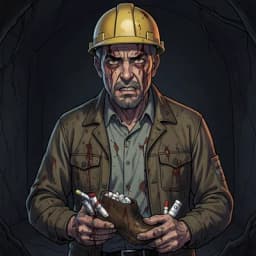
Meet the sample character
The air is running thin, and so is your trust.
Try a scene · No signup
Concrete Breath
A short sample of this world. Your own version starts with your character.
You press your ear against the rusted blast door. The faint hum of the generator is stuttering, a rhythmic rattle that matches your own racing pulse. Dust motes dance in the harsh, flickering glow of a single tube light. Behind you, the pantry shelves are skeleton-bare, rows of empty steel echoing the silence of the world above.

“The seals are leaking, Hideo. I heard the hiss again, and if we lose that pressure, we’re just waiting to be dug out like worms.”
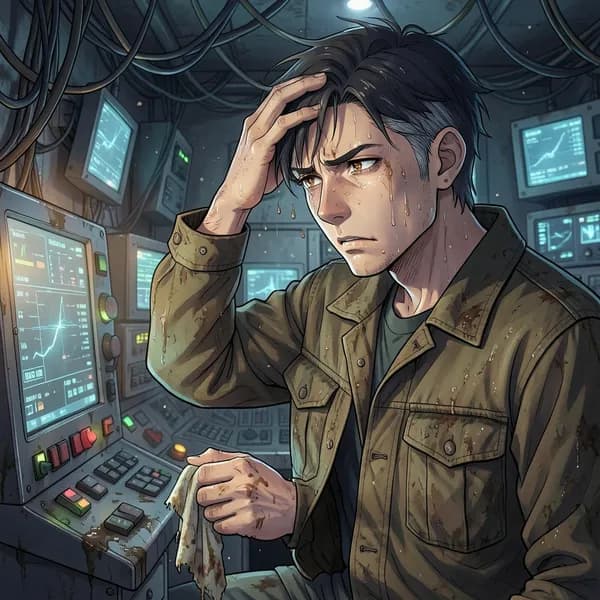
You turn around, wiping sweat from your forehead with a grease-stained rag. Marcus stands by the intake vent, his hand trembling as he clutches a heavy pipe wrench. The air in the bunker feels heavier now, metallic and stale, tasting of ozone and stagnant dust.
“Fixing the seal won't matter if you keep bashing the pipes, Marcus. Put the wrench down before you trigger the emergency lockdown.”
He ignores you, stepping closer to the vent with a frantic glint in his eyes. He believes someone is sabotaging the system from the crawlspace, but you know the truth—the mechanical failure is systemic, and the main battery is dying. If he rips the vent off, the entire ventilation shaft might collapse, sealing you both in total darkness.
Marcus raises the wrench, his knuckles white. How do you stop him before he brings the ceiling down?
Your character. Your next move.
Will you keep the doors locked or let them in?
The oxygen is running low, and Marcus is already eyeing your portion of the rations. Every decision you make determines if your group survives the week or tears itself apart from the inside. Step into the bunker and see if you have the resolve to lead.
Seal the bunker and playYour Story, Your Way
Everything is customizable. Pick any genre, setting, or character — the AI builds a world around exactly what you want.
Any Character
Design your appearance, personality, backstory — every detail
Any World
Fantasy kingdoms, sci-fi stations, modern cities — you choose
Branching Paths
No two playthroughs are the same. Your choices reshape everything
Full Immersion
AI images, voice acting, sound effects — a living story
Allocate limited water and fuel rations to prevent or trigger internal civil unrest.
Decide whether to investigate mysterious noises outside the bunker or seal the vents permanently.
Manage the mental stability of your group through dialogue choices during long, dark nights.
Choose who earns a spot on the limited-capacity air filtration schedule during emergencies.
The hum of the air filtration system is the only thing keeping you sane. Upstairs, the cities are quiet, silenced by the rot that claimed the surface. Down here, the concrete walls feel like they are closing in, sweating condensation that tastes like rust. You check the monitor again—the thermal sensors show movement near the ventilation shaft, but it is the sound of muffled arguing in the mess hall that makes your stomach turn. Elena is hiding something in her pack, and Marcus has been staring at the ammunition locker for three days straight. You hold the master key in your pocket, feeling the cold weight of it against your thigh. This is a game of attrition where your decisions dictate who eats, who guards the perimeter, and who is eventually left out in the cold. Every choice ripples through the cramped quarters, shifting the fragile peace between you and the others trapped in this tomb.
What is Underground Bunker Survival in Zombie?
Underground bunker survival focuses on the claustrophobic tension of a post-apocalyptic lockdown. Unlike stories that emphasize running and gunning through city streets, this trope centers on resource management, social friction, and the psychological decay caused by isolation. The primary conflict is rarely just the undead scratching at the reinforced bulkhead; it is the human breakdown occurring when the fear of starvation outweighs the fear of infection. In films like George A. Romero's 'Day of the Dead', the setting acts as a pressure cooker, forcing scientists and soldiers to confront their own moral failures while the world above continues to decompose. The trope relies on the 'bottle episode' effect, where characters cannot escape one another. You are forced to deal with the consequences of your leadership, whether that means rationing water to the point of dehydration or choosing which survivor to exile when supplies run dry. It is a slow-burn narrative that rewards players who prioritize long-term stability over short-term survival.
Why play Underground Bunker Survival as an interactive story?
Playing this scenario allows you to dictate the social hierarchy of the vault. You are not just observing a tragedy; you are the one deciding if the generator gets fixed or if the rations are distributed equally. The tension comes from the lack of information—you might hear a thud against the exterior door, but you have no way of knowing if it is a lone stray or a horde. You must decide whether to open the security feed, risking exposure to whatever is looking back, or stay in the dark to protect the group’s mental health. The AI tracks your relationships with the other survivors. If you act too harshly, a mutiny is inevitable. If you act too soft, you will run out of resources before the rescue signal ever arrives. Every interaction is a gamble.
Famous examples of Underground Bunker Survival in books, film, and games
The bunker trope has evolved from simple shelter to a crucible for human nature. In Dan Trachtenberg’s film '10 Cloverfield Lane', the story excels by keeping the audience—and the protagonist—in constant doubt regarding whether the threat outside is truly worse than the captor inside. It uses the bunker as a psychological cage where trust is a liability. Conversely, the 'Fallout' video game series utilizes the vault concept as a social experiment, where the bunker itself is the antagonist, designed to fail or manipulate its inhabitants for twisted research. These stories succeed because they strip away the luxury of movement, forcing characters to confront their flaws in a space where they cannot walk away. Whether it is the rigid military hierarchy of 'Day of the Dead' or the claustrophobic dread of a modern thriller, the appeal remains constant: we want to know if we would hold onto our humanity when the world ends and the only company we have is the person standing across from us in a concrete box. The trope endures because it mirrors our own anxieties about societal collapse, making the bunker a perfect setting for testing your own moral limits.
FAQ
Can I play this game solo, or do I manage a team?
You play as the leader of a small group of survivors. You are responsible for their survival, which means managing their morale, health, and supplies while balancing their conflicting agendas.
How does the AI handle my choices in the bunker?
The AI tracks every interaction and resource expenditure. If you make selfish choices, your group will eventually turn against you. If you are too generous, you may run out of supplies, leading to a desperate situation.
Is this just about fighting zombies?
No. While the threat of the undead is always present, the primary focus is on the human element. Managing internal conflict, psychological stress, and scarce resources is just as important as reinforcing the doors.
Are there multiple endings to the bunker story?
Yes. Depending on how you manage your resources and your relationships with the other survivors, you could end up trapped, rescued, or forced to venture back to the surface.
Explore more Zombie stories like Zombie Outbreak Day Zero, Safe Zone Search, Zombie Horde Siege.
More Zombie Stories
Zombie Outbreak Day Zero
The first reports are hitting the news and nobody believes them yet. You witness the initial chaos firsthand and must decide whether to warn others, stockpile supplies, or run before the city falls.
TropeSafe Zone Search
Rumor has it there is a safe zone still standing, but the road there is crawling with the undead. You must navigate hostile territory, decide who to trust, and find sanctuary before your supplies run out.
TropeZombie Horde Siege
They are pressing against every barricade and your defenses are crumbling. You must rally your group, ration ammunition, and make brutal sacrifices to survive the night.
TropeCure Quest
A scientist claims there is a cure hidden in a facility overrun with the undead. You must brave impossible odds, gather the components, and decide whether the cost of saving humanity is worth paying.
TropeZombie Evolution
These are not the shambling corpses you expected. The undead are evolving, learning, and adapting to your defenses. You must stay one step ahead of a threat that grows smarter with every passing day.
TropeFast vs Slow Zombies
Some shuffle and some sprint. You are caught between two terrifying variants of the undead, each demanding a different survival strategy. One wrong assumption about what is chasing you could be your last.