
Zombie · Interactive story
The Walking Dead: Sprinting Predators or Shuffling Corpses?
One wrong guess about the speed of your enemy is a death sentence.
Start as a guest. Choose your character before the story begins.
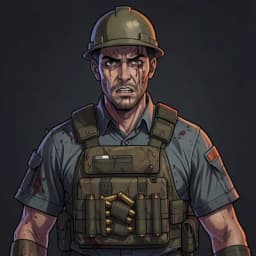
Meet the sample character
Some bleed out, others sprint. Knowing the difference is your only hope.
Try a scene · No signup
The Perimeter Breach
A short sample of this world. Your own version starts with your character.
You are prone on the cracked asphalt. Below, the shamblers move with rhythmic, mindless pulses, a sea of gray skin swaying toward the sound of your campfire. Then, the silence snaps. A high-pitched, inhuman keening erupts from the northern ridge, a sound that makes your skin crawl.

“They aren't shuffling, Mateo. Those aren't the regulars.”
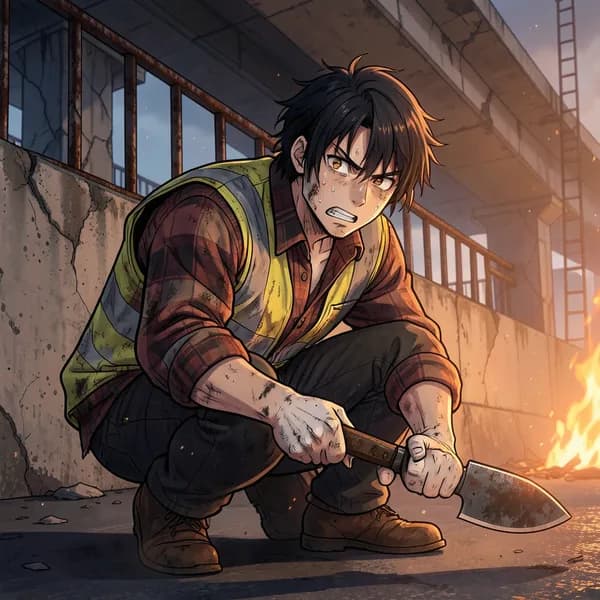
Your pulse hammers against your throat. You catch sight of the erratic sprint of the infected—the ones that don't tire, the ones that hunt by sound alone. They’ve caught your scent, and they aren't stopping for the fence. They are moving with terrifying, predatory intent, closing the distance to the maintenance ladder.
“We have to move now. Either we hold the stairs or we take the drop.”
The sprinters reach the base of the overpass, their boots—or what is left of them—slapping against the pavement with frantic speed. The slow ones below are blocked by the chain-link fence, but the pack is already scaling the ladder. If you don't act, the first one will be over the railing in seconds.
The ladder is rattling under the weight of the climbing pack. How do you respond?
Your character. Your next move.
The undead are closing in. Which path will you take?
A pack of infected is sprinting down the alleyway while a larger, slow-moving hoard blocks the main exit. You have one clip of ammo and a heavy pipe. Do you fight, or do you climb the fire escape? Your choices define your survival.
Start Your Survival StoryYour Story, Your Way
Everything is customizable. Pick any genre, setting, or character — the AI builds a world around exactly what you want.
Any Character
Design your appearance, personality, backstory — every detail
Any World
Fantasy kingdoms, sci-fi stations, modern cities — you choose
Branching Paths
No two playthroughs are the same. Your choices reshape everything
Full Immersion
AI images, voice acting, sound effects — a living story
Analyze movement patterns to choose between barricading a room or fleeing to high ground.
Manage stamina levels during frantic escapes when confronted by aggressive, sprinting infected packs.
Decide when to use limited ammunition on slow threats versus saving it for sprinters.
Scavenge for specific tools that help you counter different types of undead movement.
Rain slicks the asphalt of the abandoned highway. You crouch behind the rusted chassis of a sedan, listening. In the distance, a low, rhythmic dragging sound echoes against the concrete—a slow one, easily avoided if you keep your composure. Suddenly, a high-pitched, frantic scraping erupts from the alleyway to your left. That is not a shuffler; that is something that will catch you before you reach the fire escape. Your breath hitches as you decide: do you stand your ground and risk a swarm, or do you bolt into the open? Every heartbeat matters, and every choice dictates whether you become a meal or a survivor. This is an interactive story where the speed of your enemy changes the rules of the game. You must read the environment, identify the threat, and react before the distance between you and the undead closes for good.
What is Fast vs Slow Zombies in Zombie?
The distinction between the 'shambler' and the 'sprinter' defines the geography of fear in horror fiction. Slow zombies, pioneered by George A. Romero in Night of the Living Dead, rely on overwhelming numbers and the crushing realization that you cannot run forever. They represent the inevitable decay of society and the exhaustion of constant vigilance. Conversely, fast zombies, popularized by Danny Boyle’s 28 Days Later, turn the apocalypse into a frantic chase. These infected do not just hunt; they swarm with predatory instinct. When you encounter a hoard, your strategy must pivot instantly. Against the slow, you can fortify a position, ration your gear, and wait for a window of opportunity. Against the fast, the environment becomes a lethal obstacle course where a single trip or a moment of hesitation ends your story. Understanding the movement profile of the undead is the difference between a successful escape and a gruesome end.
Why play Fast vs Slow Zombies as an interactive story?
In these stories, the threat is unpredictable. You might encounter a group of infected that behaves like a tide, slowly encroaching on your perimeter, or you might find yourself in a high-octane chase against a pack of sprinters. You must decide whether to conserve ammunition for a desperate stand or burn your stamina sprinting for high ground. Do you barricade the door knowing they will eventually push through, or do you risk an open-field sprint to reach the extraction point? The tension lies in the shift of pace. When the story throws a fast variant at you, your tactical plan must change in seconds. You are not just surviving; you are reading the movement of the dead to decide how best to expend your limited resources. The agency to choose your path—whether to fight, hide, or flee—makes the encounter personal and visceral.
Famous examples of Fast vs Slow Zombies in books, film, and games
The contrast between these two types of undead is a cornerstone of modern horror. In The Walking Dead (comic and television series), the threat is almost exclusively the slow-moving shuffler. The horror here is psychological—the exhaustion of constant vigilance and the realization that the living are often more dangerous than the dead. The zombies are a persistent, inescapable background radiation of mortality. Compare this to World War Z (the film), where the zombies act like a fluid, rushing mass that scales walls and crashes through glass. The terror there is physical and overwhelming, forcing the pace of the narrative to accelerate to match the speed of the threat. Another example is the Left 4 Dead video game series, which masterfully blends both. You are constantly harassed by slow-moving common infected, but the sudden appearance of a 'Special Infected' changes the rhythm of the match entirely. This dichotomy remains effective because it plays on two different human fears: the fear of being worn down by time, and the fear of being hunted by an apex predator. Whether you prefer the slow burn of a siege or the adrenaline of a chase, the mechanics of the undead define your survival experience.
FAQ
Are fast zombies harder to defeat than slow ones?
Generally, yes. Fast zombies require quicker reflexes and more efficient ammunition usage. Slow zombies are about resource management and maintaining your stamina over long periods.
How do I know what type of zombie I am facing?
Pay attention to environmental cues. Listen for heavy, dragging feet versus frantic, irregular thumping or guttural, high-pitched screeches. Visual cues like posture and movement speed will also inform your strategy.
Can I change my tactics mid-story?
Yes. Your survival depends on adapting your strategy. If you realize the threat is faster than anticipated, you must pivot from a defensive stance to an evasive one immediately.
Is this game better for stealth or combat?
It depends on the scenario. Sometimes hiding is your only option; other times, you must fight your way through to reach a safe zone. You must weigh the risk of being spotted against your available supplies.
Explore more Zombie stories like Zombie Outbreak Day Zero, Safe Zone Search, Zombie Horde Siege.
More Zombie Stories
Zombie Outbreak Day Zero
The first reports are hitting the news and nobody believes them yet. You witness the initial chaos firsthand and must decide whether to warn others, stockpile supplies, or run before the city falls.
TropeSafe Zone Search
Rumor has it there is a safe zone still standing, but the road there is crawling with the undead. You must navigate hostile territory, decide who to trust, and find sanctuary before your supplies run out.
TropeZombie Horde Siege
They are pressing against every barricade and your defenses are crumbling. You must rally your group, ration ammunition, and make brutal sacrifices to survive the night.
TropeCure Quest
A scientist claims there is a cure hidden in a facility overrun with the undead. You must brave impossible odds, gather the components, and decide whether the cost of saving humanity is worth paying.
TropeZombie Evolution
These are not the shambling corpses you expected. The undead are evolving, learning, and adapting to your defenses. You must stay one step ahead of a threat that grows smarter with every passing day.
TropeInfected Loved One
Someone you love has been bitten and the clock is ticking. You must choose between mercy, hope for a cure, or hiding the truth from a group that would put them down without hesitation.