
Zombie · Interactive story
Silence the Static: The Radio Signal Rescue
The broadcast cuts through the static, but can you trust a ghost on the air?
Start as a guest. Choose your character before the story begins.
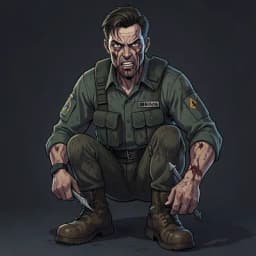
Meet the sample character
The broadcast isn't meant for survivors.
Try a scene · No signup
Static on the Wire
A short sample of this world. Your own version starts with your character.
You press your ear against the cold plastic of the handheld radio, tuning through the aggressive white noise. It has been weeks since you heard anything but the wind. Then, a voice cuts through—hollow, mechanical, but undeniable: 'Coordinate 44-N, Sector 7. Fuel, medicine, and clean water. Arrival window closing at dusk.' Your fingers tremble against the dial, the greasy grime of the roadside station coating your skin.

“Don't listen to it, Hollis. The last time we chased a frequency, Miller died in the wire. It's a trap.”
You look at the map pinned to the wall, a frayed paper relic of a world that no longer exists. Sector 7 is a death trap, nestled in the valley where the highway curves into a bottleneck. Marta is right, but your stores are down to three cans of beans and a half-empty jug of murky rain water. Every hour you wait here, the infection gets closer, scratching at the reinforced doors of the office.

“Maybe it's a trap, but it's the only lead we have. If we stay, we starve. If we go, at least we're moving.”
Outside, the shifting shadows grow longer. The clicking sound intensifies, a dozen hungry mouths gathering near the vending machine barricade. You have two minutes to decide before the light fails and the pack breaches the glass. The radio crackles again, the voice repeating the coordinates, a rhythmic lure pulling you toward the dark.
The glass is spider-webbing under the pressure of the horde outside. How do you respond to the radio signal?
Your character. Your next move.
The signal is fading. Will you answer?
You have enough fuel for another fifty miles. The voice on the radio is repeating the coordinates, but your group is exhausted and low on medical kits. Do you push forward tonight, or do you stop to scavenge for supplies and risk losing the signal forever? Your choices determine the fate of your survivors.
Start Your Survival StoryYour Story, Your Way
Everything is customizable. Pick any genre, setting, or character — the AI builds a world around exactly what you want.
Any Character
Design your appearance, personality, backstory — every detail
Any World
Fantasy kingdoms, sci-fi stations, modern cities — you choose
Branching Paths
No two playthroughs are the same. Your choices reshape everything
Full Immersion
AI images, voice acting, sound effects — a living story
Decide whether to investigate a potential trap or stick to your current, grueling route.
Manage limited fuel and medical supplies while weighing the risks of scavenging for more.
Argue with skeptical group members who fear the broadcast is a lure for raiders.
Choose between saving precious ammunition or using it to clear a path toward the signal.
The batteries in your handheld unit are dying, but the signal cuts through the static with haunting clarity. "Station 4, this is Delta Base. We have clean water, secure perimeters, and enough rations for a month. If you’re hearing this, head north to the silos." You stare at the map, your hands shaking from a mixture of hunger and adrenaline. Outside, the wind howls through the hollowed-out ruins of a suburban strip mall, carrying the faint, wet moans of the infected. Your group is down to four, and the fuel gauge is hovering near empty. Every decision you make—whether to scavenge for more gas in the infested grocery store or risk the highway without it—will determine if you actually reach the silos or become just another set of bones in the tall grass. Your choices dictate who survives the night and who stays behind.
What is Radio Signal Rescue in Zombie?
The Radio Signal Rescue trope functions as a psychological anchor in survival fiction. When the world has collapsed into chaos, a human voice over the airwaves represents the last vestige of civilization. It promises order, food, and safety in exchange for the grueling task of traveling through hostile territory. This trope tests the protagonist's desperation; it forces them to weigh the risk of a dangerous trek against the crushing hopelessness of their current situation. In *The Walking Dead*, the promise of Terminus acts as a classic example of this, drawing survivors toward a location that may not be the sanctuary it claims to be. Similarly, in the game *Days Gone*, the player constantly monitors radio signals and distress calls, knowing that the source might be a beacon of hope or a lure for something far more sinister. The tension lies in the ambiguity. Is there truly a community waiting on the other end, or is the frequency being used by scavengers, raiders, or worse, the infected themselves? It forces the player to consider the human cost of blind hope.
Why play Radio Signal Rescue as an interactive story?
Agency changes the stakes of a radio rescue. When you are the one holding the radio, the decision to trust that crackling voice becomes a heavy burden. You are not just watching a character make a mistake; you are deciding whether to put your group in danger based on a gut feeling. You will face moments where you must choose between a safe, slow path and a fast, high-risk route that might get your group killed. You will also have to mediate internal conflicts, as other survivors in your party will have their own opinions on whether the broadcast is a trap. The interactive nature means that every time you stop to scavenge for supplies, you risk losing time, but moving too quickly leaves you vulnerable to ambushes. You must manage your group's morale, health, and dwindling resources while keeping your eyes on the road and your ears on the radio.
Famous examples of Radio Signal Rescue in books, film, and games
The Radio Signal Rescue is a staple because it effectively bridges the gap between isolation and the promise of community. In the television series *The Walking Dead*, the Terminus arc utilizes this trope perfectly. Survivors are lured by signs and radio broadcasts promising sanctuary, only to find that the structure of civilization they craved has been replaced by predatory human behavior. The trope works because it taps into the fundamental human need for safety during a crisis. In the game *Days Gone*, the protagonist Deacon St. John spends much of the narrative tracking signals and radio chatter. These moments serve to break the monotony of the open-world survival loop, giving the player a tangible goal that feels worth the risk of dying in the wilderness. Another example is found in the novel *Metro 2033*, where radio signals from the surface become a source of both religious fervor and terror, as characters struggle to determine if humanity still exists beyond the tunnels. The trope endures because it forces characters to confront the most terrifying question of the apocalypse: is it better to die in the safety of your own isolation, or to risk everything for the slim chance that someone else is still out there?
FAQ
What makes a radio signal rescue story different from a standard survival game?
In a standard survival game, your goal is often just to last as long as possible. A radio signal rescue story introduces a specific narrative objective. You are no longer just surviving; you are moving toward a goal. This shift adds time pressure and requires you to balance your survival tactics against the necessity of reaching your destination.
Can I choose not to follow the signal?
Yes. Your agency is the driving force of the story. If you decide that the signal sounds like a trap or that the distance is too great for your group to travel, you can choose to ignore it. However, doing so may force you to face other, equally difficult survival challenges.
Does the radio signal always lead to a safe location?
In the world of the undead, nothing is guaranteed. The outcome of following a signal depends entirely on your choices, the state of your group, and the hidden dangers you encounter along the way. Sometimes the signal is a genuine lifeline, and other times it is a dangerous gamble.
Is this story right for me if I prefer tactical gameplay?
Absolutely. The focus on resource management, route planning, and group dynamics provides a deep tactical layer. You will need to carefully track your supplies and make calculated risks if you want to make it to your destination alive.
Explore more Zombie stories like Zombie Outbreak Day Zero, Safe Zone Search, Zombie Horde Siege.
More Zombie Stories
Zombie Outbreak Day Zero
The first reports are hitting the news and nobody believes them yet. You witness the initial chaos firsthand and must decide whether to warn others, stockpile supplies, or run before the city falls.
TropeSafe Zone Search
Rumor has it there is a safe zone still standing, but the road there is crawling with the undead. You must navigate hostile territory, decide who to trust, and find sanctuary before your supplies run out.
TropeZombie Horde Siege
They are pressing against every barricade and your defenses are crumbling. You must rally your group, ration ammunition, and make brutal sacrifices to survive the night.
TropeCure Quest
A scientist claims there is a cure hidden in a facility overrun with the undead. You must brave impossible odds, gather the components, and decide whether the cost of saving humanity is worth paying.
TropeZombie Evolution
These are not the shambling corpses you expected. The undead are evolving, learning, and adapting to your defenses. You must stay one step ahead of a threat that grows smarter with every passing day.
TropeFast vs Slow Zombies
Some shuffle and some sprint. You are caught between two terrifying variants of the undead, each demanding a different survival strategy. One wrong assumption about what is chasing you could be your last.