Zombie · Interactive story
Farmhouse Siege: The Last Stand Against the Undead
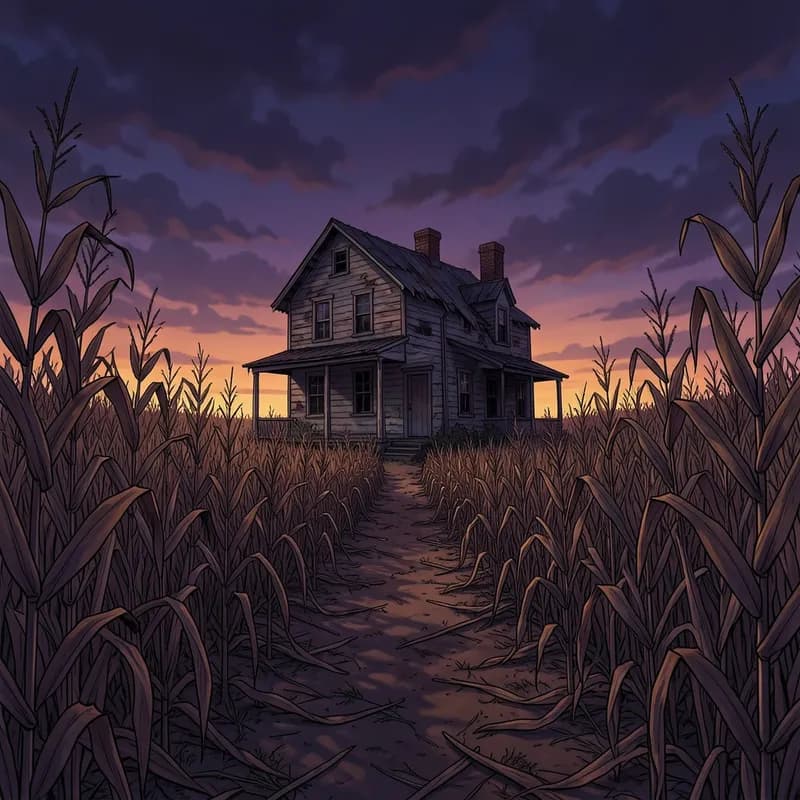
The treeline darkens. You have one hammer, four boards, and an hour of light.
Start as a guest. Choose your character before the story begins.

Meet the sample character
Try a scene · No signup
Nails and Splinters
A short sample of this world. Your own version starts with your character.
The wind howls through the gaps in the siding, carrying the rhythmic, wet thuds of hundreds of feet hitting the dirt. You slam another two-by-four across the kitchen window, the hammer meeting the frame with a jarring, hollow thud. Outside, the corn stalks are swaying, though there is no breeze to move them, and the low, guttural moans of the approaching dead begin to drown out the crickets.
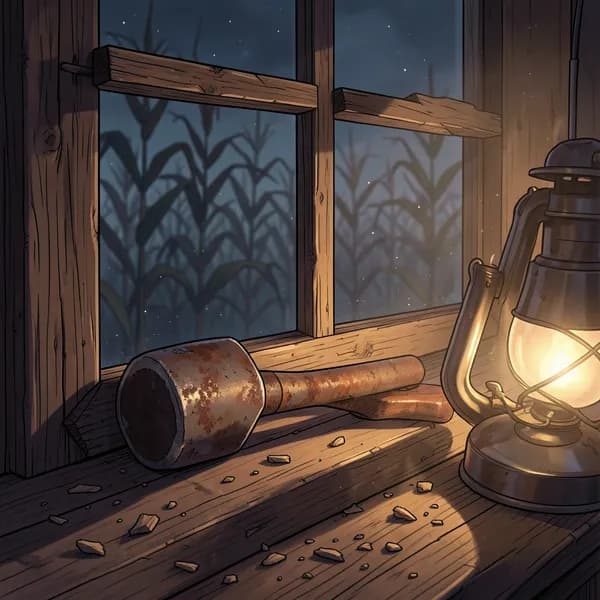
“They’re massing at the treeline, Arthur. We only have three shells left, and the front door hinges are screaming under the pressure.”
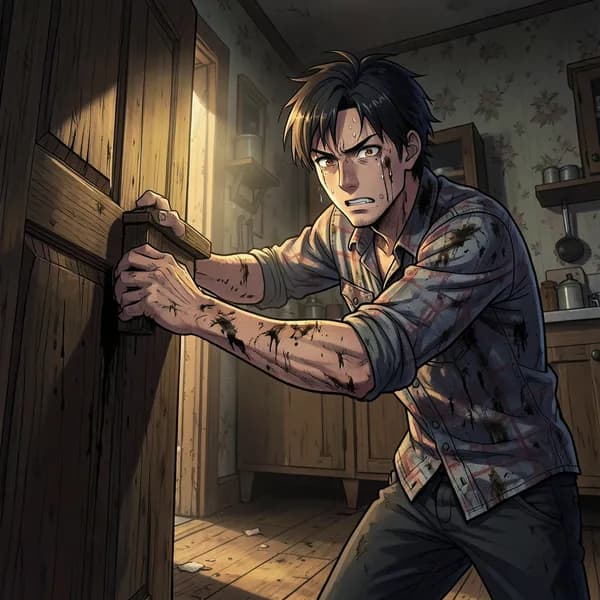
Your leg throbs with a sickening heat, the infection blooming under your bandage with every frantic movement. You wipe sweat from your eyes, leaving a streak of dark grease across your forehead. The farmhouse groans as a heavy body slams against the exterior wall, the plaster cracking near your head. You have seconds before the kitchen wall gives way entirely.
“Forget the shells. Help me shove the heavy oak table against the door, then get to the cellar hatch.”
As you shove the table, the wood splinters under the weight of something slamming against the door from the other side. A gray, rotting hand punches through the thin wood, its fingers clawing blindly for your throat. You have a hammer in one hand and the heavy table in the other, but the porch light flickers and dies, plunging you into total darkness.
The creature's fingers are inches from your neck; how do you hold this position?
Your character. Your next move.
The sun is setting. Will you survive?
The moaning has reached a fever pitch. You have enough boards for the front door or the kitchen window, but not both. Pick your defense, conserve your shells, and see if your barricades hold through the night. The dead are waiting at the edge of the cornfield.
Defend the Farmhouse NowYour Story, Your Way
Everything is customizable. Pick any genre, setting, or character — the AI builds a world around exactly what you want.
Any Character
Design your appearance, personality, backstory — every detail
Any World
Fantasy kingdoms, sci-fi stations, modern cities — you choose
Branching Paths
No two playthroughs are the same. Your choices reshape everything
Full Immersion
AI images, voice acting, sound effects — a living story
Reinforce individual entry points using scavenged wood and rusted nails under mounting pressure.
Scavenge the surrounding property for medical supplies while the dead circle your perimeter.
Allocate precious ammunition between suppressing the front yard and clearing the back porch.
Manage the morale of your group when the farmhouse begins to feel like a coffin.
The porch light flickers against a wall of rotting corn stalks. You can smell the copper scent of blood on the wind, a sharp contrast to the damp earth and diesel. Inside the farmhouse, your supplies are dwindling—a handful of canned peaches and a single box of shotgun shells. Outside, the low, guttural moans begin to rise from the field. You have to decide: do you barricade the cellar and pray they don't find the floorboards, or do you stand on the porch and draw them into the open? Every decision you make here leaves a mark on the story, determining whether you see the sunrise or become part of the landscape.
What is Farmhouse Siege in Zombie?
Farmhouse Siege is a specific sub-genre of horror that strips away the safety of urban environments and leaves you exposed in the open country. It is defined by isolation and the mechanical effort of defense. Think of the visceral desperation in George A. Romero’s Night of the Living Dead, where the house serves as both a sanctuary and a trap. Unlike a city setting where you can move through alleyways or climb fire escapes, the farmhouse siege forces you to confront the enemy head-on. The geography is simple: you are inside, they are outside, and the perimeter is only as strong as your last repair. Whether you are engaging with the farmstead defense in The Walking Dead comics or the frantic barricading found in titles like Project Zomboid, the core principle remains the same. You are not a hero; you are a scavenger trying to keep a roof over your head against an unrelenting tide.
Why play Farmhouse Siege as an interactive story?
Playing through a farmhouse siege forces you to weigh your limited resources against the physical threat of the dead. You are managing the fragility of your environment. You will choose which windows to prioritize, whether to conserve ammunition for a desperate breakout, or how to ration the remaining clean water among your group. The tension comes from the silence between the waves—the moments when you hear a floorboard creak upstairs or the sound of a window latch rattling. Will you risk a supply run to the barn for more tools, knowing you might be spotted? Will you trust the stranger stumbling toward your porch, or keep the door bolted tight? Every choice ripples through the narrative, potentially compromising your defense or saving your skin.
What makes Farmhouse Siege work: the worldbuilding
The farmhouse siege works because it weaponizes the concept of home. A house is meant to be a place of safety, but in a zombie scenario, it becomes a cage. The architecture itself—the creaky stairs, the narrow hallways, the glass panes—becomes an antagonist. The effectiveness of this setting lies in the claustrophobia it generates despite the vast, empty fields surrounding the building. The conflict is inherently tactical: how do you turn a domestic space into a fortress? Realism is the engine here. You need to account for the weight of a barricade, the noise of a glass break, and the exhaustion of a sleepless night. In 28 Weeks Later, the vulnerability of the farmhouse highlights how quickly order collapses into chaos. The setting thrives on the contrast between the familiar, like a kitchen or bedroom, and the horrific, such as the undead clawing at the walls. It forces characters to act with desperation rather than strategy, making every mistake feel earned and every victory feel temporary.
FAQ
Can I leave the farmhouse?
Yes, but the open fields offer zero cover. Leaving requires planning, stealth, and a willingness to abandon your fortification for the unknown.
How do traps work in this setting?
You can set up noise makers or tripwires using everyday items, but they require resources that could otherwise be used for barricading windows or doors.
Is it possible to hold the farmhouse indefinitely?
While you can reinforce your position, supplies will eventually run out. Survival is a test of how long you can delay the inevitable.
How does the AI handle group dynamics?
The AI tracks the mental state of your group members based on your decisions, affecting their performance and loyalty during a siege.
Explore more Zombie stories like Zombie Outbreak Day Zero, Safe Zone Search, Zombie Horde Siege.
More Zombie Stories
Zombie Outbreak Day Zero
The first reports are hitting the news and nobody believes them yet. You witness the initial chaos firsthand and must decide whether to warn others, stockpile supplies, or run before the city falls.
TropeSafe Zone Search
Rumor has it there is a safe zone still standing, but the road there is crawling with the undead. You must navigate hostile territory, decide who to trust, and find sanctuary before your supplies run out.
TropeZombie Horde Siege
They are pressing against every barricade and your defenses are crumbling. You must rally your group, ration ammunition, and make brutal sacrifices to survive the night.
TropeCure Quest
A scientist claims there is a cure hidden in a facility overrun with the undead. You must brave impossible odds, gather the components, and decide whether the cost of saving humanity is worth paying.
TropeZombie Evolution
These are not the shambling corpses you expected. The undead are evolving, learning, and adapting to your defenses. You must stay one step ahead of a threat that grows smarter with every passing day.
TropeFast vs Slow Zombies
Some shuffle and some sprint. You are caught between two terrifying variants of the undead, each demanding a different survival strategy. One wrong assumption about what is chasing you could be your last.