
Sword & Sorcery · Interactive story
Fortune Favors the Bold: The Treasure Hunter
One map, a thousand traps, and a fortune that demands a blood price.
Start as a guest. Choose your character before the story begins.
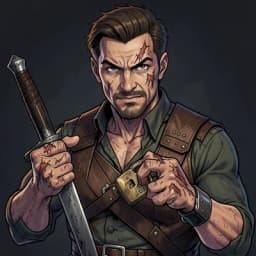
Meet the sample character
The vault never gives up its riches without a sacrifice.
Try a scene · No signup
Gold of the Shifting Silt
A short sample of this world. Your own version starts with your character.
The grinding sound of shifting stone sets your teeth on edge. You press your back against the cold, damp masonry, watching the ceiling above the central pedestal shudder. The pressure trap has been triggered. Dust cascades onto your leather tunic, and the heavy iron door you entered through is already half-buried under a mounting dune of sand.

“Move, you fool! Either grab the idol and run, or stay here and become part of the decor.”

Vesper is already halfway to the side passage, her blade drawn to hack through the rotted wooden bracing blocking the exit. You look at the pedestal. The idol—a jagged hunk of obsidian carved into a screaming god—sits there, pulsing with a faint, sickly violet light. The floor beneath your feet is beginning to tilt, a sign the entire chamber is sinking into the abyss below.
“I didn't come this far to leave empty-handed, Vesper. If that thing falls into the rift, we both die poor.”
The ground groans, a deep metallic scream that echoes through the hollow vault. A massive slab of ceiling stone shears away, pinning your boot to the floor. You have seconds before the floor drops away entirely. Your hand hovers inches from the idol's cold, vibrating surface, but the exit is closing fast.
The floor beneath you is giving way; how do you secure your future?
Your character. Your next move.
The vault is opening. Will you enter?
The map is in your hands, and the shadows are lengthening. Behind the heavy stone door lies a fortune that could change your life—or end it. Every decision you make from here on is yours alone. Step into the tomb, claim your prize, and see if you have the nerve to walk away rich.
Start Your HuntYour Story, Your Way
Everything is customizable. Pick any genre, setting, or character — the AI builds a world around exactly what you want.
Any Character
Design your appearance, personality, backstory — every detail
Any World
Fantasy kingdoms, sci-fi stations, modern cities — you choose
Branching Paths
No two playthroughs are the same. Your choices reshape everything
Full Immersion
AI images, voice acting, sound effects — a living story
Decide whether to disarm complex mechanical traps or risk a high-speed escape.
Choose to hoard gold or share spoils to gain loyalty from local guides.
Solve ancient riddles to bypass magical wards guarding long-lost royal treasures.
Balance your inventory weight against the need for survival gear and weapons.
The air in the Sunken Vault tastes of copper and centuries of dust. Vesper wipes sweat from her brow, her torchlight flickering against walls lined with gold coins that haven't seen the sun since the fall of the Old Empire. She checks the tension on her tripwire kit. Behind her, the heavy stone door has already clicked shut, sealing her in with the prize. Every step forward is a gamble. The floor tiles shift beneath her leather boots, and she knows that one wrong move will trigger the ceiling to collapse. You hold the map, and your instincts are the only thing keeping you alive. In this story, every hesitation costs time, and every decision determines whether you leave this tomb draped in glory or forgotten in the dark. Silence settles over the chamber, broken only by the rhythmic ticking of a pressure plate. Your hands are steady, but your heart hammers against your ribs. Will you risk the curse for the hoard, or cut your losses before the walls close in?
What is The Treasure Hunter in Sword & Sorcery?
The Treasure Hunter is a classic archetype defined by a singular, dangerous pursuit: the acquisition of lost relics, forgotten gold, or forbidden knowledge. Unlike the noble knight or the stoic wizard, the hunter is motivated by the thrill of the find and the promise of wealth. They are pragmatic, skilled in the arts of lockpicking, trap detection, and survival, often operating on the fringes of civilization where laws hold little weight. Consider the relentless pursuit of fortune in films like The Mummy or the classic pulp stories of Robert E. Howard’s Conan, where the protagonist often finds themselves scavenging ruins for survival. These characters are not heroes in the traditional sense; they are professionals who know the value of an artifact and the cost of a trigger-happy skeleton guardian. They survive because they are faster, greedier, and more observant than the fools who died before them. In a sword and sorcery setting, this archetype serves as the perfect lens through which to explore the consequences of greed and the thin line between a legendary heist and a shallow grave.
Why play The Treasure Hunter as an interactive story?
Playing as a treasure hunter forces you to constantly weigh the value of greed against the reality of your own mortality. In this interactive format, you aren't just watching a character make mistakes; you are the one deciding whether to disarm that suspicious pressure plate or sprint through the corridor while the ceiling crumbles. You will face dilemmas that test your character’s ethics and survival instincts. Do you leave a wounded rival behind to secure the idol, or do you risk your escape to save a potential ally? The tension comes from your agency. You choose which tunnels to explore, which ancient languages to decipher, and which traps to bypass. Every decision ripples through the narrative, changing the difficulty of the path ahead and the quality of the loot you recover. You might find a legendary blade that changes how you fight, or you might find a curse that haunts your every move for the rest of the story.
The psychology of The Treasure Hunter: why readers fall for this character
The appeal of the treasure hunter lies in the raw, unfiltered desire for autonomy. These characters represent the fantasy of the self-made individual—someone who rejects the hierarchy of kings and gods to carve their own path through the ruins of history. They embody the fear of being trapped in a mundane existence and the thrill of the high-stakes gamble. When we follow a character like Lara Croft in Tomb Raider or the fortune-seeking exploits of Indiana Jones, we are drawn to their adaptability. They don't just rely on strength; they rely on their wits and their ability to outmaneuver threats that would crush a lesser person. What makes this archetype resonate is the vulnerability hidden beneath the bravado. The hunter is often defined by what they have lost or what they are running toward. In the Witcher series, Geralt’s contracts often mirror the treasure hunter's search, highlighting the transactional nature of his world where every monster head or hidden stash is a means to sustain a nomadic life. The reader connects with this because it feels authentic to the human condition—the need to find meaning or value in the wreckage of the past. By placing yourself in the boots of the hunter, you aren't just playing a game; you are exploring the internal conflict between the desire for comfort and the addictive pull of the unknown. The treasure hunter doesn't seek glory for the sake of reputation; they seek it because they know the world is indifferent, and they would rather be the one holding the gold when the sun goes down.
FAQ
How does the treasure hunter archetype differ from a traditional hero?
A traditional hero usually acts out of duty, morality, or altruism. The treasure hunter is driven by self-interest, curiosity, and the tangible rewards of their work. They are more likely to bypass a fight than win one, prioritizing their survival and their haul over honor.
Can I choose my own gear before I start the hunt?
Yes. Your starting equipment—such as lockpicks, climbing gear, or ancient maps—directly influences which obstacles you can overcome. A well-prepared hunter can bypass traps that would stop an unprepared character in their tracks.
Will my choices lead to permanent character death?
Yes. The tomb is a dangerous place. If you trigger a trap or fail a critical decision, your story can end abruptly. The stakes are designed to be high, making your survival feel earned.
Is this story suitable for those who prefer puzzles over combat?
Absolutely. While combat is a constant threat, many of the challenges are logic-based, requiring you to interpret symbols, navigate shifting architecture, and avoid detection rather than just swinging a sword.
Explore more Sword & Sorcery stories like Barbarian Quest, Ancient Tomb Raid, Sorcerer Duel.
More Sword & Sorcery Stories
Barbarian Quest
You come from the wild lands with nothing but a blade and iron will. Carve your path through civilized treachery, ancient ruins, and sorcerous enemies who underestimate the fury of the uncivilized.
TropeAncient Tomb Raid
A forgotten king's tomb lies unsealed, its corridors lined with traps, curses, and treasures that haven't seen daylight in millennia. Plunder the dead — if you can survive what guards them.
TropeSorcerer Duel
Two wielders of dark power face off in a contest of will, cunning, and raw magical force. Challenge a rival sorcerer to a duel where the loser pays with far more than their life.
TropeMercenary Contract
Gold is gold, and you don't ask questions — until the job turns out to be far darker than the contract described. Navigate double-crosses, moral dilemmas, and enemies on every side.
TropeGladiator Arena
The crowd roars and the gate rises. Fight beasts, warriors, and sorcerers on the blood-soaked sand, winning your freedom one kill at a time — or die entertaining the masses.
TropeCursed Blade
The sword whispers to you, promising victory at a terrible cost. Wield a weapon of legendary power that feeds on your soul, and discover whether you master the blade or it masters you.