Sword & Sorcery · Interactive story
Command the Company: The Mercenary Captain
Gold is heavy, but a dead man’s debt weighs twice as much.
Start as a guest. Choose your character before the story begins.
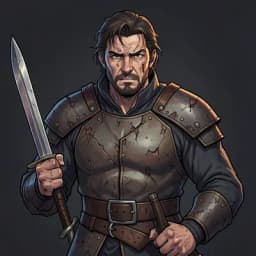
Meet the sample character
Profit is a cold comfort when the blade is at your throat.
Try a scene · No signup
Blood for the Crossing
A short sample of this world. Your own version starts with your character.
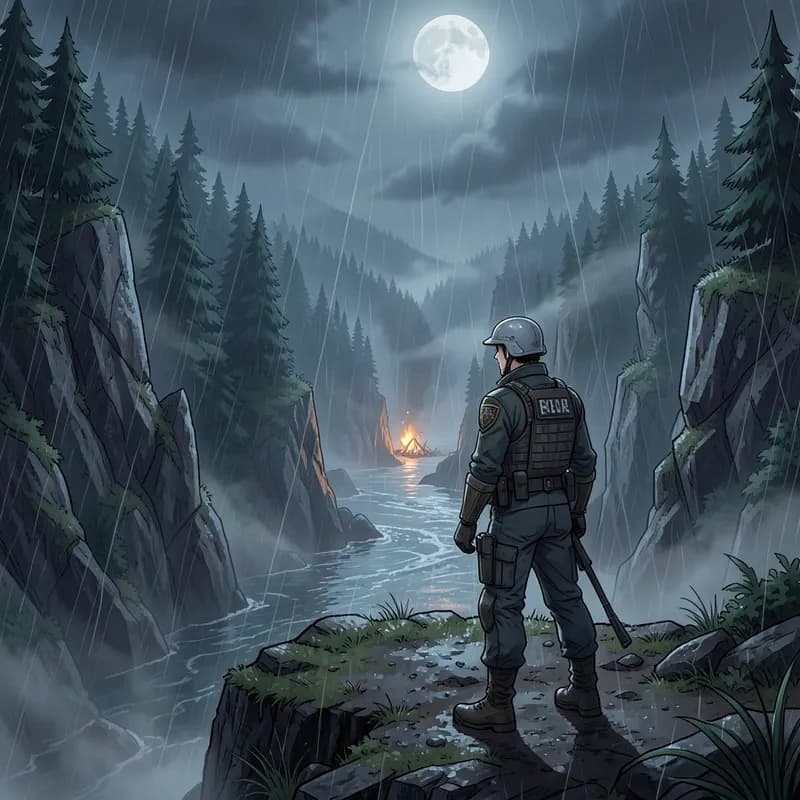
You wipe mud from your visor, the scent of stagnant water and cold iron filling your lungs. Your men huddle around a dying fire, their gear rusted and spirits lower than the riverbank. This contract was supposed to be easy coin, but the roads are infested with brigands who move faster than your heavy infantry.

“The supply wagons are light, Captain. If we don't push through the gorge tonight, we won't have enough rations to see the sun.”

Jax is right. The rations are meager, and the men are whispering about mutiny. You glance at your coin pouch; it is lighter than it should be, thanks to the bribe you paid the city magistrate. If you lose this shipment, you lose your reputation and your life.
“We don't retreat, Jax. Gather the scouts. We march at midnight, and if the gorge is trapped, we bleed our way through.”
A horn bellows from the ridge, cutting through the rhythmic rain. It isn't a friendly signal. Archers emerge from the tree line, their bowstrings pulled taut. Your client steps out from the tent, a dagger pressed against your throat, his eyes gleaming with the promise of a double-cross. You have seconds to act before his blade finds your jugular.
The merchant's hand trembles against your skin. How do you respond to the betrayal?
Your character. Your next move.
Will you lead your crew to fortune or ruin?
The contract is signed, and the enemy is at the gates. Every choice you make dictates whether your company earns its keep or finds its final resting place in the mud. Take command and see if your leadership holds.
Take Command TodayYour Story, Your Way
Everything is customizable. Pick any genre, setting, or character — the AI builds a world around exactly what you want.
Any Character
Design your appearance, personality, backstory — every detail
Any World
Fantasy kingdoms, sci-fi stations, modern cities — you choose
Branching Paths
No two playthroughs are the same. Your choices reshape everything
Full Immersion
AI images, voice acting, sound effects — a living story
Decide which contracts to accept, weighing the risk of death against the potential reward.
Manage the morale of your fighters after a brutal defeat or a long, unpaid march.
Negotiate payment terms with untrustworthy lords who would rather see you dead than paid.
Choose between saving your own skin or risking everything to rescue a captured lieutenant.
The mud of the trenches clings to your boots, and the smell of ozone from a sorcerer’s botched ritual hangs thick in the air. Beside you, Hektor checks the edge of his rusted claymore, his eyes darting toward the treeline where the enemy scouts wait. You are the captain of the Iron Vulture Company, and today’s contract is going sideways. The client promised a simple escort, but the tomb you’re guarding holds something that doesn't want to stay buried. You make your choices, and the lives of your crew hang in the balance. Every tactical decision you commit to alters the loyalty of your soldiers and the future of your reputation.
What is The Mercenary Captain in Sword & Sorcery?
A mercenary captain is the ultimate survivor in a landscape where kings and gods care little for the common soldier. They are the ones who get their hands dirty while the nobility debates philosophy in marble halls. Think of the grit found in Glen Cook’s The Black Company or the brutal pragmatism of Bronn from Game of Thrones. These characters do not fight for honor or destiny; they fight for the next paycheck and the survival of their kin. They manage dwindling supplies, negotiate with treacherous lords, and keep their soldiers from deserting when the odds turn against them. A mercenary captain operates on the edge of morality, balancing the need for profit against the reality of keeping their company alive. It is a role defined by tough decisions and the willingness to take risks that would make a knight tremble. In this archetype, the focus shifts from grand quests to the grind of professional violence.
Why play The Mercenary Captain as an interactive story?
Playing as a mercenary captain forces you to look at the battlefield not just as a place to swing a sword, but as a business ledger written in blood. You are not a hero; you are a manager of violence. You will face moments where you must decide whether to hold a defensive line for a client who has not paid, or cut your losses and retreat, knowing you will be branded a coward. You will negotiate wages with arrogant nobles, decide which of your fighters gets the limited medical supplies, and choose whether to loot a holy site for gold or leave it be to avoid a curse. Every decision shifts the loyalty of your men and the standing of your company. Will you be the captain who dies rich, or the one who dies with a loyal crew by your side?
The psychology of The Mercenary Captain: why readers fall for this character
The mercenary captain is a fantasy archetype that taps into our fascination with the professional soldier. Unlike the knight who serves a crown or the chosen hero destined for greatness, the mercenary is a free agent. They embody the fantasy of autonomy—the idea that you can carve out a life for yourself by your own strength and wit, regardless of the powers that be. This archetype resonates because it is grounded. It mirrors the real-world anxieties of employment, loyalty, and the struggle to keep one's integrity in a corrupt system. Consider Geralt of Rivia from The Witcher—though he is a mutant, his day-to-day life is that of a mercenary, constantly navigating the gray areas of morality for coin. Or look at the band of sellswords in Joe Abercrombie’s The Heroes, where the focus is entirely on the chaos of the front lines and the exhaustion of the men doing the killing. These characters are not motivated by grand prophecies; they are motivated by the need to survive another day. Readers fall for this archetype because it feels achievable. It is the fantasy of being competent in a dangerous environment, of being the person who can look at a disaster and see a way to turn a profit or at least make it home alive. It is the antithesis of the hero’s journey; it is the survivor’s grind.
FAQ
What is the main goal of this story?
You lead a band of soldiers for hire, balancing survival, profit, and reputation in a dangerous world where steel is the primary currency.
Is this game about tactical combat?
It features combat encounters, but the core focus is on leadership decisions, resource management, and social negotiation under pressure.
Can I choose my own moral path?
Yes. You decide if you are a ruthless profiteer who abandons the weak or a captain who treats their men like family, regardless of the cost.
What happens if my company fails?
If you lose too many men or run out of funds, your reputation crumbles, and you may be forced to disband or face the consequences of your failures.
Explore more Sword & Sorcery stories like Barbarian Quest, Ancient Tomb Raid, Sorcerer Duel.
More Sword & Sorcery Stories
Barbarian Quest
You come from the wild lands with nothing but a blade and iron will. Carve your path through civilized treachery, ancient ruins, and sorcerous enemies who underestimate the fury of the uncivilized.
TropeAncient Tomb Raid
A forgotten king's tomb lies unsealed, its corridors lined with traps, curses, and treasures that haven't seen daylight in millennia. Plunder the dead — if you can survive what guards them.
TropeSorcerer Duel
Two wielders of dark power face off in a contest of will, cunning, and raw magical force. Challenge a rival sorcerer to a duel where the loser pays with far more than their life.
TropeMercenary Contract
Gold is gold, and you don't ask questions — until the job turns out to be far darker than the contract described. Navigate double-crosses, moral dilemmas, and enemies on every side.
TropeGladiator Arena
The crowd roars and the gate rises. Fight beasts, warriors, and sorcerers on the blood-soaked sand, winning your freedom one kill at a time — or die entertaining the masses.
TropeCursed Blade
The sword whispers to you, promising victory at a terrible cost. Wield a weapon of legendary power that feeds on your soul, and discover whether you master the blade or it masters you.