
Space Opera · Interactive story
The Eighty-Day Galactic Circuit
Can you outrun the collapse of a dying star to win the ultimate wager?
Start as a guest. Choose your character before the story begins.

Meet the sample character
Time waits for no star, and neither do you.
Try a scene · No signup
The Eighty-Parsec Wager
A short sample of this world. Your own version starts with your character.
You adjust your cravat as the HMS Pendulum shudders under the tectonic pressure of the binary pair. Outside the reinforced viewport, light bends into impossible violet fractals, threatening to stretch the hull into scrap metal. Your pocket chronometer clicks—a steady, rhythmic reminder that you are exactly four minutes behind your projected arrival at the Orion Jump Gate. The silence on the bridge is absolute, save for the frantic hum of failing cooling reactors.
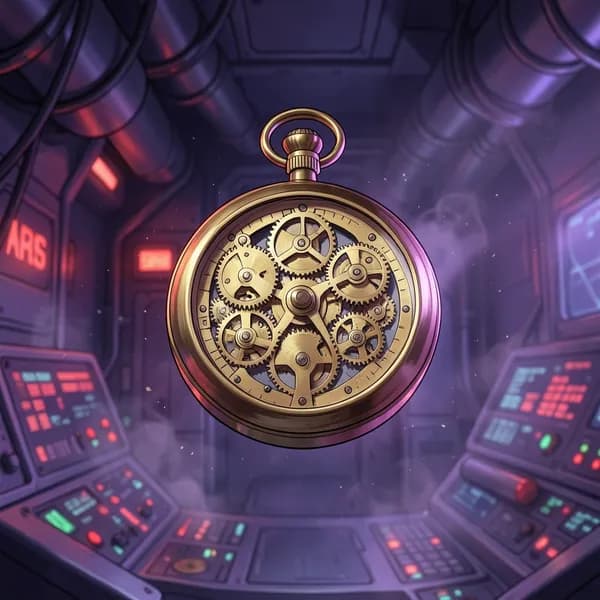
“Monsieur, the navigational array is failing! If we do not vent the reactor coolant now, the gravity well will claim us before the next wormhole opens!”
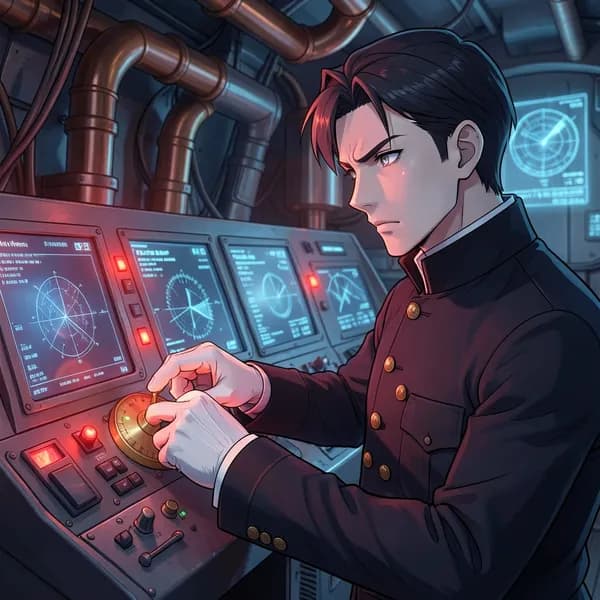
The console flares a deep, warning crimson, casting jagged shadows across your pristine white gloves. The ship groans, metal screeching as the stabilizers fight an invisible, crushing giant. You verify your calculations once more; the math is sound, but the physics of this sector remain dangerously unpredictable. Your reputation, and the substantial sum wagered upon this voyage, depend entirely on your next instruction.
“Maintain current velocity, Passepartout. To vent the coolant is to sacrifice our speed, and I have no intention of losing a single second to atmospheric drag.”
Your command hangs in the air, immediately countered by the ship’s AI shrieking a proximity alert. A massive asteroid, caught in the binary’s grasp, is hurtling directly toward your starboard engine. If you hold course, you risk total vessel disintegration. If you veer, you miss your scheduled window for the jump, forfeiting the entire circumnavigation of the spiral arm.
The asteroid is closing in. How will you secure the ship's survival without sacrificing your schedule?
Your character. Your next move.
The Galaxy Awaits Your Precision
The Reform Club is waiting, and your ship is prepped for warp. Will you prioritize the speed of your journey to secure the win, or will you stop to save a stranded freighter in the outer rim? Every decision you make writes the next chapter of your galactic legacy.
Begin Your Galactic JourneyYour Story, Your Way
Everything is customizable. Pick any genre, setting, or character — the AI builds a world around exactly what you want.
Any Character
Design your appearance, personality, backstory — every detail
Any World
Fantasy kingdoms, sci-fi stations, modern cities — you choose
Branching Paths
No two playthroughs are the same. Your choices reshape everything
Full Immersion
AI images, voice acting, sound effects — a living story
Calculate risk-to-reward ratios when shortcutting through unstable wormholes to save precious ship fuel.
Navigate complex diplomatic negotiations with alien factions to secure passage through restricted galactic sectors.
Manage the morale and loyalty of your crew while facing the stress of a ticking clock.
Decide whether to sacrifice your precious cargo to outrun a pursuing bounty hunter fleet.
The chronometer on the dashboard hums with a steady, rhythmic pulse, matching the frantic beat of your own heart. Outside the reinforced viewport, the Orion Nebula bleeds crimson and gold, a celestial backdrop to the most expensive gamble in the quadrant. You are Phileas Fogg, a man whose reputation is as precise as the hyperdrive engines humming beneath your feet. Your valet, Jean Passepartout, adjusts his oxygen mask, eyeing the fuel reserves with mounting dread. The Reform Club back on Earth—or rather, the digital projection of it—has staked their reputations on your inability to cross the charted expanse in under eighty days. Every choice you make, from the trade routes you calibrate to the bribes you offer to suspicious customs officials on the moons of Jupiter, dictates whether you arrive at the finish line or drift forever in the silent vacuum. The clock is ticking. The galaxy is vast, unforgiving, and waiting for your next command.
What is Phileas Fogg in Space Opera?
Phileas Fogg is the quintessential Victorian gentleman, first introduced to the world in Jules Verne’s 1872 masterpiece, Around the World in Eighty Days. He is a man defined by his rigid adherence to schedules, his unshakable stoicism, and his belief that anything, given enough capital and calculation, can be achieved. While Verne originally trapped Fogg in the mechanical limits of trains and steamships, his archetype translates perfectly to the vast, cold reaches of a space opera setting. Just as Fogg faced the dangers of the Suez Canal or the American plains, a space-faring version navigates the treacherous asteroid fields of the Kessel-like sectors or the bureaucratic labyrinths of the Galactic Federation. In visual storytelling, we see echoes of this obsession with time and precision in characters like The Doctor from Doctor Who, particularly when they are racing against a fixed point in time. By transplanting Fogg into a starship cockpit, we replace the Orient Express with a warp-capable freighter, but the core tension remains: the relentless, uncaring march of time against the indomitable human spirit. Whether you are playing through a text-based simulation or watching a cinematic retelling like the 2021 television miniseries starring David Tennant, the fascination lies in seeing how cool-headed logic survives when the universe itself seems determined to throw a wrench in the gears.
Why play Phileas Fogg as an interactive story?
Playing as Phileas Fogg forces you to prioritize efficiency over morality. When a warp gate is blocked by a blockade of pirate frigates, do you risk a costly detour through a volatile ion storm to maintain your schedule, or do you negotiate with the smugglers, potentially compromising your reputation? The agency you hold changes the flavor of the journey entirely. You aren't just following a script; you are managing a crew, allocating limited energy resources, and choosing which alien alliances are worth the political fallout. If you waste time investigating a distress signal from a derelict freighter, you might gain a valuable component for your engine, but you fall behind the strict eighty-day limit. Every stop at a spaceport is a calculated risk. Do you spend your credits on a high-grade fuel upgrade or bribe a dock official to bypass customs? The narrative adapts to these decisions, creating a unique trajectory for your voyage. You will feel the weight of every lost hour as the galaxy shifts around you, and the pressure of the wager will force you to choose between your honor and your survival.
The literary legacy of Phileas Fogg
Jules Verne’s Around the World in Eighty Days was a cultural phenomenon that captured the late 19th-century obsession with globalization and the rapid advancement of technology. Phileas Fogg, with his pocket watch and his unwavering, almost robotic, composure, became the face of the modern man who believed the world could be conquered through sheer willpower and superior logistics. This character has proven remarkably resilient, appearing in countless adaptations, from the 1956 film epic to the more recent serialized explorations of his journey. The appeal of Fogg is that he represents the triumph of order over chaos. In a world that feels increasingly unpredictable, watching a man stick to a rigid schedule while the world burns around him is deeply satisfying. Modern reinterpretations, such as those found in steampunk literature or space opera games, lean into this contrast. Placing Fogg in space shifts the stakes from mere geography to the vast, unknowable physics of the cosmos. It allows for a more operatic scale—where circumnavigating the globe becomes traversing a galactic cluster. The reason this archetype endures is that we all harbor a secret desire to be the person who remains calm when the engines fail, the fuel runs out, and the odds are stacked against us. Fogg proves that even in a chaotic universe, a well-placed bet and a perfectly timed maneuver can change everything.
FAQ
Can I deviate from the original plot?
Absolutely. The wager is the framework, but how you travel—the routes you take and the alliances you forge—is entirely up to you.
Is this a strategy game or a story?
It is a fusion of both. Your choices in navigation and resource management directly influence the narrative outcomes and the success of your journey.
What happens if I fail the eighty-day limit?
The story continues, but the consequences of losing the wager will ripple through your reputation and the political state of the galaxy.
Do I need to know the original book to play?
No prior knowledge is required. The challenges of a galactic journey are intuitive, and the narrative provides all the context you need.
Explore more Space Opera stories like Galactic Empire Politics, Starship Captain's Burden, Alien Alliance.
More Space Opera Stories
Galactic Empire Politics
The throne controls a thousand star systems, and every faction wants a piece. You are caught in the web of galactic intrigue where a single vote—or assassination—can reshape the known universe.
TropeStarship Captain's Burden
The crew looks to you for every impossible decision. Command your vessel through hostile space, manage dwindling resources, and bear the weight of lives that depend on your next order.
TropeAlien Alliance
Humanity cannot survive alone against what is coming. Forge alliances with alien species whose customs, biology, and motives are utterly unlike your own—and pray the coalition holds.
TropeSpace Pirate Fleet
You command a ragtag fleet of pirates prowling the shipping lanes between stars. Raid convoys, outrun navy patrols, and build your reputation as the most feared name in the void.
TropeInterstellar War
Entire star systems burn as civilizations clash across light-years. You are on the front lines of a conflict so vast that winning one battle means nothing if you lose the war for survival.
TropeRebellion Against the Empire
The empire's grip is iron, but cracks are forming. Join the rebellion, recruit allies from oppressed worlds, and strike at the heart of a regime that has ruled the galaxy for centuries.