
Regression Fiction · Interactive story
Return to the Depths: A Dungeon Regression
You know the layout of every tomb. Now, use that cold, hard truth.
Start as a guest. Choose your character before the story begins.
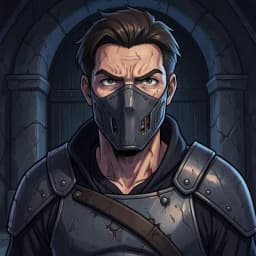
Meet the sample character
Dead men know the traps better than the living.
Try a scene · No signup
The Iron Spire's Echoes
A short sample of this world. Your own version starts with your character.
You stand in the damp foyer of the Iron Spire, the air tasting of static and rusted metal. Beside you, Takeshi grips his sword with white knuckles, his eyes fixed on the darkness ahead. You have lived this moment before. You remember the exact sensation of a clockwork blade piercing your lung exactly three minutes from now.

“Stay close, Jiro. We don't know what’s waiting behind that gate.”

The air vibrates with the hum of the machinery hidden behind the walls. Your muscle memory screams to reach for your dagger, not to fight the coming ambush, but to sabotage the trigger mechanism you ignored during your first attempt. You are the only one who knows the gate is a death trap.
“Takeshi, move back. The pressure plate under that rug is going to trigger a spike volley.”
Takeshi stares at you, his brow furrowing in confusion. The silence in the room stretches, heavy and thick. If you move now, you shatter the timeline, but if you wait, you ensure their deaths—and perhaps yours too. The clockwork gears in the ceiling begin to grind with a lethal, rhythmic precision.
How will you force the change without revealing your secret?
Your character. Your next move.
The Dungeon Remembers Your Failures. Do You?
You have died on the fifth floor before. You know exactly which shadow hides the assassin and which chest holds a curse. Now, return to the entrance and rewrite your fate. Will you be the hero who saves everyone, or will you use your knowledge to secure power at any cost?
Enter the Dungeon AgainYour Story, Your Way
Everything is customizable. Pick any genre, setting, or character — the AI builds a world around exactly what you want.
Any Character
Design your appearance, personality, backstory — every detail
Any World
Fantasy kingdoms, sci-fi stations, modern cities — you choose
Branching Paths
No two playthroughs are the same. Your choices reshape everything
Full Immersion
AI images, voice acting, sound effects — a living story
Identify hidden structural weaknesses in boss armor based on previous combat logs.
Choose whether to rescue party members who betrayed you in your original life.
Navigate floor layouts with the eerie precision of a veteran who never left.
Balance the temptation of efficiency against the unpredictable consequences of changing established history.
The iron scent of blood still clings to the stone walls, a phantom memory from your final moments. You stare at the rusted gate, the same one that crushed your party three years ago. Only you remember the trigger plate hidden under the moss, the one that releases the poison darts. The others look at you, waiting for a command, unaware that you have already seen them die here. This is a story where your choices rewrite the outcome of a battle already lost in another timeline. Every step forward acts as a gamble against history, and the dungeon waits to see if you have truly learned from your mistakes. You hold the map of the dead in your mind; now, you must decide how to use it.
What is Dungeon Re-Entry in Regression Fiction?
Dungeon Re-Entry is a specific subgenre within the broader scope of regression fiction. It centers on the protagonist returning to a high-stakes, lethal environment—the dungeon—armed with the memories of a previous, failed attempt. Think of it as a tactical reset where the stakes remain life and death. You are not just exploring; you are optimizing. In works like Solo Leveling or the web novel The Return of the Disaster-Class Hero, the protagonist is not just powerful; they are informed. They walk past hidden loot caches that others ignore and avoid rooms where they know a party wipe is inevitable. This setting forces the reader to balance the urge to speed-run through challenges with the risk of creating a butterfly effect. If you skip a trap you were supposed to trigger, do you change the behavior of the boss waiting at the end of the floor? It is a game of memory and consequence, where the setting is static, but your influence is absolute.
Why play Dungeon Re-Entry as an interactive story?
Playing a dungeon re-entry story turns the narrative into a high-stakes puzzle of efficiency. You are not just choosing to fight or flee; you are choosing which secrets to reveal and which to keep hidden. If you save an NPC who died in your first run, how does their survival change the political landscape of the guild? You will face moments where you must decide whether to save a rival to gain their future skill or let them fall to ensure you reach the treasure first. Agency here feels heavy because you are constantly measuring your current path against the ghost of your past failures. Every choice feels like a correction of a previous error, making the gameplay a constant battle between your knowledge and the dungeon's indifference.
What makes Dungeon Re-Entry work: the worldbuilding
The appeal of this setting lies in the tension between foreknowledge and chaos. It works because the dungeon acts as a static, unyielding antagonist. The walls do not care that you have been here before; they respond to your actions with the same lethal indifference. This is perfectly captured in games like Hades or the Dark Souls series, where death is not the end but a lesson. In fiction, this trope shines when the protagonist realizes that knowing the future does not make them omnipotent. In Re:Zero, the protagonist experiences a brutal form of this, where death is a reset button that extracts a heavy psychological toll. The best dungeon re-entry stories lean into the loneliness of that knowledge. You are the only person in the room who knows the cost of the path ahead. Sensory details—the specific click of a pressure plate, the exact timing of a dragon’s breath, the way the light hits the boss’s weak point—create a sense of mastery that is satisfying to play through. You aren't just fighting monsters; you are fighting the memory of your own failure.
FAQ
What is dungeon re-entry in fiction?
It is a narrative trope where a character returns to a dangerous dungeon after failing, keeping their memories of the previous attempt to optimize their performance.
How does future knowledge affect the story?
It allows for tactical decision-making, letting you avoid traps and optimize combat, but often leads to unintended timeline shifts and complex moral dilemmas.
Is this setting right for me?
If you enjoy strategy, tactical combat, and the psychological weight of second chances, this is your ideal genre.
Can I change the outcome of the boss fight?
Yes. Your choices, informed by your past life, allow you to approach boss mechanics in entirely new ways to secure a different result.
Explore more Regression Fiction stories like Death and Return, Future Knowledge Advantage, Changed Timeline.
More Regression Fiction Stories
Death and Return
You die — violently, suddenly, unfairly — and then you open your eyes in the past, alive and whole with every memory of what killed you. The second chance is real, the pain was real, and you have no intention of dying the same way twice.
TropeFuture Knowledge Advantage
You know the stock that will skyrocket, the disaster that will strike, and the betrayal that has not happened yet. Your knowledge of the future is the ultimate cheat code, but using it without revealing how you know is a constant, exhausting balancing act.
TropeChanged Timeline
You change one thing and the ripples rewrite everything you thought you knew. The future you came from is dissolving, replaced by a new timeline where your knowledge is increasingly unreliable and the people you loved may become strangers.
TropeButterfly Effect Regression
You fix one problem and create three more, each small change cascading into consequences you never predicted. The butterfly effect turns your careful plans into chaos, and you begin to understand that the past is not a machine you can simply adjust.
TropeRegression Romance
You are reunited with someone you lost, but they do not know you yet, and the love you shared exists only in your memory. You must fall in love again from the beginning while carrying the weight of a future they will never remember, and the relationship is both familiar and heartbreakingly new.
TropePreventing the Catastrophe
You came back for one reason — to stop the event that destroyed everything. You have the knowledge, the motivation, and the desperate urgency of someone who has already lived through the worst, but the catastrophe has roots deeper than you realized and preventing it may require sacrifices you are not prepared to make.