
Regression Fiction · Interactive story
The Weight of Yesterday: Surviving Your Own Altered Timeline
You know how the story ends, but the path forward has completely vanished.
Start as a guest. Choose your character before the story begins.

Meet the sample character
The coup was scheduled for midnight, but the blade arrived at dawn.
Try a scene · No signup
The Ink of Unwritten Betrayal
A short sample of this world. Your own version starts with your character.
Your fingers grip the mahogany desk, the wood polished to a mirror shine that reflects your younger, unscarred face. You recall the precise temperature of the steel that ended your life in the original timeline, yet here, the morning sun hits the carpet at an angle that shouldn't be possible. The heavy silence of the study is shattered by the rhythmic, impatient clicking of boots against the marble floor.
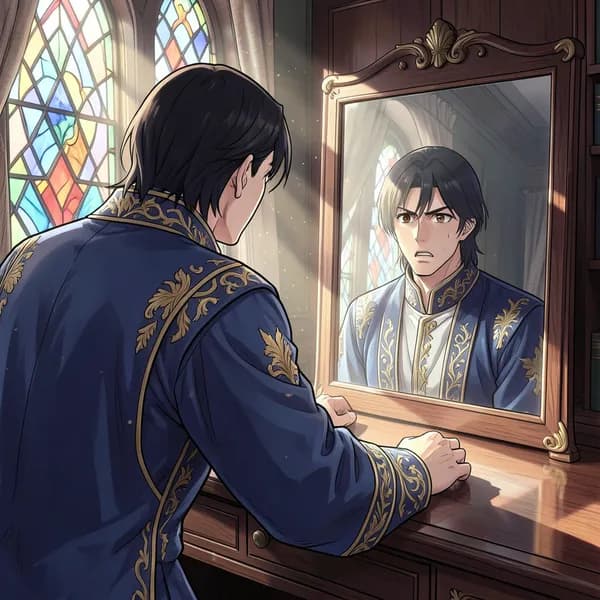
“You look like you've seen a ghost, Jinho. I expected a report on the trade routes, not a man terrified of his own shadow.”
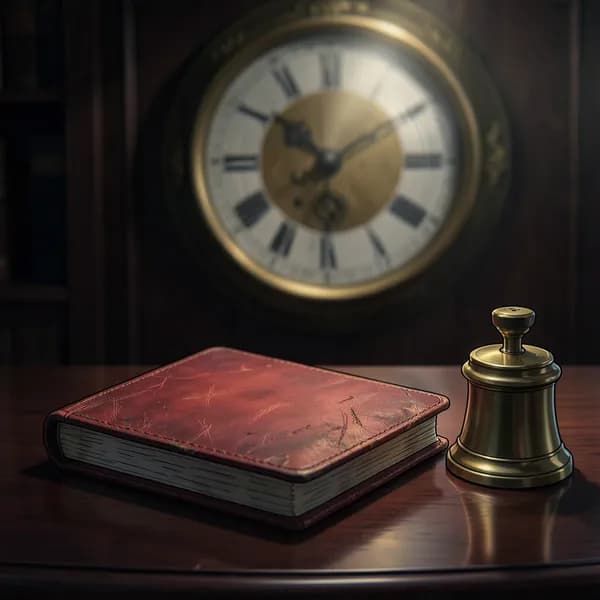
You freeze. In the future you just escaped, Min-jun didn't enter this room until the night of the rebellion, and he certainly didn't address you with such casual, venomous familiarity. The timeline is not just shifting; it is collapsing into a configuration you never memorized. The ledger in his hand is bound in red leather—a detail that was black in every memory you possess of this day.
“My apologies, Duke. I was merely preoccupied with the anomalies in the southern border logs. They don't match the reality of our current situation.”
Min-jun smiles, but it doesn't reach his eyes. He tosses the red ledger onto your desk, the thud echoing like a death knell. He knows something. He leans closer, his voice dropping to a jagged whisper, asking you why you checked the logs two days before the order was even issued. The clock on the wall ticks forward, the hour hand skipping ahead by an impossible ten minutes.
Min-jun is waiting for your explanation, and the timeline is fracturing beneath your feet. How do you handle this shift?
Your character. Your next move.
The future is broken. Fix it your way.
You have the map, but the terrain is shifting under your feet. Every word you speak changes the outcome for everyone you know. Do you follow the path you remember, or do you carve a new, dangerous road? Your choices determine who lives and who vanishes. Choose your first action now.
Enter the Altered TimelineYour Story, Your Way
Everything is customizable. Pick any genre, setting, or character — the AI builds a world around exactly what you want.
Any Character
Design your appearance, personality, backstory — every detail
Any World
Fantasy kingdoms, sci-fi stations, modern cities — you choose
Branching Paths
No two playthroughs are the same. Your choices reshape everything
Full Immersion
AI images, voice acting, sound effects — a living story
Decide whether to warn a loved one of their betrayal, risking their permanent disappearance.
Balance your secret future knowledge against the unpredictable reactions of those around you.
Face the consequences of your interference as the world’s power structures shift in real time.
Attempt to stabilize a crumbling reality while enemies exploit your uncharacteristic, erratic behavior.
The ink on your death warrant is still wet, yet here you are—waking up in your childhood bedroom, heart hammering against your ribs. You remember the betrayal that cost you everything and the exact date the kingdom fell. With a trembling hand, you decide to speak up just once, warning a friend who was supposed to vanish. It seems like a mercy, but by noon, the palace guards are arresting the wrong people, and your mentor is dead weeks ahead of schedule. Your memories are now a liability rather than a map. Every choice you make ripples outward, turning the familiar streets of your past into a landscape of shifting shadows where your friends act like strangers and your enemies have learned new tricks. This is an interactive story where your choices determine the survival of an entire era.
What is Changed Timeline in Regression Fiction?
The Changed Timeline trope in regression fiction centers on the inherent instability of the past. It is not just about possessing future knowledge; it is about the realization that the future is a living, breathing thing that reacts violently to your interference. When you return to a prior point in time, you assume you are an architect building a better life. Instead, you quickly become a wild card that forces reality to reconfigure itself in ways you never anticipated. Consider the mechanics found in the anime and light novel series *Steins;Gate*. The protagonist attempts to prevent a tragedy, only to find that the fundamental laws of his reality have shifted, pushing him into a version of the world that feels fundamentally wrong. In regression narratives, this is the core tension. You are not just reliving your life; you are actively dismantling the foundation of the world you once inhabited. It forces the protagonist to ask: is the original tragedy a fixed point, or can you navigate the chaos without erasing the very people you fought to save? The trope thrives on the irony of being the only person who remembers a world that no longer exists.
Why play Changed Timeline as an interactive story?
Playing this genre requires more than just memory; it requires the ability to adapt to a reality that is actively rejecting your influence. As you play, you will find that your future knowledge is a double-edged sword. If you act exactly as you remember, you are a puppet of your own past. If you change things, you lose your predictability. You will face moments where the right choice in your original life leads to disaster here. Do you save the mentor at the cost of your best friend's safety? Do you keep your mouth shut to preserve the timeline, or do you risk everything to prevent a catastrophe that might be replaced by something worse? The tension comes from the loss of agency—the more you fight to fix things, the more the world changes in ways you cannot account for.
Famous examples of Changed Timeline in books, film, and games
The Changed Timeline trope serves as a mirror to our own regrets, questioning whether we would truly be happier if we could fix our past mistakes. In the film *The Butterfly Effect*, the protagonist repeatedly returns to his childhood to fix tragic events, only to discover that every successful correction creates a more horrific outcome elsewhere. It demonstrates that the timeline is not a static map but a fragile system of trade-offs. Similarly, the series *Erased* (Boku dake ga Inai Machi) utilizes this trope through a detective lens. The protagonist is sent back to his childhood to stop a serial killer. Unlike other stories where the focus is on personal wealth or status, his journey is one of pure sacrifice. He must identify the culprit while navigating the social limitations of being a child again, knowing that his adult mind is trapped in a body that carries no authority. Finally, in the game *Zero Escape: Virtue's Last Reward*, the use of timeline jumping is essential to solving the overarching mystery, where players must explore divergent paths to gather the information needed to resolve the final loop. These works endure because they tap into the universal fear that our current lives are built on a fragile sequence of events. They ask if it is better to live with the pain of the past or to risk the unknown consequences of an altered future.
FAQ
What happens when my future knowledge fails?
When your knowledge fails, you must rely on your intuition and the new data you have gathered in the current timeline. The goal shifts from following a script to managing the immediate threats created by your own butterfly effect.
Can I prevent every tragedy in the timeline?
Rarely. The nature of this trope is that fixing one problem often creates another. You will have to decide which outcomes are acceptable and which losses are unavoidable in your pursuit of a better future.
How do I know if the timeline has changed too much?
You will notice subtle shifts in character motivations and historical events. If your childhood friend acts like a stranger or a mentor takes a different path, you are experiencing the direct result of your interference.
Is this experience right for me?
If you enjoy high-stakes decision-making and narratives that punish you for being too predictable, this genre is a perfect fit. It is designed for players who want to test their wits against a world that fights back.
Explore more Regression Fiction stories like Death and Return, Future Knowledge Advantage, Butterfly Effect Regression.
More Regression Fiction Stories
Death and Return
You die — violently, suddenly, unfairly — and then you open your eyes in the past, alive and whole with every memory of what killed you. The second chance is real, the pain was real, and you have no intention of dying the same way twice.
TropeFuture Knowledge Advantage
You know the stock that will skyrocket, the disaster that will strike, and the betrayal that has not happened yet. Your knowledge of the future is the ultimate cheat code, but using it without revealing how you know is a constant, exhausting balancing act.
TropeButterfly Effect Regression
You fix one problem and create three more, each small change cascading into consequences you never predicted. The butterfly effect turns your careful plans into chaos, and you begin to understand that the past is not a machine you can simply adjust.
TropeRegression Romance
You are reunited with someone you lost, but they do not know you yet, and the love you shared exists only in your memory. You must fall in love again from the beginning while carrying the weight of a future they will never remember, and the relationship is both familiar and heartbreakingly new.
TropePreventing the Catastrophe
You came back for one reason — to stop the event that destroyed everything. You have the knowledge, the motivation, and the desperate urgency of someone who has already lived through the worst, but the catastrophe has roots deeper than you realized and preventing it may require sacrifices you are not prepared to make.
TropeRevenge Regression
You came back from death with a list of names and a plan that spans years. Every person who betrayed you, used you, or destroyed your life in the original timeline is now a target, and this time you have the advantage of knowing exactly what they will do before they do it.