
Mythology · Interactive story
The Nile at Dawn: Where Gods Walk the Riverbanks
Gold-leafed temples tremble as the sun god’s barge crests the horizon.
Start as a guest. Choose your character before the story begins.
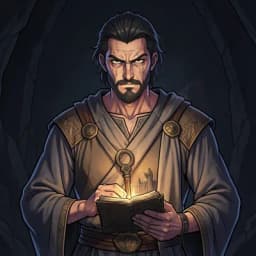
Meet the sample character
The sun holds its breath for no man.
Try a scene · No signup
Gold on the Horizon
A short sample of this world. Your own version starts with your character.
The river glows with an unnatural, sickly amber. You stand on the terrace of the Temple of Karnak, your papyrus damp with morning dew. The horizon should be blinding, but Ra’s barge sits stagnant, caught in the grip of a shadow that refuses to retreat.

“The incense burns blue, Seneb. It should be white. Why is the sun refusing to wake?”

You glance at the heavy brass key hidden beneath your linen tunic. The temple walls vibrate, a low hum that rattles your teeth. If the god fails to rise, the chaos lurking beneath the silt will claim the valley before the hour is out.
“The ritual failed because the vessel was empty, Neferet. I saw the shadow move from the inner sanctum.”
Outside the columns, the water turns black. A giant, serpentine form stirs beneath the surface of the Nile, its scales scraping against the temple foundations. You hold the key that could lock the sanctum, or open it to whatever is trying to break through.
The serpent's coils tighten around the temple pillars. What do you do with the key?
Your character. Your next move.
The Sun Rises—Will You Survive the Dawn?
The solar barge is approaching, and the gods are waiting for an offering. Will you pledge your loyalty to the Pharaoh, or will you listen to the whispers of the river spirits? Your choices will ripple through the history of the Nile. The dawn is here, and the scales of justice are waiting for your weight.
Begin Your RiteYour Story, Your Way
Everything is customizable. Pick any genre, setting, or character — the AI builds a world around exactly what you want.
Any Character
Design your appearance, personality, backstory — every detail
Any World
Fantasy kingdoms, sci-fi stations, modern cities — you choose
Branching Paths
No two playthroughs are the same. Your choices reshape everything
Full Immersion
AI images, voice acting, sound effects — a living story
Decide whether to offer gold to the temple or secrets to the river’s spirits.
Negotiate with a manifestation of Bastet to protect your kin during the solar transit.
Interpret the omens written in the river sediment as the Nile begins its flood.
Choose your path through the labyrinthine bureaucracy of the royal court’s divine overseers.
The scent of lotus blooms hangs heavy in the morning air as the first sliver of Ra’s golden disk pierces the horizon. Beside the river, the limestone walls of the great temples glow with an unnatural, divine warmth. You stand among the reeds, a priest whose lineage traces back to a forgotten deity, watching the sacred barge drift toward the underworld’s threshold. The air hums with static electricity, a sign that the gods are not merely concepts in scrolls, but physical forces demanding tribute. Every breath you take in this place is a gamble; your next choice could earn a blessing of infinite grain or a curse that turns your blood to silt. In this interactive story, the river does not merely flow—it judges the weight of your intentions before the scales of Ma’at. Your decisions dictate whether the sun continues its cycle or if the world falls into eternal shadow.
What is The Nile at Dawn in Mythology?
The Nile at Dawn focuses on the intersection of daily life and divine manifestations. In Egyptian mythology, the river was the literal artery of the cosmos, connecting the mortal realm to the Duat. Unlike the distant, capricious deities of other pantheons, Egyptian gods were deeply entwined with the geography of the riverbanks. You see this dynamic in Rick Riordan’s 'The Kane Chronicles' or the visually stunning environment of 'Assassin’s Creed Origins,' where the river acts as both a highway and a battlefield for spirits. This setting captures the liminal quality—that brief, magical moment when the sun rises and the boundaries between the living and the dead are thinnest. It is a period of transition, where rituals must be performed correctly to ensure the world continues to turn. Whether you are a scribe witnessing a miracle or a noble seeking favor from Sekhmet, the dawn is your most critical hour. It is a world where the monumental architecture of the pharaohs serves as a backdrop to the intimate, terrifying presence of the divine.
Why play The Nile at Dawn as an interactive story?
Agency in this setting is about balance. You are not just an observer; you are a participant in the maintenance of the world. You might be forced to choose between feeding the temple’s sacred crocodiles—a sign of piety—or diverting the water to save a starving village, knowing that the gods might punish your lack of devotion. Every interaction with a deity requires choosing your tone: will you be subservient, bold, or cunning? The stakes are visceral. A wrong word spoken to a priest of Thoth could result in your name being erased from the temple annals. You will navigate the tension between the rigid laws of the Pharaoh and the unpredictable whims of the divine. The tension arises from the fact that you are a mortal interacting with entities that do not share your morality. Every choice feels heavy with consequence, as the river itself reacts to your presence.
What makes The Nile at Dawn work: the worldbuilding
The Nile at Dawn succeeds because it grounds grand mythology in tactile, sensory reality. The heat of the sun, the grit of the sand, and the cool relief of the water provide a grounded foundation for the surreal elements—the jackal-headed guardians and the glowing solar barques. This setting functions best when it emphasizes the transactional nature of ancient religion. In works like Mika Waltari’s 'The Egyptian' or the film 'The Prince of Egypt,' the river is a character that demands respect. Writers often make the mistake of making gods too distant; here, the gods are physically present, their influence felt in the humidity and the growth of the crops. The conflict is inherently political and spiritual. By focusing on the dawn, you capture the peak of potentiality—the moment when the cycle resets. Characters who belong here are those who operate in the gaps: the temple scribes, the tomb architects, and the canal engineers. These people manage the infrastructure of heaven on earth. The sensory details—the smell of incense, the sound of sistrums, and the sight of the sun reflecting off polished obelisks—create a world that feels as solid as stone yet as fluid as water. By focusing on these elements, you create a narrative where the player feels the weight of the sun god's gaze.
FAQ
What makes this setting unique?
It combines high-stakes divine drama with the gritty, tactile reality of life on the ancient riverbanks, making the gods feel present and dangerous.
Can I interact with the gods directly?
Yes, you can converse with various deities, but your choices determine whether they act as your allies, patrons, or obstacles in your path.
Does my character's background matter?
Absolutely. Your character's origin and social standing in ancient Egypt dictate how the priests, royal officials, and local spirits perceive your actions.
Is this based on actual Egyptian history?
The setting blends historical accuracy regarding temple life and river geography with the mythological belief systems that defined the culture.
Explore more Mythology stories like Godly Intervention, Mortal Champion, Underworld Journey.
More Mythology Stories
Godly Intervention
The gods take a personal interest in your fate, meddling with your life for their own amusement or agenda. Navigate divine politics where a single prayer can bring salvation or catastrophe depending on which god is listening.
TropeMortal Champion
A god chooses you as their champion in a conflict they cannot fight directly. Wield divine blessings and carry the weight of a god's expectations as you battle on behalf of forces far greater than yourself.
TropeUnderworld Journey
Descend into the realm of the dead to rescue a lost soul, seek forbidden knowledge, or bargain with death itself. The underworld tests your resolve with shades of the past and guardians who do not easily release the living.
TropeDivine Punishment
You dared to defy the gods, and now their wrath reshapes your existence. Endure a punishment designed to last eternity and search for the loophole, the redemption, or the defiance that could set you free.
TropeProphecy Fulfillment
An oracle speaks your fate, and every attempt to avoid the prophecy brings you closer to fulfilling it. Choose your path carefully in a story where destiny is a trap and free will may be the greatest illusion of all.
TropeGodly Love Affair
A deity descends from the heavens to pursue a mortal lover, bringing gifts, transformations, and the jealousy of divine spouses. Love a god and face the consequences that come when immortal desire collides with mortal fragility.