
Mythology · Interactive story
The Gates of Dis: A Descent Into Myth
The ferryman waits, but the price of passage is yours to name.
Start as a guest. Choose your character before the story begins.
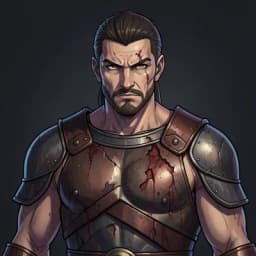
Meet the sample character
The Acheron does not accept gold from the living.
Try a scene · No signup
The Toll of Iron and Ash
A short sample of this world. Your own version starts with your character.
The freezing mist of the Acheron clings to your skin like a wet shroud. You stand at the water's edge, the weight of your bronze shield mocking the hollow silence of this place. Ahead, the black skiff cuts through the gloom, propelled by a figure whose eyes are sunken pits of ancient, tired sorrow.

“The coin is for the passage, not for the return of the ghost you cradle in your memory.”

Charon’s voice grates like grinding basalt against the stillness. You feel the ghost you seek—your sister—calling out from the shifting shadows, her voice a fragile melody beneath the roar of the current. You have no coin, only the rusted dagger at your hip and the desperate conviction that the laws of Olympus can be bent by mortal iron.
“I do not seek a ferry ride, Boatman. I seek the one who holds the tally of souls. Tell me how to bypass the gates or be moved aside by force.”
The ferryman pauses, his oar dripping black sludge. He points toward the jagged spires of the fortress beyond the fog, where the shadow of Hades looms. He warns that to enter uninvited requires a sacrifice that blood alone cannot satisfy. A hound howls in the distance—Cerberus has scented your warmth, and the heavy obsidian gates are beginning to grind shut.
The gates of the fortress are closing. How will you force your way into the domain of the dead?
Your character. Your next move.
Will you return from the shadows?
The ferryman has arrived at the bank, his boat straining under the weight of a thousand regrets. You have one chance to cross the river and reclaim what was stolen. Will you offer the gods your courage, or will you succumb to the whispers of the dead? Choose your path carefully, for the gates of the underworld do not open for the weak.
Begin your descentYour Story, Your Way
Everything is customizable. Pick any genre, setting, or character — the AI builds a world around exactly what you want.
Any Character
Design your appearance, personality, backstory — every detail
Any World
Fantasy kingdoms, sci-fi stations, modern cities — you choose
Branching Paths
No two playthroughs are the same. Your choices reshape everything
Full Immersion
AI images, voice acting, sound effects — a living story
Negotiate passage across the Styx by offering memories or precious life force to Charon.
Confront the shades of your own history, forcing you to reconcile with past failures.
Navigate the shifting labyrinths of Tartarus, where the terrain reacts to your current emotional state.
Decide whether to defy the gods of death or accept their cruel, binding terms.
The coin is cold against your palm, a dull bronze weight that feels heavier than a mountain. Ahead, the river Styx churns with the wails of those who lost their way, its dark current swallowing the light of the sun. You stand at the threshold of the afterlife, a mortal breathing air that has not touched a lung for centuries. Whether you seek a lover stolen by shadow or a secret buried by the gods, your choices dictate your survival. In this interactive story, the path through the land of the dead shifts with every decision you make, forcing you to choose between mercy and cold ambition. Silence hangs over the fields of asphodel; the only sound is the rhythmic drip of water against stone and the encroaching footsteps of something that has never known life.
What is Underworld Journey in Mythology?
The Underworld Journey is a staple of human storytelling, representing the ultimate test of character. It forces a protagonist to confront the end of all things while still clinging to their humanity. In Homer’s Odyssey, Odysseus must travel to the realm of Hades to consult the blind prophet Tiresias, a task that forces him to face the ghosts of his own past and the fragility of his mortality. This trope functions as more than a physical location; it is a psychological landscape where the rules of the living no longer apply. It appears in everything from the ancient Mesopotamian myth of Inanna to the modern video game Hades, where the protagonist must fight his way out of his father's domain. The underworld serves as a mirror, reflecting the hero’s deepest fears back at them. If they lack resolve, they become another shade drifting through the dark; if they possess grit, they might just return to the surface with the wisdom—or the person—they sought.
Why play Underworld Journey as an interactive story?
Playing through an underworld journey tests your capacity for sacrifice. You aren't just reading about a hero’s struggle; you are deciding whether to bribe the three-headed guardian, pledge your service to a forgotten deity, or find a way to cheat the cycle of death entirely. The tension comes from the scarcity of resources and the finality of your mistakes. When you reach the throne of the dead, do you bow, or do you demand? Every interaction with the shadows of the past forces you to weigh the cost of your goal against the potential loss of your own soul. You might find that the person you came to save has already forgotten your name, or that the knowledge you crave is a burden too heavy to carry back to the light.
Famous examples of Underworld Journey in books, film, and games
The appeal of the underworld journey lies in its inevitability. In Virgil’s Aeneid, Aeneas descends to the underworld not for glory, but for duty, meeting the ghosts of his ancestors to understand his role in the founding of Rome. This contrasts sharply with the tone of Orpheus in Ovid’s Metamorphoses, whose journey is driven by desperate, fragile love. Orpheus brings his music to the silent halls of Hades, momentarily moving the king and queen of the dead to tears, only to lose everything through a single moment of doubt. In more contemporary settings, such as the film Constantine or the manga YuYu Hakusho, the underworld is often depicted as a bureaucratic or chaotic nightmare, stripping away the romanticism of ancient myth to reveal a gritty, dangerous reality. These stories endure because they speak to the universal fear of loss. Whether it is a Greek hero, a demon hunter, or a modern protagonist, the journey represents the struggle against the finality of death. It is the ultimate confrontation with the self, where there is nowhere left to hide.
FAQ
What makes a good underworld journey story?
A good underworld journey requires a high cost for entry. The protagonist must give up something significant—a piece of their memory, a weapon, or their own comfort—to prove they belong in the realm of the dead.
How does the setting affect the narrative?
The underworld acts as a secondary character. Its architecture, guardians, and silence should actively hinder or help the protagonist based on their moral alignment, forcing the player to adapt their strategy.
Can I fail the journey?
Yes. The stakes are absolute. In interactive fiction, your choices determine whether you return to the land of the living or become a permanent resident of the afterlife.
Is this genre only for Greek mythology?
Not at all. Every culture has an underworld, from the Norse Helheim to the Egyptian Duat. Each offers unique challenges and rules for the living to navigate.
Explore more Mythology stories like Godly Intervention, Mortal Champion, Divine Punishment.
More Mythology Stories
Godly Intervention
The gods take a personal interest in your fate, meddling with your life for their own amusement or agenda. Navigate divine politics where a single prayer can bring salvation or catastrophe depending on which god is listening.
TropeMortal Champion
A god chooses you as their champion in a conflict they cannot fight directly. Wield divine blessings and carry the weight of a god's expectations as you battle on behalf of forces far greater than yourself.
TropeDivine Punishment
You dared to defy the gods, and now their wrath reshapes your existence. Endure a punishment designed to last eternity and search for the loophole, the redemption, or the defiance that could set you free.
TropeProphecy Fulfillment
An oracle speaks your fate, and every attempt to avoid the prophecy brings you closer to fulfilling it. Choose your path carefully in a story where destiny is a trap and free will may be the greatest illusion of all.
TropeGodly Love Affair
A deity descends from the heavens to pursue a mortal lover, bringing gifts, transformations, and the jealousy of divine spouses. Love a god and face the consequences that come when immortal desire collides with mortal fragility.
TropeCreation Myth
Before the world existed, there was chaos — and you were there. Shape the cosmos itself as a primordial being, deciding what gets created, what gets destroyed, and what fundamental laws govern the reality you are building.