
Mythology · Interactive story
The Toll for the River Styx
One coin for the ferryman. What will you offer when the living world fades?
Start as a guest. Choose your character before the story begins.
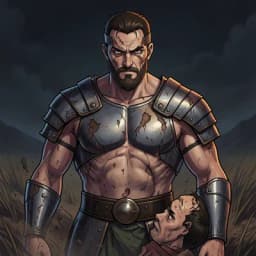
Meet the sample character
Payment is demanded, but the soul is not for sale.
Try a scene · No signup
The Price of a Silent Shore
A short sample of this world. Your own version starts with your character.
You stand on the jagged obsidian shore, where the air tastes of wet ash and stagnant silence. Before you, the Styx churns with the wailing of those who never found peace, a river of thick, ink-black sludge. The cold seeps into your marrow, chilling the bronze of your greaves until your skin feels like stone.

“The coin is not merely metal, soldier. It is the weight of your last breath. Do you have it, or do you intend to pay with your remaining days?”

You reach into your tunic, your fingers brushing the cold, smooth surface of the single obol you pried from your brother's cooling eyelid. The weight of his memory feels heavier than the coin. If you surrender it, you secure passage, but the tether to your own life grows thin.
“I did not come to the edge of death to bargain for a seat in your boat. I came to reclaim what the fates snatched away.”
The boatman’s cowl shifts, revealing nothing but a hollow, swirling void where eyes should be. He leans forward, his skeletal grip tightening on the oar, and the river begins to rise, hungry and insistent. The coin burns against your palm; you must decide whether to pay the toll, draw your blade, or offer a secret more precious than silver.
The river rises to your knees, freezing the blood in your veins. How do you confront the ferryman?
Your character. Your next move.
The Ferryman is Waiting for You
The mist is rising, and the skiff is pulling away from the shore. Will you offer your coin, or will you force the ferryman to take you on your own terms? Your journey through the underworld begins the moment you step onto the rotting wood of the boat. Do not let your story end in silence on the banks of the Styx.
Board the Ferryman's BoatYour Story, Your Way
Everything is customizable. Pick any genre, setting, or character — the AI builds a world around exactly what you want.
Any Character
Design your appearance, personality, backstory — every detail
Any World
Fantasy kingdoms, sci-fi stations, modern cities — you choose
Branching Paths
No two playthroughs are the same. Your choices reshape everything
Full Immersion
AI images, voice acting, sound effects — a living story
Negotiate with Charon by sacrificing a precious, defining memory of your former life.
Choose which of your mortal sins to confess before the judges of the underworld.
Attempt to bribe the three-headed Cerberus to bypass the standard judgment of souls.
The mist clings to your skin, colder than any winter morning. Ahead, the water churns—black, viscous, and silent. A wooden skiff scrapes against the jagged shore, guided by a figure draped in tattered, colorless robes. He does not speak; he merely waits, his hand extended, palm up. You have reached the boundary between existence and the void. Here, your memories are your only currency, and your next decision dictates whether you cross into the fields of asphodel or find a way to cheat the inevitable. Your path through this silent, shifting landscape depends entirely on the choices you make as you bargain with the ferryman and navigate the trials of the dead. You are the architect of your own afterlife, and the water is rising.
What is River Styx Crossing in Mythology?
The crossing of the River Styx is the quintessential threshold of transition. In ancient Greek mythology, it serves as the final barrier separating the land of the living from the dominion of Hades. This motif is not merely about death; it is about the transition of identity. When a soul reaches the river, they must have the means to pay Charon, the ferryman. If they lack the coin—traditionally placed in the mouth of the deceased—they are doomed to wander the banks for a hundred years as restless spirits. This trope appears in Dante’s Inferno, where the crossing of the Acheron, often conflated with the Styx, marks the true entry into the circles of hell. It is a moment of absolute finality, stripping away the comforts of the mortal coil. Whether it is the grim, atmospheric tone found in the film Hercules or the strategic, high-stakes depiction in the video game Hades, the Styx represents the moment where the narrative shifts from the pursuit of mortal goals to the cold reckoning of one's essence. It forces characters to acknowledge that their life, as they knew it, has concluded, and whatever remains must be accounted for before the judges of the dead.
Why play River Styx Crossing as an interactive story?
Playing through the crossing requires more than luck; it demands a confrontation with your character’s past. You are not a passive observer watching a myth unfold; you are the one deciding how to approach the ferryman. Do you offer him a bribe, plead for mercy, or attempt to outwit him with the knowledge you gathered in your final days? Each decision alters your standing with the judges of the dead—Minos, Rhadamanthus, and Aeacus. You might find yourself negotiating for a loved one’s soul or fighting to keep your own memories intact as you drift across the dark currents. The tension lies in the uncertainty: what lies on the other side changes based on who you were before you reached the water. You must weigh the value of your mortal deeds against the harsh reality of the underworld, making split-second decisions that define your eternal fate.
Famous examples of River Styx Crossing in books, film, and games
The imagery of a river crossing remains a potent storytelling device because it forces a protagonist to confront their mortality. In Rick Riordan’s The Last Olympian, Percy Jackson dips into the Styx to gain invulnerability, though at the cost of tethering his soul to his mortal failings. The river here becomes a source of power that simultaneously threatens to consume the hero’s humanity. Contrast this with the depiction in the God of War series, where the crossing feels like a battleground—a place where the protagonist must literally fight his way through the spirits of those he has wronged. These stories succeed because they use the Styx to externalize internal conflict. Whether it is a test of character or a physical obstacle to be conquered, the river acts as a mirror. It is the point of no return that defines the protagonist’s legacy, proving that even in death, the choices one makes carry weight. The trope endures because it speaks to a universal fear: the loss of control when we reach the end of our own personal history. By placing the reader in the center of this transition, the narrative forces a recognition that the afterlife is not just a destination, but a consequence of the life lived.
FAQ
Can I change my fate while crossing the Styx?
Yes. The narrative allows you to seek paths to redemption or bargain your way into different sectors of the underworld based on your actions.
Do I need to know Greek mythology to play?
Not at all. The story provides the context needed to understand the rules of the underworld as you encounter them.
What happens if I don't have the coin for the ferryman?
You will need to find another way to appease Charon, perhaps through offering a secret or performing a favor for the restless dead.
How do my choices affect the ending?
Your actions influence how the judges perceive your soul, leading to vastly different outcomes for your afterlife, from oblivion to rebirth.
Explore more Mythology stories like Godly Intervention, Mortal Champion, Underworld Journey.
More Mythology Stories
Godly Intervention
The gods take a personal interest in your fate, meddling with your life for their own amusement or agenda. Navigate divine politics where a single prayer can bring salvation or catastrophe depending on which god is listening.
TropeMortal Champion
A god chooses you as their champion in a conflict they cannot fight directly. Wield divine blessings and carry the weight of a god's expectations as you battle on behalf of forces far greater than yourself.
TropeUnderworld Journey
Descend into the realm of the dead to rescue a lost soul, seek forbidden knowledge, or bargain with death itself. The underworld tests your resolve with shades of the past and guardians who do not easily release the living.
TropeDivine Punishment
You dared to defy the gods, and now their wrath reshapes your existence. Endure a punishment designed to last eternity and search for the loophole, the redemption, or the defiance that could set you free.
TropeProphecy Fulfillment
An oracle speaks your fate, and every attempt to avoid the prophecy brings you closer to fulfilling it. Choose your path carefully in a story where destiny is a trap and free will may be the greatest illusion of all.
TropeGodly Love Affair
A deity descends from the heavens to pursue a mortal lover, bringing gifts, transformations, and the jealousy of divine spouses. Love a god and face the consequences that come when immortal desire collides with mortal fragility.