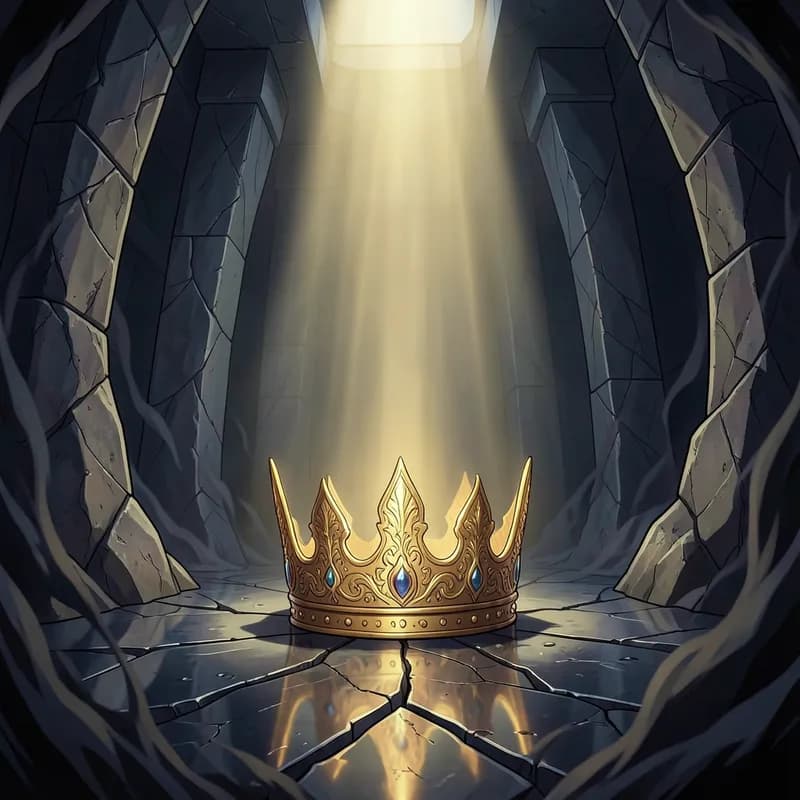
Mythology · Interactive story
The Seven Gates of Ishtar
Seven gates. Seven sacrifices. Will you emerge as a goddess or a captive?
Start as a guest. Choose your character before the story begins.
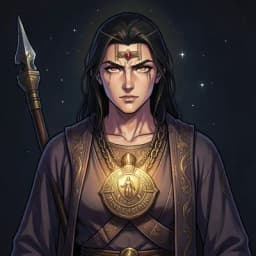
Meet the sample character
Will you witness the Queen of Heaven fall to the shadows?
Try a scene · No signup
Dust of the Seven Gates
A short sample of this world. Your own version starts with your character.
The iron gate looms before you, a jagged tear in the fabric of existence. Beyond it, Irkalla stretches into infinite, lightless misery. You crouch behind a pillar of calcified bone, your breath shallow, watching the Queen of Heaven stand before the gatekeeper, her radiance flickering like a dying candle in a drafty tomb.
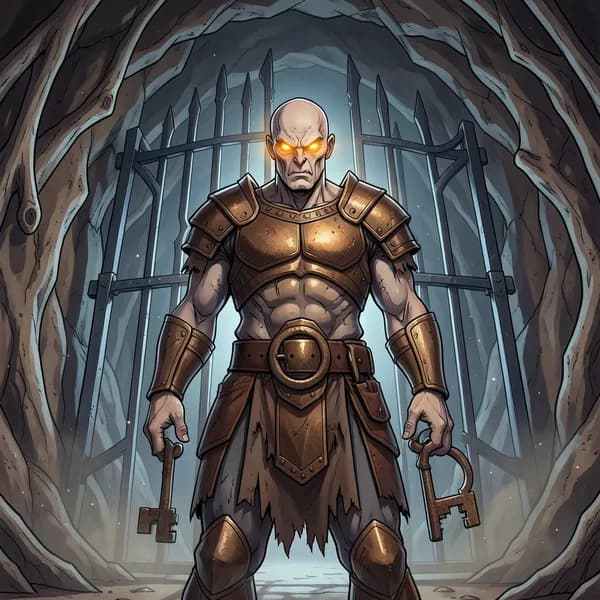
“Why does the Queen of Heaven bring her vanity to a place where shadows eat the light, Ishtar? Surrender your crown or return to the sun-drenched dirt of the living.”
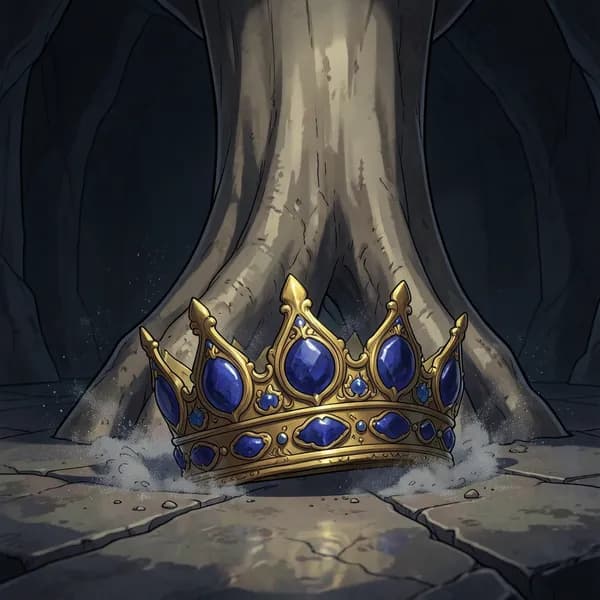
Ishtar reaches up, her fingers trembling as she unpins the great lapis-lazuli crown from her hair. She casts it upon the dusty floor; it makes a hollow, final sound. You grip the stolen talisman inside your robes, feeling its cold pulse against your ribs, wondering if your presence here is a sacred duty or a catastrophic mistake.
“She belongs to the heavens, not this hollow void. I must ensure she does not lose her essence entirely, no matter the cost to my own soul.”
As Ishtar moves to the second gate, Neti’s head snaps toward your pillar, his eyes burning like dead coals. He has sensed the warmth of the living. He stalks toward you, the heavy iron key at his belt dragging through the dust, and for the first time, you realize you have nowhere to run.
Neti lunges, his hand outstretched to drag you into the darkness. How do you confront the gatekeeper?
Your character. Your next move.
Will you survive the seven gates?
The underworld is waiting, and Ereshkigal is watching your every move. You have the power to decide which pieces of your divinity to sacrifice and which to keep. The choice is yours to make before the final gate closes forever.
Begin your descent nowYour Story, Your Way
Everything is customizable. Pick any genre, setting, or character — the AI builds a world around exactly what you want.
Any Character
Design your appearance, personality, backstory — every detail
Any World
Fantasy kingdoms, sci-fi stations, modern cities — you choose
Branching Paths
No two playthroughs are the same. Your choices reshape everything
Full Immersion
AI images, voice acting, sound effects — a living story
Decide which divine tokens to sacrifice at each of the seven underworld gates.
Negotiate with the gatekeeper Neti to gain passage without losing your lethal edge.
Confront Ereshkigal in high-stakes dialogue battles to contest control of the afterlife.
Balance your hunger for war against your capacity for love during critical diplomatic encounters.
Ishtar stands at the threshold of the Great Below, the dust of the underworld clinging to her golden sandals. Before her lies the first of seven gates, each requiring a toll—a piece of her crown, her lapis lazuli necklace, her very essence. You hold the reins of her descent. Do you surrender your symbols of authority to pass, or do you fight the guardians of Ereshkigal for a chance to keep your pride intact? Every choice you make echoes through the silent halls of the dead, determining whether you return as a queen of heaven or remain a prisoner of the abyss. This is a story where the weight of your decisions ripples across the pantheon, shifting the balance of power between the living and the dead.
What is Ishtar in Mythology?
Ishtar is the Mesopotamian goddess of love, beauty, and war—a volatile, brilliant force. Unlike the static deities of later pantheons, she is defined by her contradictions and her fierce agency. You can see her influence in works like the 'Epic of Gilgamesh,' where she serves as a primary instigator of chaos, or in the game 'Civilization VI,' where she appears as a leader figure representing the cultural might of Sumer. Her most famous myth, known as the 'Descent of Ishtar,' is a narrative about the brutal cost of power. She travels to the underworld to confront her sister, Ereshkigal, effectively stripping herself of her divinity at each gate to pass through. She is not merely a symbol of fertility; she is a character of pure desire and unchecked consequence. In the ancient texts, she is the engine of the story, a goddess who refuses to be ignored, even when she is at her most vulnerable.
Why play Ishtar as an interactive story?
Playing as Ishtar is not about following a pre-written script; it is about weighing the cost of your own ambition. You face the gatekeepers who demand your regalia as a price for entry. Do you offer your jewelry to appease them, or do you attempt to bribe them with promises of future favors? When you finally stand before Ereshkigal, the tension is palpable. Will you attempt to usurp the throne of the dead, or will you accept the limitations of your mortal coil? Your interactions with the denizens of the underworld shift the balance between the heavens and the abyss. Every dialogue choice carries the risk of losing your status, forcing you to navigate a dangerous game of political maneuvering in a space where death is the only certainty. You are the architect of your own resurrection.
Why Ishtar still hits
Ishtar has haunted the human imagination for millennia, appearing in everything from the historical novels of Neil Gaiman to the political landscapes of the 'Age of Empires' franchise. She remains relevant because she refuses to be categorized. She is neither purely benevolent nor purely malicious; she is the storm that brings life and the fire that consumes the harvest. In the 'Epic of Gilgamesh,' her wrath is a catalyst for the hero's growth, proving that she is the engine of the story itself. Modern retellings often struggle to capture this duality, usually softening her edges to make her more palatable for general audiences. By removing the sanitized versions, we find a goddess who is terrifyingly honest about her needs. Whether she is blessing a king or destroying a city, her actions are driven by an internal logic that feels both ancient and alarmingly human. This is why she continues to resonate: she represents the raw, unvarnished parts of ourselves that we usually keep locked behind our own metaphorical gates. She demands to be felt, experienced, and understood on her own terms.
FAQ
Can I change the outcome of the descent?
Yes. Your decisions throughout the seven gates directly impact Ishtar’s condition upon arrival in the underworld and her ultimate power level when she returns.
How does this differ from reading a book?
Instead of watching Ishtar lose her power, you decide exactly when and how she surrenders it, altering the power dynamics of the narrative as you play.
Is this based on historical myths?
The narrative is grounded in the ancient Sumerian and Akkadian texts of the descent, maintaining the tone and structure of those original cultural artifacts.
Do I need to know Mesopotamian mythology to play?
No, the story provides the necessary context as you play, though those familiar with ancient history will recognize the specific rituals and gatekeepers.
Explore more Mythology stories like Godly Intervention, Mortal Champion, Underworld Journey.
More Mythology Stories
Godly Intervention
The gods take a personal interest in your fate, meddling with your life for their own amusement or agenda. Navigate divine politics where a single prayer can bring salvation or catastrophe depending on which god is listening.
TropeMortal Champion
A god chooses you as their champion in a conflict they cannot fight directly. Wield divine blessings and carry the weight of a god's expectations as you battle on behalf of forces far greater than yourself.
TropeUnderworld Journey
Descend into the realm of the dead to rescue a lost soul, seek forbidden knowledge, or bargain with death itself. The underworld tests your resolve with shades of the past and guardians who do not easily release the living.
TropeDivine Punishment
You dared to defy the gods, and now their wrath reshapes your existence. Endure a punishment designed to last eternity and search for the loophole, the redemption, or the defiance that could set you free.
TropeProphecy Fulfillment
An oracle speaks your fate, and every attempt to avoid the prophecy brings you closer to fulfilling it. Choose your path carefully in a story where destiny is a trap and free will may be the greatest illusion of all.
TropeGodly Love Affair
A deity descends from the heavens to pursue a mortal lover, bringing gifts, transformations, and the jealousy of divine spouses. Love a god and face the consequences that come when immortal desire collides with mortal fragility.