
Mythology · Interactive story
Shadows of the Duat: An Egyptian Afterlife Odyssey
The sun sets, the gates open, and your soul awaits its final judgment.
Start as a guest. Choose your character before the story begins.
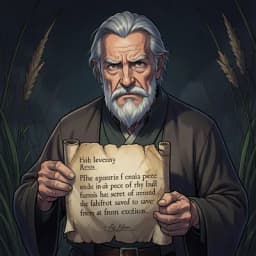
Meet the sample character
The weighing of your soul is not for your deeds, but for your omissions.
Try a scene · No signup
A Scribal Debt in the Fifth Hour
A short sample of this world. Your own version starts with your character.
You stand on the jagged obsidian shore, where the air tastes of scorched papyrus and stagnant water. A serpent the size of a mountain coil shifts in the darkness, its scales scraping against the rock like grinding stones. The light of the solar barque has long faded, leaving you to the mercy of the spirits that drift through the toxic mist. Your heart hammers against your ribs, heavy as lead.

“Scribe Hori, the balance does not lie. Your hands are stained with ink—and with the treachery you etched into the royal annals.”

You look down at your translucent fingers, seeing the faint, shimmering traces of the ink you used to rewrite the history of your king. The lake before you churns, boiling with the essence of those who defied the cosmic order. You feel the weight of your deception pulling you toward the embers, a gravity stronger than any earthly force.
“The truth was a burden that would have destroyed the innocent. I chose the weight of my sin over the weight of an unjust execution.”
The Gatekeeper draws a khopesh, the blade gleaming with a sickly, ethereal light. He does not listen to justifications; he only serves the scales. The ground beneath your feet cracks, revealing the searing glow of the abyss below. You must act now, for the serpent’s gaze is fixed upon you, and the gate to the next hour is closing, leaving you stranded in this purgatory forever.
How will you justify your altered record before the balance is struck?
Your character. Your next move.
Will your heart be lighter than a feather?
The solar barque is departing, and the gates of the Duat are closing. You have one chance to prove your worth before the scales of Ma'at. Every choice you make from this moment forward will be measured against the truth of your soul. Do not let your name be forgotten in the darkness.
Enter the DuatYour Story, Your Way
Everything is customizable. Pick any genre, setting, or character — the AI builds a world around exactly what you want.
Any Character
Design your appearance, personality, backstory — every detail
Any World
Fantasy kingdoms, sci-fi stations, modern cities — you choose
Branching Paths
No two playthroughs are the same. Your choices reshape everything
Full Immersion
AI images, voice acting, sound effects — a living story
Memorize secret incantations to bypass lethal gatekeepers and their elemental traps.
Choose which deities to petition for aid and which to avoid entirely.
Balance your moral alignment, affecting how the scales of Ma'at judge you.
Manage your spiritual energy to survive the twelve hours of darkness.
The scent of incense fades, replaced by the dry, metallic tang of shifting sands. You stand before a wall of black stone, the first of twelve gates that divide the living from the eternal. Behind you, the Nile is a distant memory; ahead, the solar barque of Ra glows against the oppressive gloom. Every whisper in the darkness is a potential trap, and every shadow hides a deity waiting to test your resolve. You must speak the right names, appease the guardians, and maintain your composure as the path twists beneath your feet. This is an interactive story where every decision alters your spiritual weight. Whether you emerge into the Field of Reeds or vanish into the void depends on your ability to outwit the ancient forces of the underworld.
What is the Egyptian Duat in Mythology?
The Duat is the Egyptian underworld, a realm of transformation and profound peril. It is not merely a place of death but a testing ground where the soul must prove its worthiness to exist in the afterlife. In funerary texts like the Book of the Dead, this journey is depicted as a rigorous roadmap of survival, filled with fire-spitting serpents, lakes of flame, and gatekeepers who demand secret names before allowing passage. The game Assassin’s Creed Origins captures the unsettling, ethereal beauty of this landscape, showing how the environment itself acts as an antagonist to the protagonist. Unlike a static myth, the Duat is a dynamic space where the geography shifts according to the spiritual integrity of the traveler. It is a domain where the gods exert their influence through rigid laws, and failing to adhere to them results in the total cessation of your soul.
Why play the Egyptian Duat as an interactive story?
The tension of the Duat lies in the high stakes of your moral agency. You face the scales of Ma'at, where your heart is weighed against the feather of truth, but the result is determined by the cumulative choices you make throughout your transit. Do you hoard your limited divine favor, or sacrifice your memories to aid a fallen spirit? You might choose to deceive a guardian to bypass a gate, only to find that the lie complicates your trial before the gods later on. Every interaction with figures like Anubis or Thoth demands a balance between humility and the drive to preserve your existence. By controlling the narrative, you determine whether you are a supplicant seeking forgiveness or a defiant wanderer carving a new path through the afterlife.
What makes the Egyptian Duat work: the worldbuilding
The Duat functions on the logic of the threshold. It is a place where boundaries between physical matter and divine essence dissolve, creating a setting that is inherently surreal and hostile. Authors like Rick Riordan in The Kane Chronicles highlight the chaotic, dangerous nature of Egyptian magic, while the film The Mummy leans into the aesthetic of cursed, hidden tombs and the weight of ancient history. The setting generates conflict through the limitation of resources—you have no physical body, only your Will and your Name. Sensory details define this experience: the rhythmic clinking of scales, the freezing touch of a jackal-headed god, and the sight of the sun rising in the wrong direction. To make the setting effective, the narrative must emphasize the isolation of the traveler. The Duat is a place of absolute accountability. There is no room for error when the architecture of the world itself is designed to judge you. By focusing on the specific, claustrophobic encounters with the entities of the underworld, the story forces you to engage with the Egyptian concept of balance—Ma'at—not as an abstract idea, but as the literal key to your survival.
FAQ
What is the primary goal in an Egyptian Duat story?
Your goal is to successfully navigate the twelve gates of the underworld to reach the Hall of Two Truths. Once there, you must pass the Weighing of the Heart ceremony to secure your place in the afterlife.
How does the 'weighing of the heart' mechanic work?
Throughout the story, your choices track your moral and spiritual alignment. When you reach the final judgment, these choices are tallied. If your heart is heavy with malice or deceit, it will outweigh the feather of truth, leading to a different narrative outcome.
Can I interact with the gods of the Egyptian pantheon?
Yes. You will encounter major deities like Anubis, Thoth, and Osiris. Your ability to negotiate with them, answer their riddles, or prove your worthiness to them is central to your progression.
Is this setting historically accurate to Egyptian mythology?
The story draws heavily from authentic funerary texts and mythic traditions, including the geography of the twelve hours of the night. While it is a fictionalized interactive experience, it respects the core tenets of the Egyptian afterlife belief system.
Explore more Mythology stories like Godly Intervention, Mortal Champion, Underworld Journey.
More Mythology Stories
Godly Intervention
The gods take a personal interest in your fate, meddling with your life for their own amusement or agenda. Navigate divine politics where a single prayer can bring salvation or catastrophe depending on which god is listening.
TropeMortal Champion
A god chooses you as their champion in a conflict they cannot fight directly. Wield divine blessings and carry the weight of a god's expectations as you battle on behalf of forces far greater than yourself.
TropeUnderworld Journey
Descend into the realm of the dead to rescue a lost soul, seek forbidden knowledge, or bargain with death itself. The underworld tests your resolve with shades of the past and guardians who do not easily release the living.
TropeDivine Punishment
You dared to defy the gods, and now their wrath reshapes your existence. Endure a punishment designed to last eternity and search for the loophole, the redemption, or the defiance that could set you free.
TropeProphecy Fulfillment
An oracle speaks your fate, and every attempt to avoid the prophecy brings you closer to fulfilling it. Choose your path carefully in a story where destiny is a trap and free will may be the greatest illusion of all.
TropeGodly Love Affair
A deity descends from the heavens to pursue a mortal lover, bringing gifts, transformations, and the jealousy of divine spouses. Love a god and face the consequences that come when immortal desire collides with mortal fragility.