Military / War · Interactive story
The Weight of the War Room
Static fills the air, and silence follows your every command.
Start as a guest. Choose your character before the story begins.
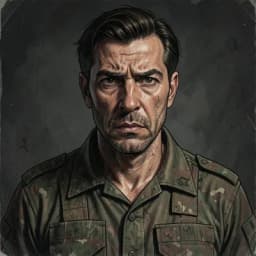
Meet the sample character
The cost of command is paid in blood.
Try a scene · No signup
Static at Sector 4
A short sample of this world. Your own version starts with your character.
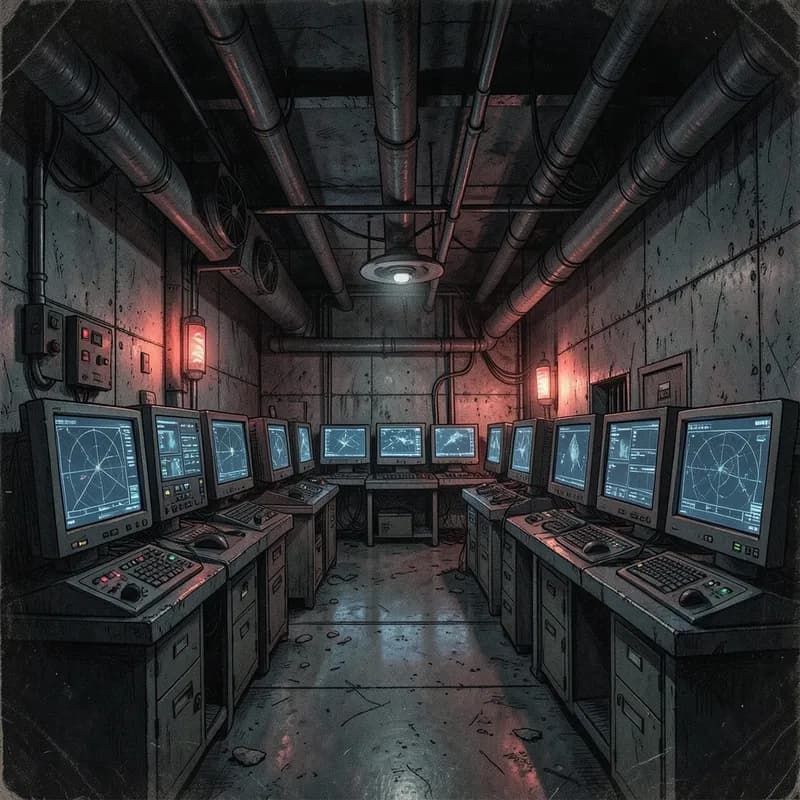
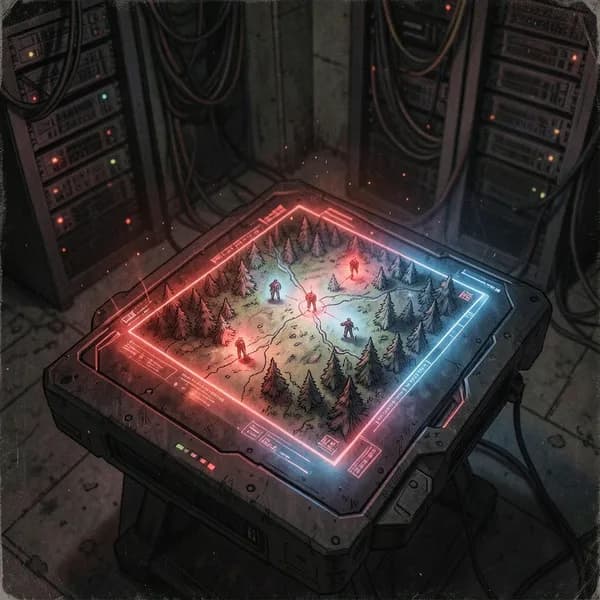
The smell of ozone and stale coffee hangs heavy in the bunker. Above you, the ceiling tremors as artillery shells turn the forest floor into a cratered graveyard. You stare at the tactical display; the glowing blue icons representing your forward scouts are blinking red. Silence saturates the room, broken only by the rhythmic, mechanical pulse of the air filtration system.
“Major, the satellite feed is dying. If we don’t call in the strike now, those scouts are going to be overrun by the incoming armored column.”

You feel the weight of every medal on your chest turning into lead. Your thumb hovers over the authorization key. If you pull the trigger on the artillery, the blast radius will vaporize the enemy, but the scouts—your own men—are caught in the kill zone. The screen flickers, the red signals dying one by one.
“Hold the line. If I fire now, I’m signing their death warrants. There has to be another way to signal them out.”
Graves stares at you, his eyes wide in the harsh light of the monitors. Outside, a heavy thud shakes the desk, knocking a plastic cup of water to the floor. The enemy tanks are closing the distance, and your window to prevent the massacre is closing. You are the only one left with the authority to command the hellfire.
The enemy is minutes away from the scouts' position. How do you respond to the incoming threat?
Your character. Your next move.
The battalion is waiting for your orders.
The enemy is advancing and the line is breaking. Do you order a retreat to save your men, or hold the position at all costs? Every choice you make in the bunker changes the outcome of the war. Step into the command chair and face the consequences of your leadership.
Assume Command NowYour Story, Your Way
Everything is customizable. Pick any genre, setting, or character — the AI builds a world around exactly what you want.
Any Character
Design your appearance, personality, backstory — every detail
Any World
Fantasy kingdoms, sci-fi stations, modern cities — you choose
Branching Paths
No two playthroughs are the same. Your choices reshape everything
Full Immersion
AI images, voice acting, sound effects — a living story
Authorize a risky flanking maneuver that exposes your command post to enemy scouts.
Choose between civilian evacuation routes and securing vital supply lines for the frontline.
Manage the morale of your officers when the casualty reports start streaming in.
Decide which intelligence reports to prioritize before the enemy breaks through your perimeter.
The hum of the ventilation system is the only thing masking the sound of your own heartbeat. Above, the artillery fire has turned the city into a graveyard of concrete and rebar. Here, four floors underground, the air tastes like stale coffee and ozone. You stare at the illuminated map, where red markers representing enemy armor are creeping toward the bridge. Sergeant Miller waits by the radio, his hand hovering over the transmit button. He needs to know if you are authorizing the airstrike on the refinery—knowing full well your own scouts are still inside the perimeter. Your decisions dictate the survival of your battalion in this interactive story. Every update from the field arrives as a frantic burst of data, and the clock is always running. You are the architect of the defense, and the consequences of your orders will echo long after the bunker door seals shut.
What is Command Bunker in Military / War?
The command bunker setting places you at the nerve center of a conflict. It is a space defined by isolation, technological reliance, and the crushing pressure of oversight. Unlike the infantry perspective found in most war fiction, the bunker experience is about the macro-view: logistics, resource allocation, and the cold arithmetic of sacrifice. You are not holding a rifle; you are holding a map and a radio handset. This setting draws heavily from the claustrophobic dread depicted in films like 'Downfall,' where the bunker becomes a crucible for ego and desperation, or the high-tech tension of 'WarGames,' where the interface between human and machine determines the fate of nations. In these stories, the bunker provides a unique perspective on the war effort, focusing on the disconnect between the sanitized data on a screen and the brutal reality occurring miles away. You become the final authority for troops who will never see your face, only hear your voice through a crackling speaker.
Why play Command Bunker as an interactive story?
Agency transforms the bunker from a static setting into a dynamic engine of moral conflict. When you sit in the commander's chair, the game forces you to prioritize objectives that rarely align. You might have enough fuel to move a medical convoy to safety or to reinforce a crumbling frontline, but never both. The tension comes from the lack of perfect information. Reports from the field are often outdated, contradictory, or biased, forcing you to gamble with the lives of the soldiers you have come to know by name. You will encounter moments where you must decide whether to trust the intuition of a seasoned sergeant or follow the rigid, often flawed, doctrine of your superiors. The weight of your choices is felt through the immediate feedback of the radio—the sudden silence of a unit that stopped responding after you sent them into a kill zone, or the grit in a subordinate's voice when they realize they have been ordered to hold a position that cannot be defended.
What makes Command Bunker work: the worldbuilding
The effectiveness of the command bunker as a setting relies on the contrast between the external chaos of war and the internal rigidity of the command center. Sensory details are vital: the flickering CRT monitors, the smell of burnt electrical components, the rhythmic ticking of a wall clock, and the constant, static-filled chatter of the radio. These elements create a sense of entrapment. You are physically separated from the conflict, yet emotionally tethered to every casualty. This setting thrives on the conflict between duty and conscience. In 'Command & Conquer,' the bunker is a place of strategic power, but in a narrative-focused experience, it is a place of psychological attrition. Great command-based stories, such as the tactical tension seen in 'The West Wing' regarding military briefings or the strategic desperation in 'Das Boot,' emphasize that the bunker is not just a room—it is a pressure cooker. The characters who belong here are those who can compartmentalize their emotions, but the story is most effective when that compartmentalization begins to crack. Whether it is a career officer trying to maintain order or a reluctant leader thrust into power due to a command vacuum, the setting forces the player to reconcile their personal ethics with the brutal requirements of military victory.
FAQ
How does the command bunker setting handle tactical decisions?
Decisions are handled through a combination of intelligence gathering and resource management. You receive briefings and real-time updates that require immediate action. Your choices influence the supply levels, unit morale, and the overall progression of the war, often triggering branching paths that change the final outcome of the campaign.
Is this setting focused on action or strategy?
This setting is heavily focused on strategy and the psychological burden of command. While the war above you is full of action, your role is to manage that action through tactical orders, prioritization, and communication, making it a cerebral and high-tension experience.
Can I lose my command in this story?
Yes. Your standing and authority are tied to your performance and the results of your orders. If your decisions lead to catastrophic failures or if you lose the trust of your unit, the narrative will reflect those consequences, potentially leading to a loss of command or a total defeat of your forces.
What kind of characters will I interact with?
You will communicate with a diverse cast of subordinates, including field scouts, logistical officers, and medical staff. Each character has their own motivations, fears, and loyalty levels, which shift based on the orders you give and the way you communicate with them over the radio.
Explore more Military / War stories like Band of Brothers, Behind Enemy Lines, Impossible Mission.
More Military / War Stories
Band of Brothers
Forge unbreakable bonds with your squad as you fight through impossible odds together. Every mission tests your loyalty and every loss hits like family in this military interactive story.
TropeBehind Enemy Lines
You're stranded deep in hostile territory with no extraction in sight. Evade patrols, scavenge supplies, and make impossible choices as you fight your way back to friendly lines.
TropeImpossible Mission
The odds are suicidal and command knows it. Accept a mission that no one expects you to survive and find a way to beat the impossible through grit and cunning.
TropeWar Hero
One act of extraordinary courage changes everything. Bear the weight of a hero's reputation while knowing the truth of what happened on that battlefield.
TropeFriendly Fire
A devastating mistake kills your own. Grapple with guilt, cover-ups, and the impossible question of accountability when the fog of war turns ally against ally.
TropePOW Escape
You're a prisoner of war, and escape is your only hope. Plan your breakout, recruit allies among fellow prisoners, and risk everything for freedom in this tense military thriller.